
Loading page content
Loading page content
Quality
By the time a garment reaches final inspection, every decision that determines its quality has already been made. The only options left are acceptance or rework, and both are expensive.
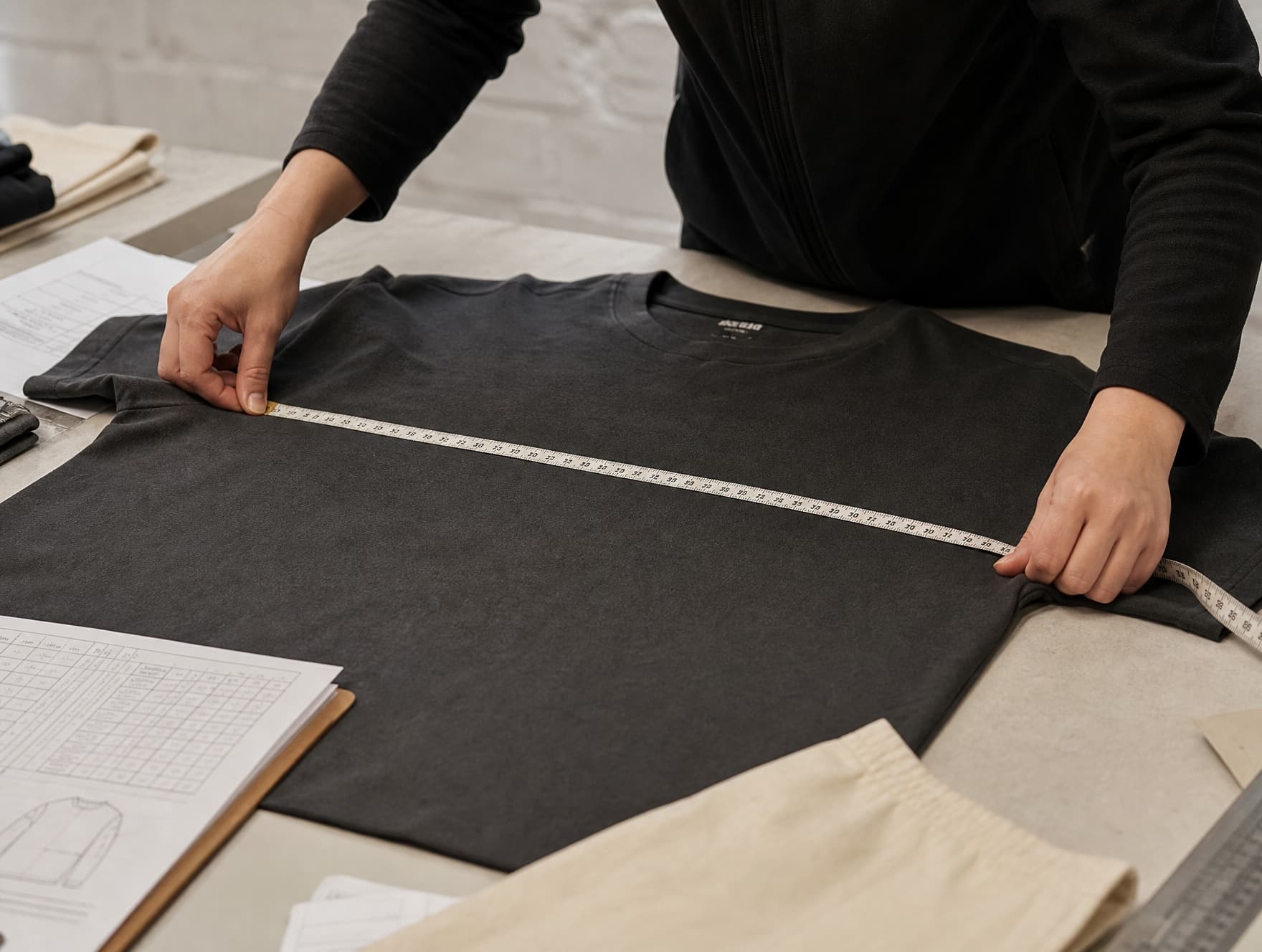
Each one exists to catch a specific class of problem while correction is still cheap.
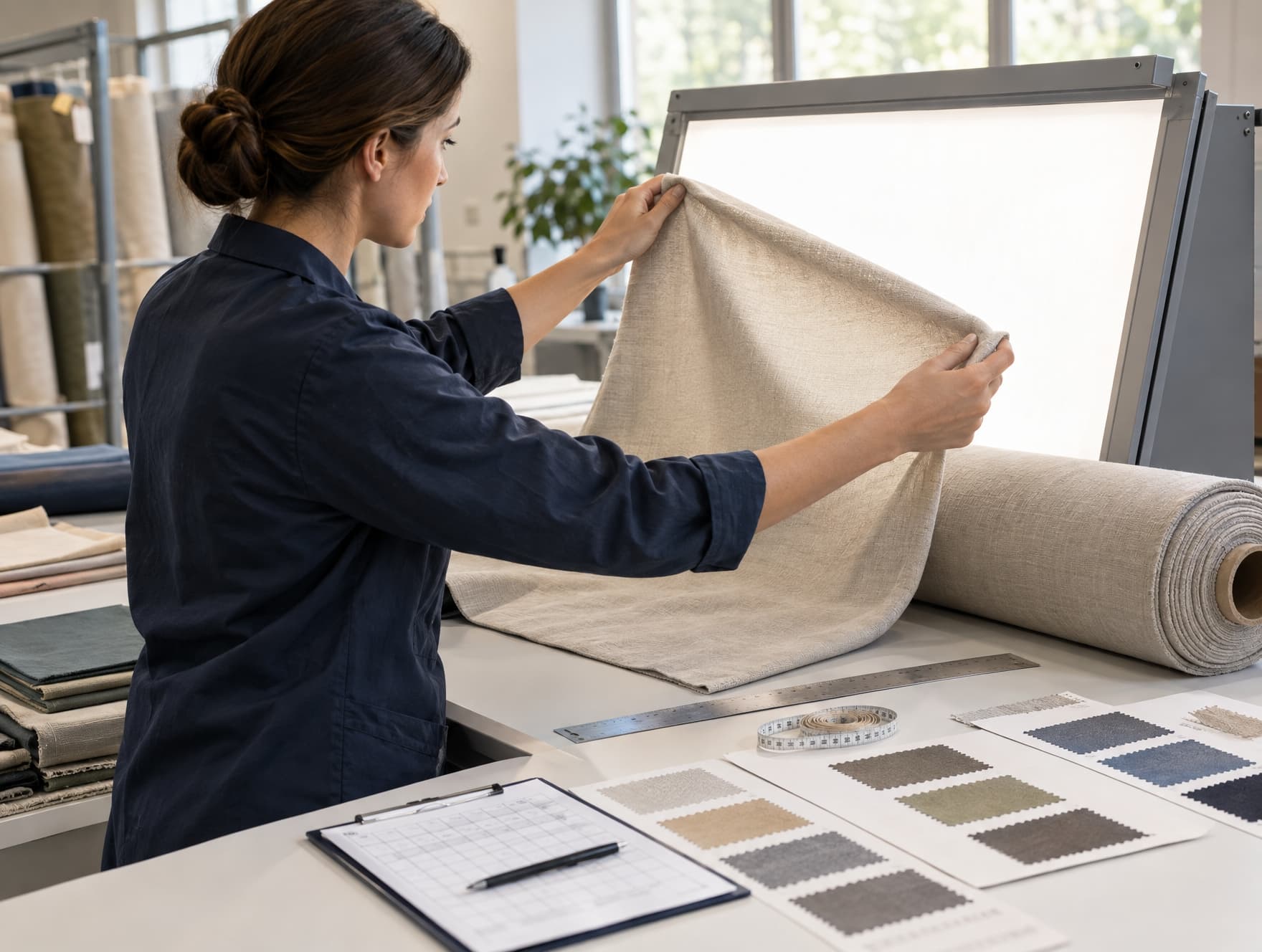
01
Incoming fabric and trims are checked against the specification before anything is cut. Fabric faults found here cost metres; found later they cost garments.

02
The approved sample, the specification and the actual materials are reviewed together before the line starts, so discrepancies surface before output does.
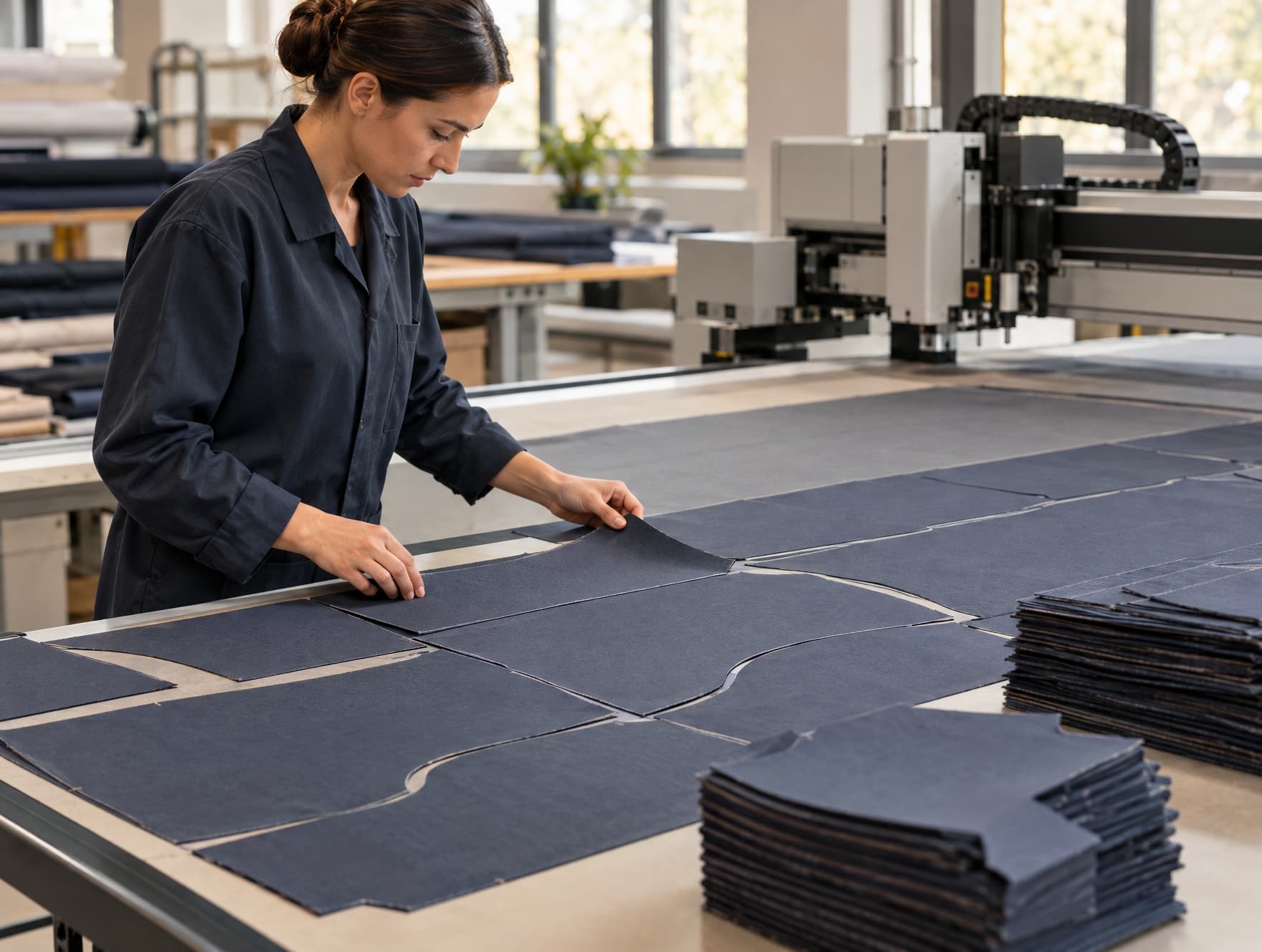
03
Cut panels are measured against the pattern and shade lots are segregated, so a single garment never combines panels from different dye batches.
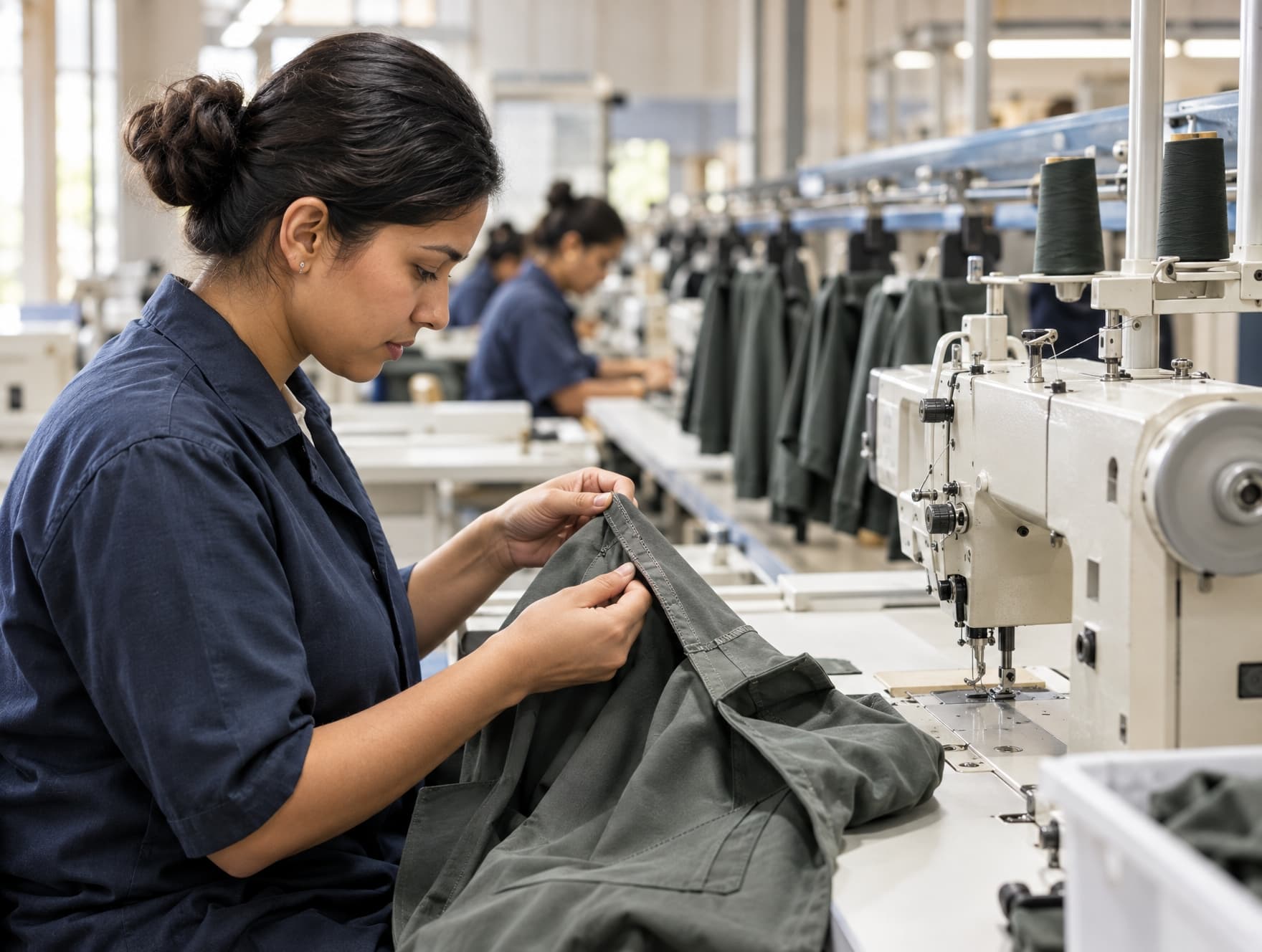
04
Defined operations are checked during production. A problem caught at the operation that caused it is corrected in minutes rather than by reworking a lot.
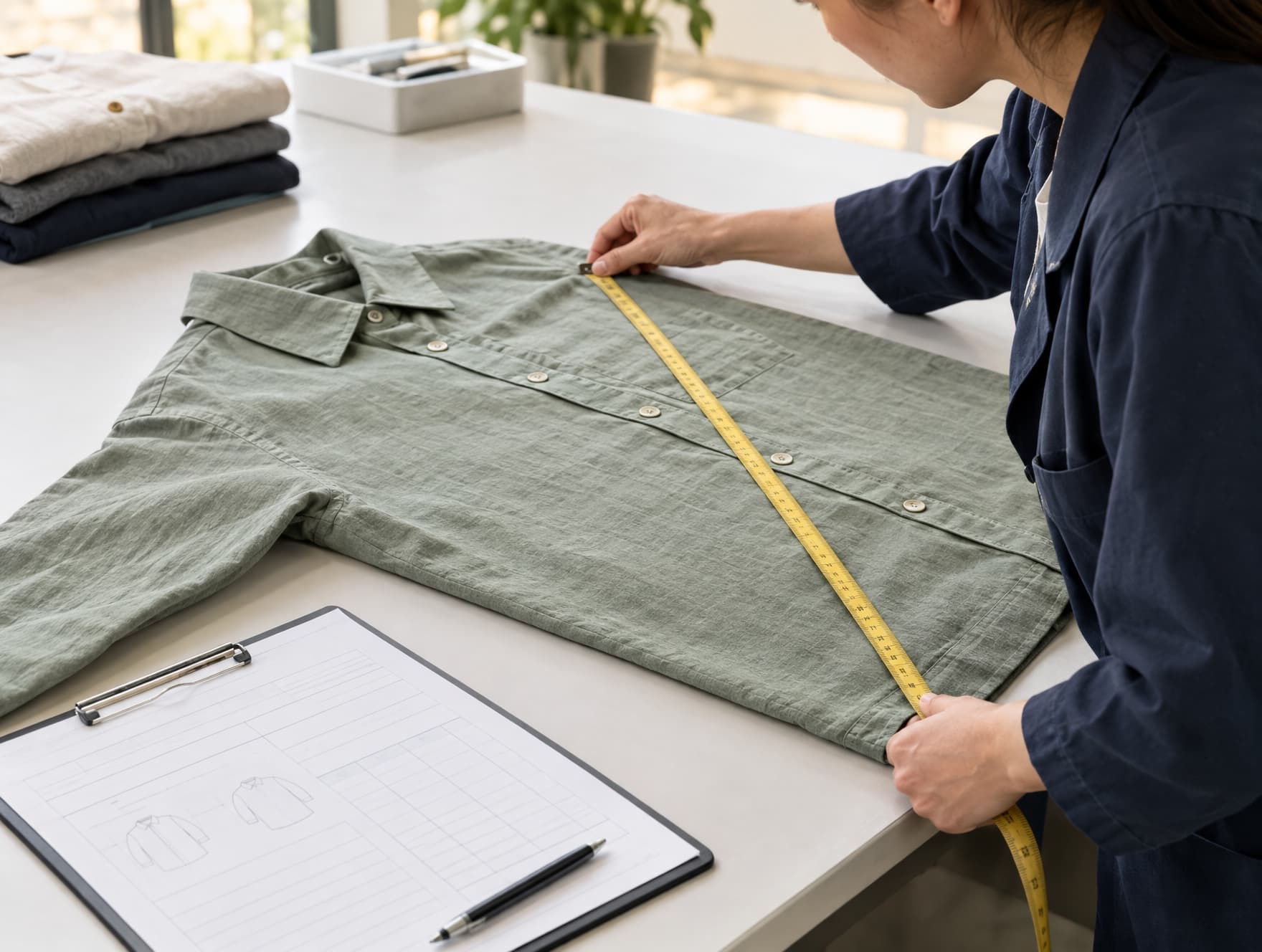
05
Garments are measured against the chart and its tolerances during the run, not only at the end.
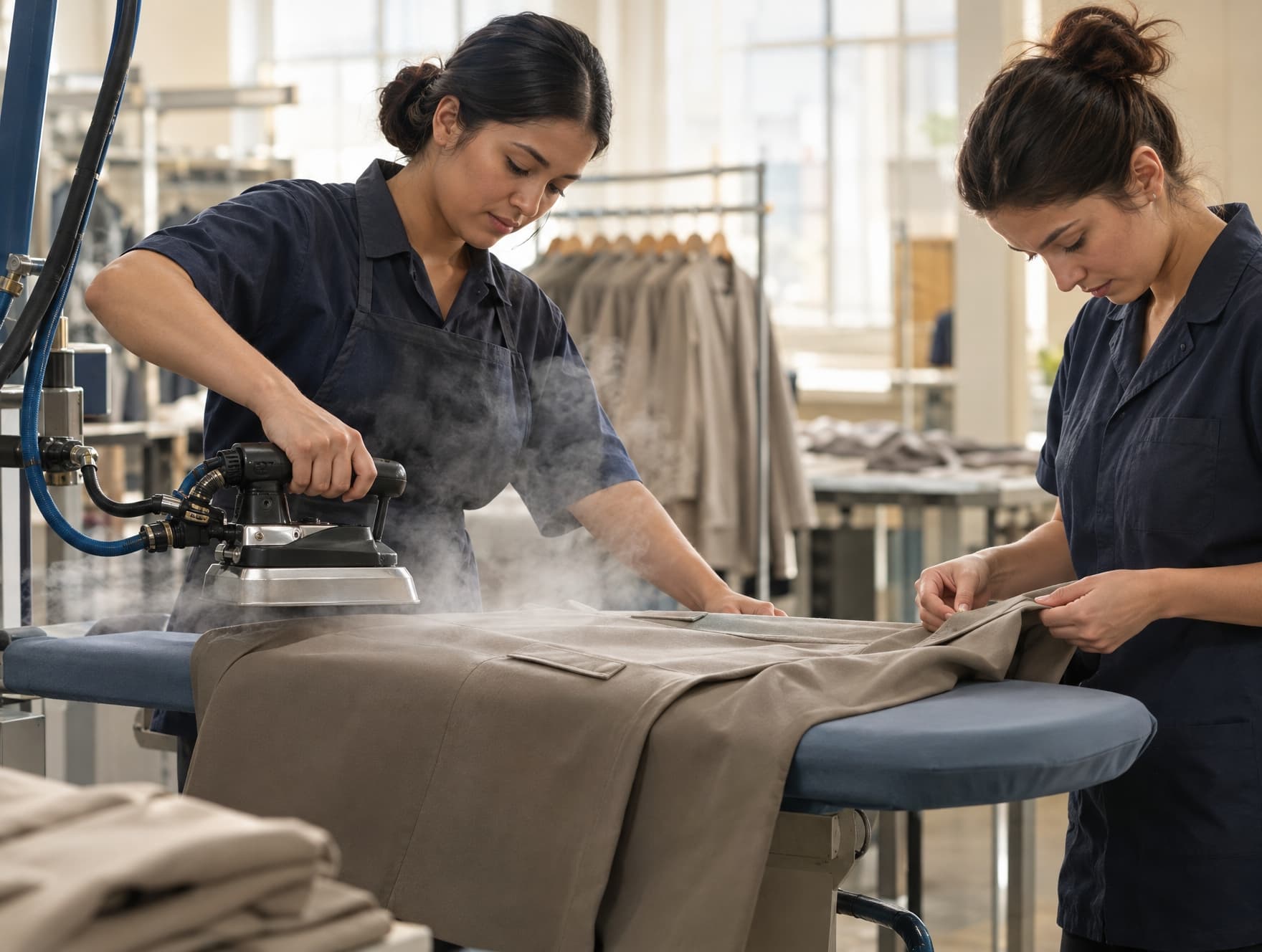
06
Trimming, pressing, decoration placement and label positioning are checked after assembly is complete.
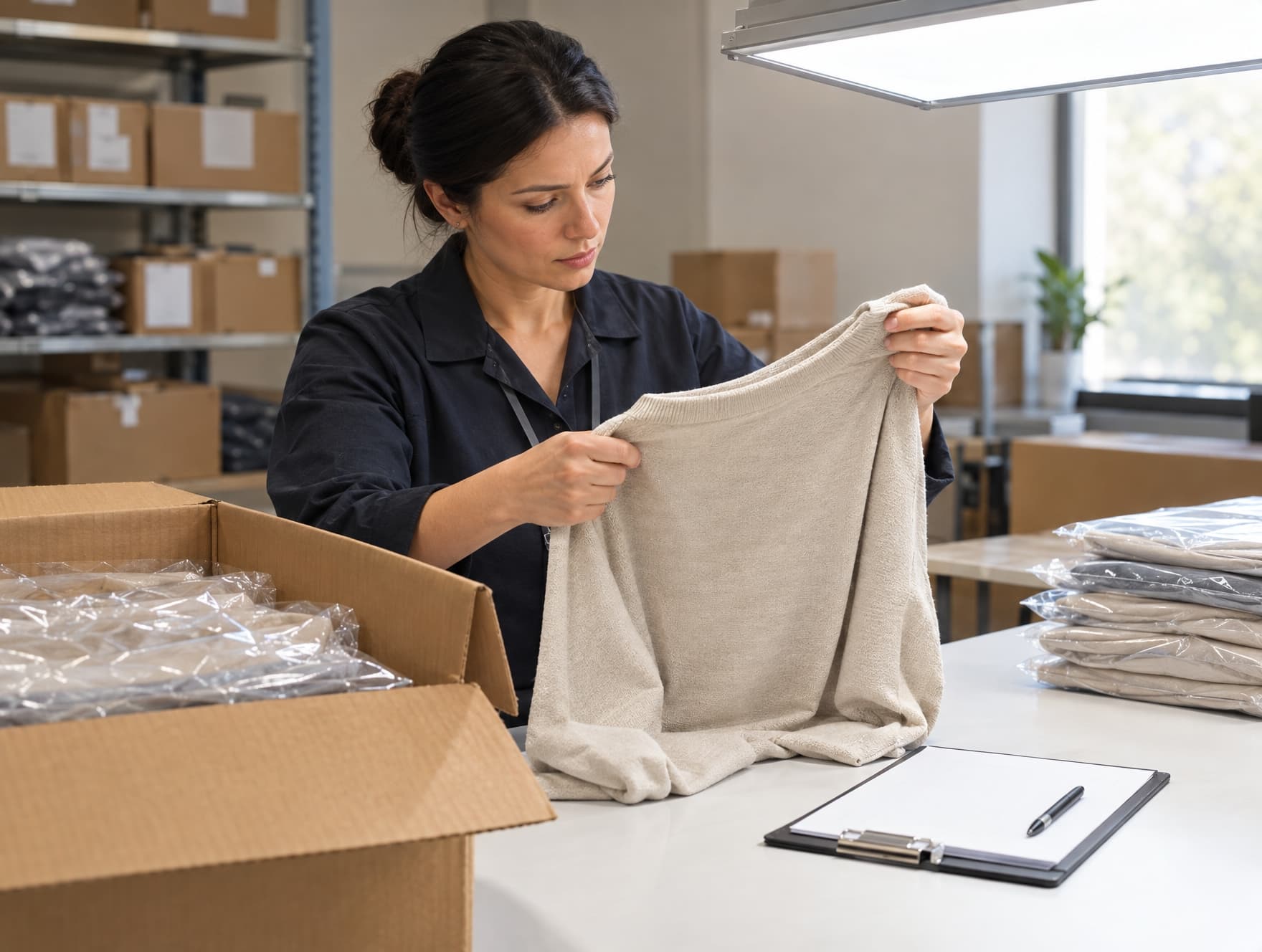
07
Finished goods are inspected against the sampling plan and acceptance limits agreed for your order.

08
Cartons are checked for assortment, quantity, marking and ticketing before shipment, because a mispacked carton costs more to fix than it costs to prevent.
Controls
Fourteen controls that run across a project. Each is a procedure rather than a promise, and each is agreed for your order.
Production runs against a written specification and an approved pre production sample, both version controlled. Without a fixed reference, an inspection is an opinion.
Incoming fabric and trims are checked against specification before cutting. A four point fabric inspection identifies faults while they still cost metres rather than garments.
Written approval of a pre production sample is what releases bulk. Nothing is released against a proto or a fit sample.
Defined operations are checked during the run so a fault is corrected at the machine that caused it rather than across a finished lot.
Every point of measure carries a tolerance agreed with you. A chart without tolerances cannot be inspected against, because no garment is made to an exact figure.
Stitching, seam appearance, trimming, pressing and general presentation are assessed against the approved sample.
Shade is checked against an approved physical standard under an agreed light source, and shade lots are segregated so a garment never mixes batches.
Placement, dimension, colour and adhesion are checked against the approved strike off or sew out, with wash testing where durability matters.
Finished goods are inspected against the sampling plan and acceptance limits agreed for your order.
Cartons are audited for assortment, quantity, marking and ticketing before shipment.
Buyer appointed inspectors and inspection agencies are supported, with schedule time allowed for inspection and any rework arising.
Composition, fastness, dimensional stability and restricted substance testing are coordinated with accredited laboratories. We do not issue our own test results.
A finding is recorded with its cause and the correction applied, then re inspected. A defect that is fixed without recording the cause returns on the next order.
Inspection records, measurement audits and approval records are retained per order and available to you on request.
Risk reversal
A guarantee is only useful when it is specific about what it covers, so this one is scoped to a single stage rather than the whole order.
Bulk production does not begin until you approve the pre production sample against the written specification, exactly as described in the Sample approval control above. If that pre production sample does not match what you approved, in material, construction or measurements, we correct it and send a revised sample at no additional charge.
This is a statement of what already happens under the Corrective action control: a finding is recorded with its cause, the correction is applied, and the result is re inspected before it goes to you. Stating it as a guarantee means you do not have to take that on faith.
It covers the sample stage specifically, not a broader money back or delivery promise, because that is the one point in a new relationship where a mismatch can be corrected before any bulk material or production time is committed to your order.
Acceptance sampling
Explained because buyers are frequently asked to agree to a standard they have not had explained to them.
AQL, or acceptable quality limit, is a statistical sampling method. Rather than checking every unit in a lot, an inspector checks a sample drawn from it and uses the number of defects found to decide whether to accept or reject the whole lot.
Three things have to be agreed before it means anything: the inspection level, which sets how large the sample is; the acceptance limits, usually stated separately for critical, major and minor defects; and the defect classification itself, which decides what counts as which.
Those are commercial decisions rather than technical constants. Different buyers in different categories reasonably apply different limits, which is why this site does not publish one as a company standard.
Questions
We correct it and send a revised sample at no additional charge. The pre production sample is checked against the written specification you approved before it is sent to you, and bulk production does not begin until that sample is approved, so this covers the one stage where a mismatch can happen before any material is committed to your order.
AQL is a statistical sampling method used to decide whether to accept or reject a production lot based on an inspected sample rather than every unit. The inspection level and acceptance limits are commercial decisions that vary by buyer and product. We agree the standard for your order in writing rather than assuming one.
Yes. Third party inspection and buyer appointed quality agents are welcome. Tell us the inspection standard and the sampling plan you intend to apply so that the schedule allows time for inspection and, if needed, for rework before shipping.
An approved pre production sample and the signed specification become the reference for repeat orders. Reorders are checked against that reference rather than reinterpreted, which is what keeps a second run consistent with the first. Where a fabric or trim has changed availability, we tell you before production instead of substituting quietly.
We build labelling into the specification and apply exactly what you approve, including fibre content, care symbols, country of origin and identification details. Responsibility for confirming what your market and your product category legally require stays with you as the brand owner. We flag anything that looks inconsistent before production.
Tell us the inspection standard, the sampling plan and any testing your buyer requires. It is far easier to build them into the schedule than to add them afterwards.