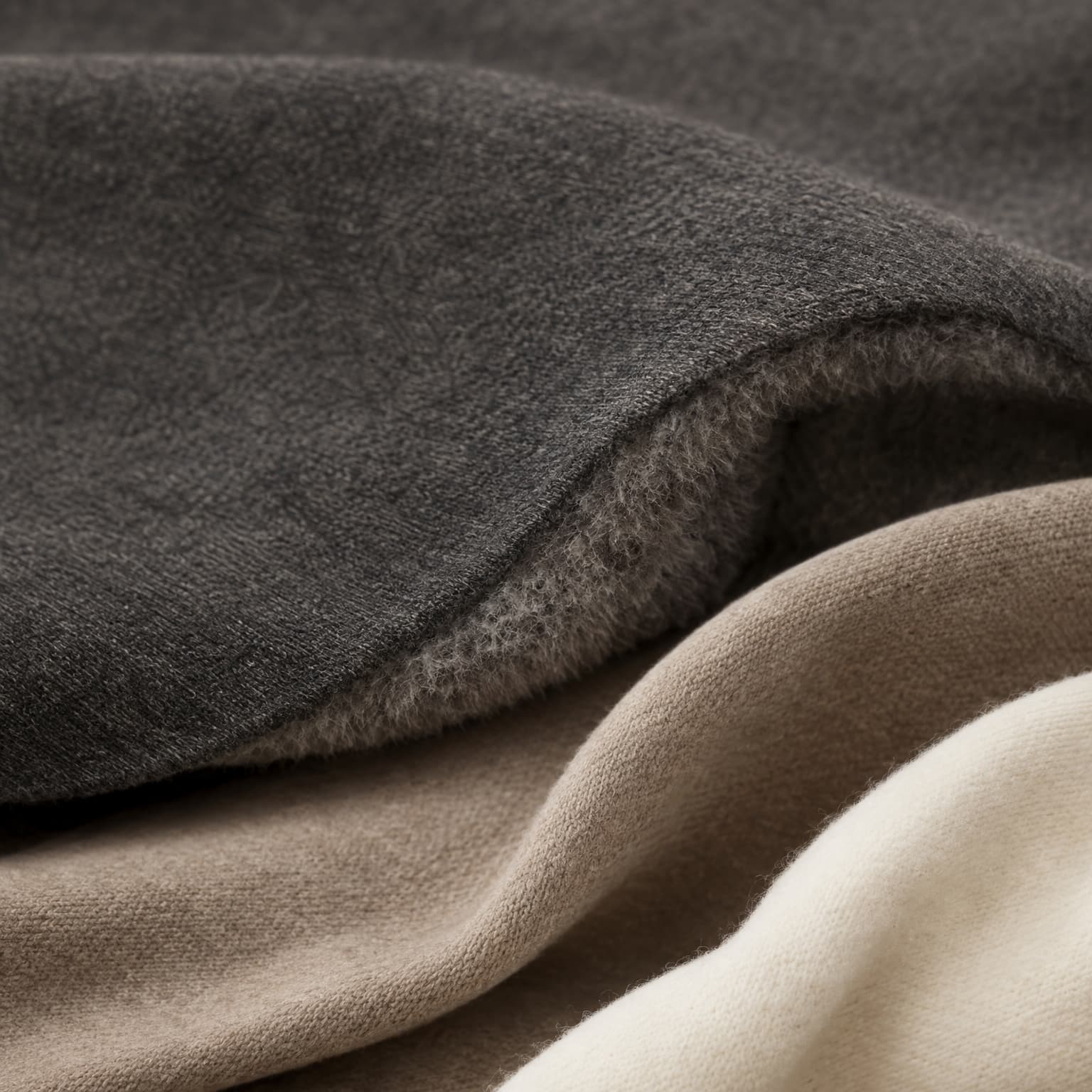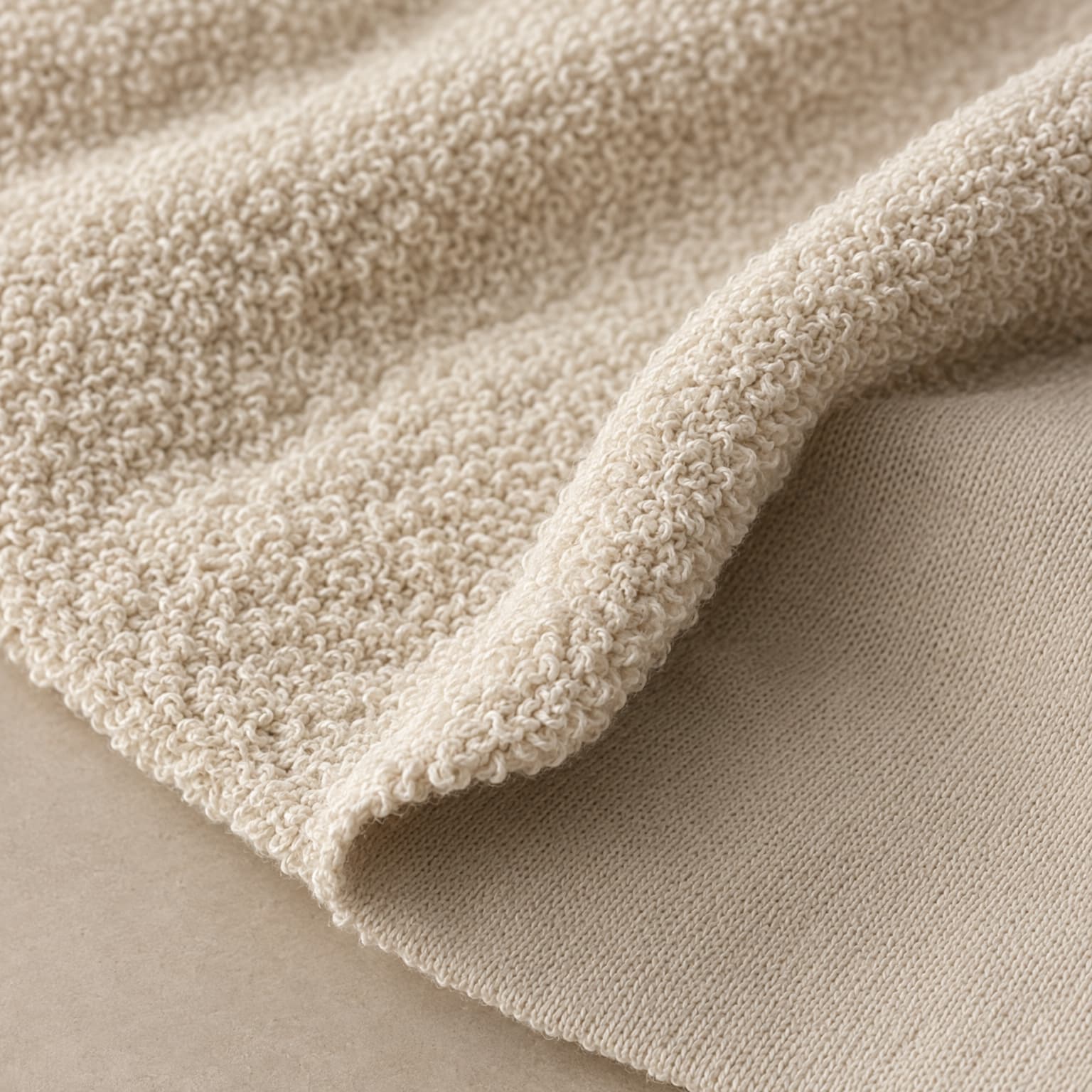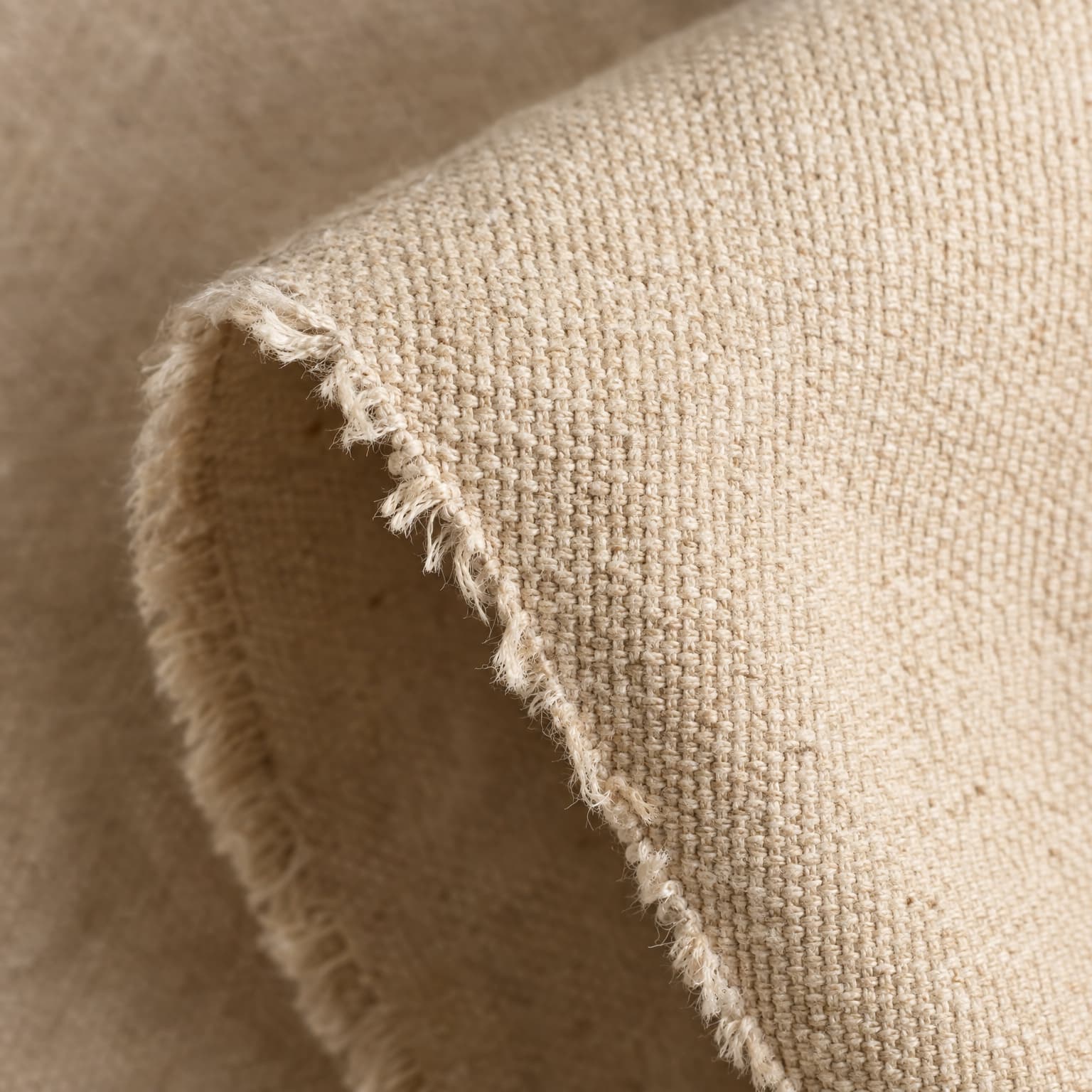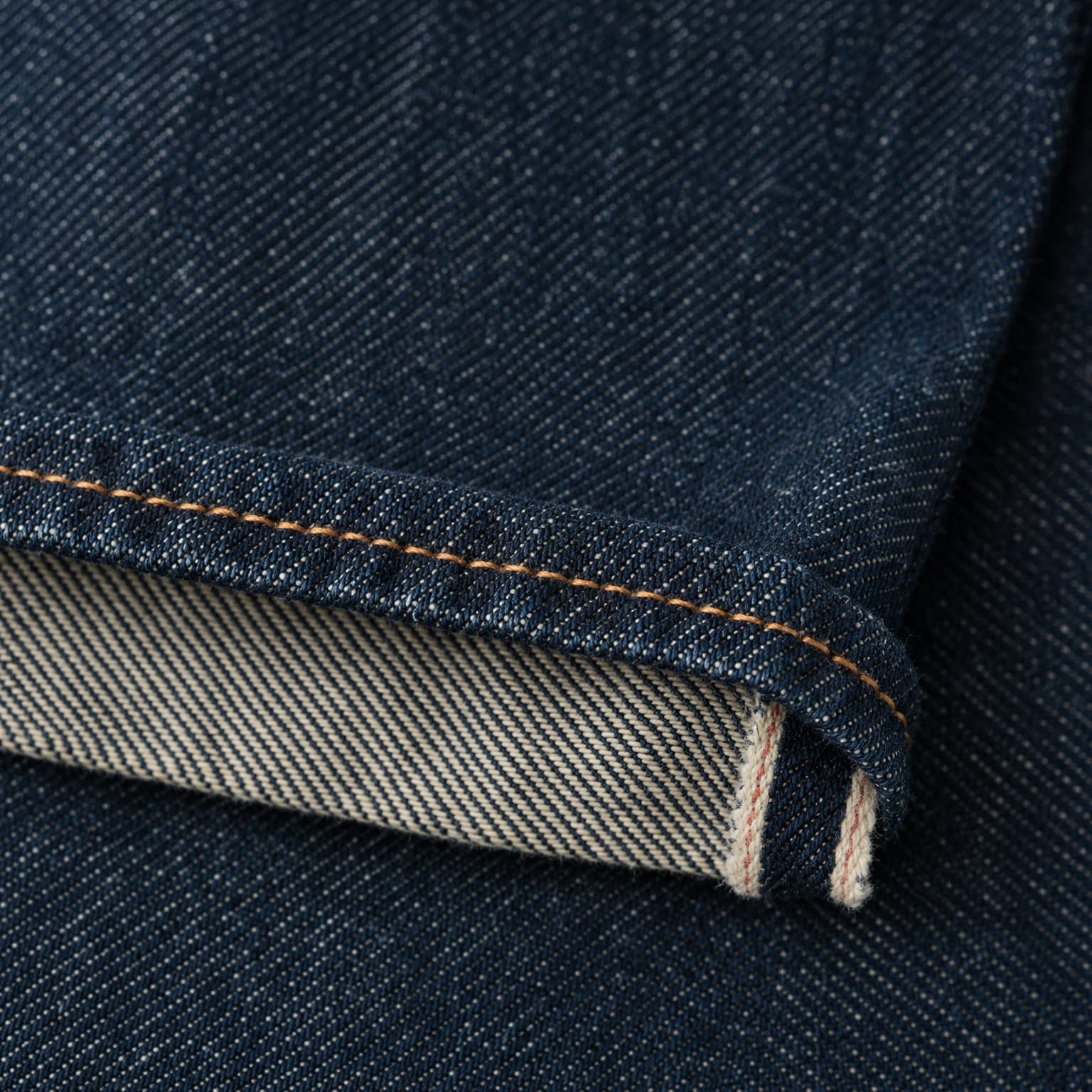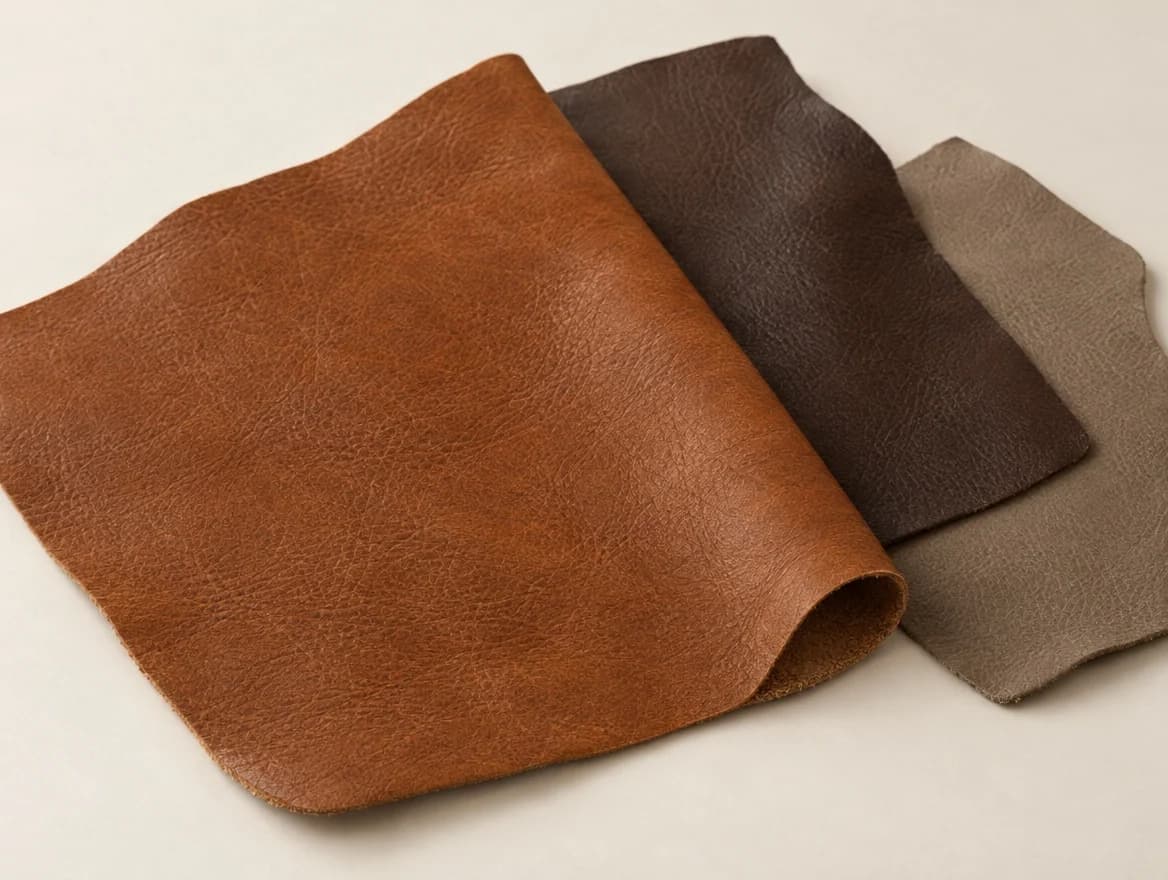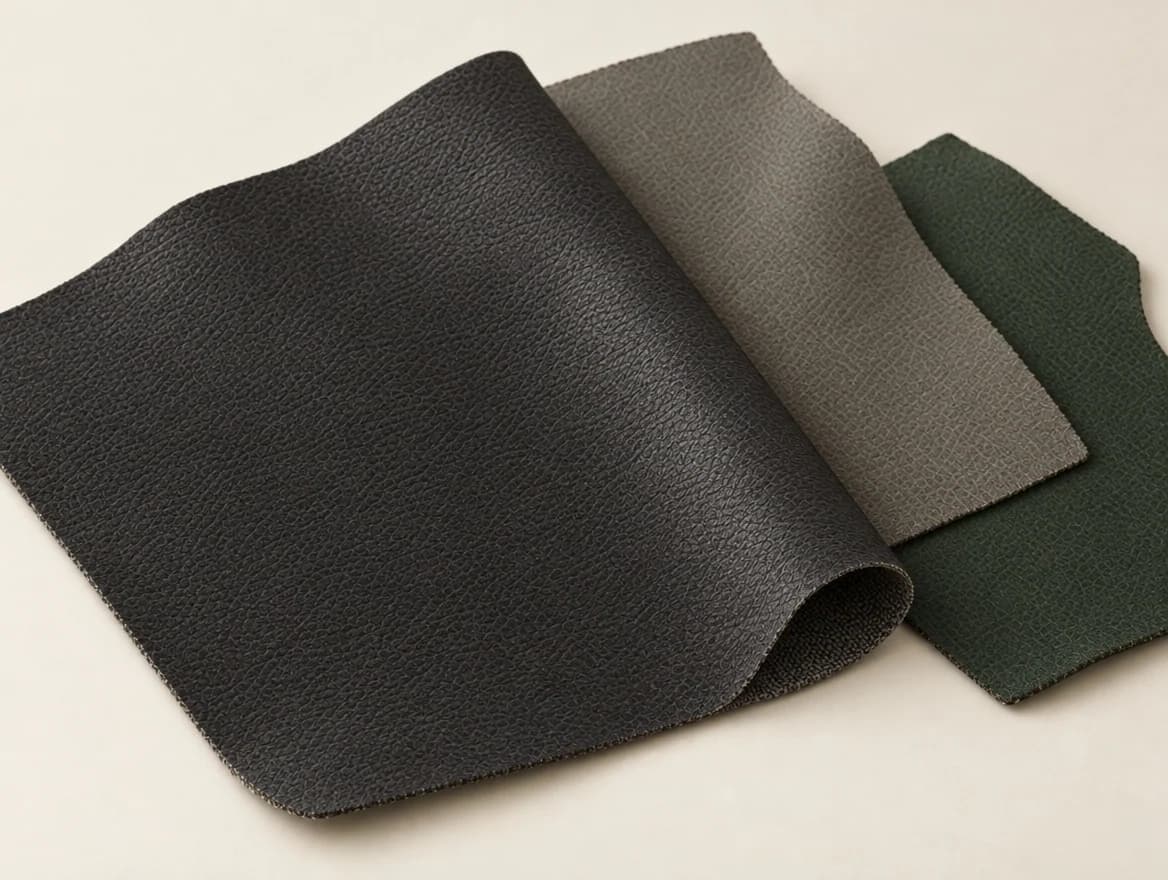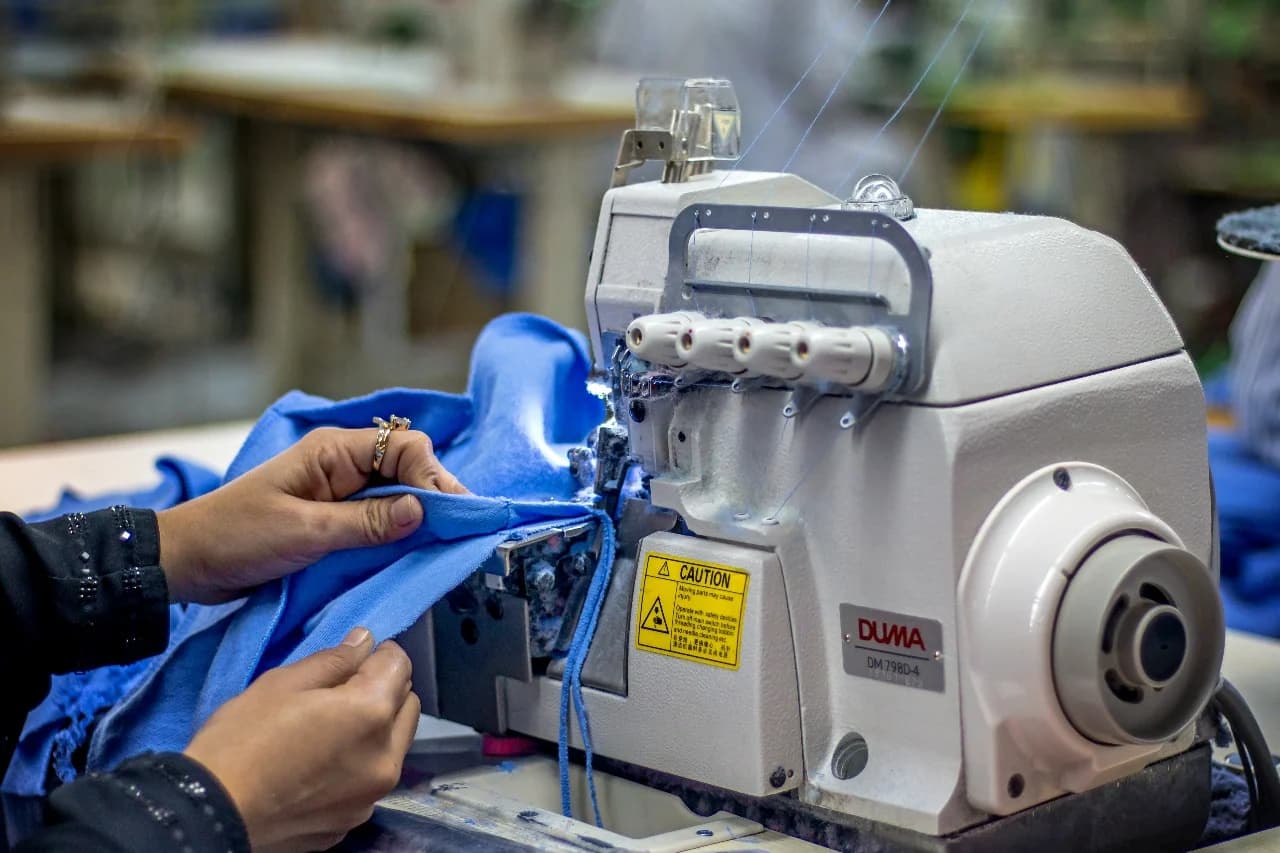
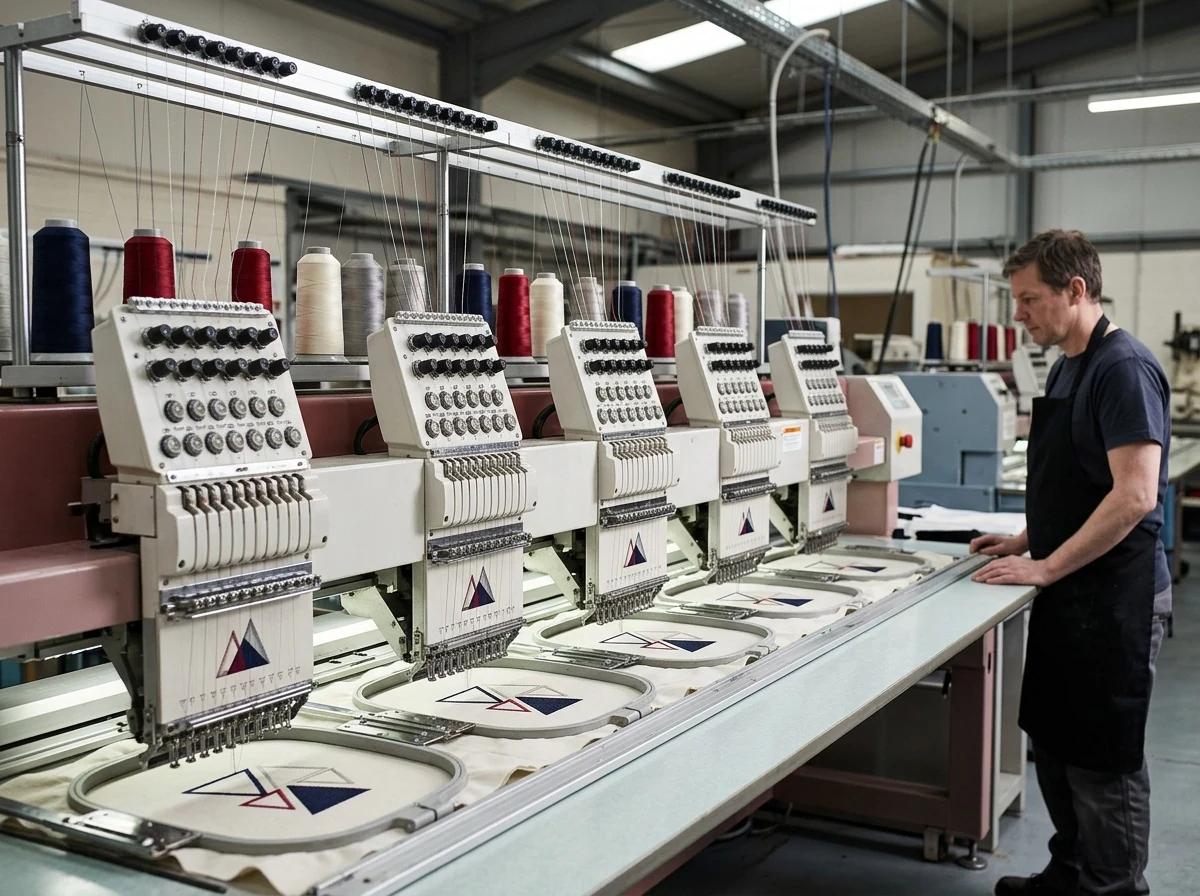
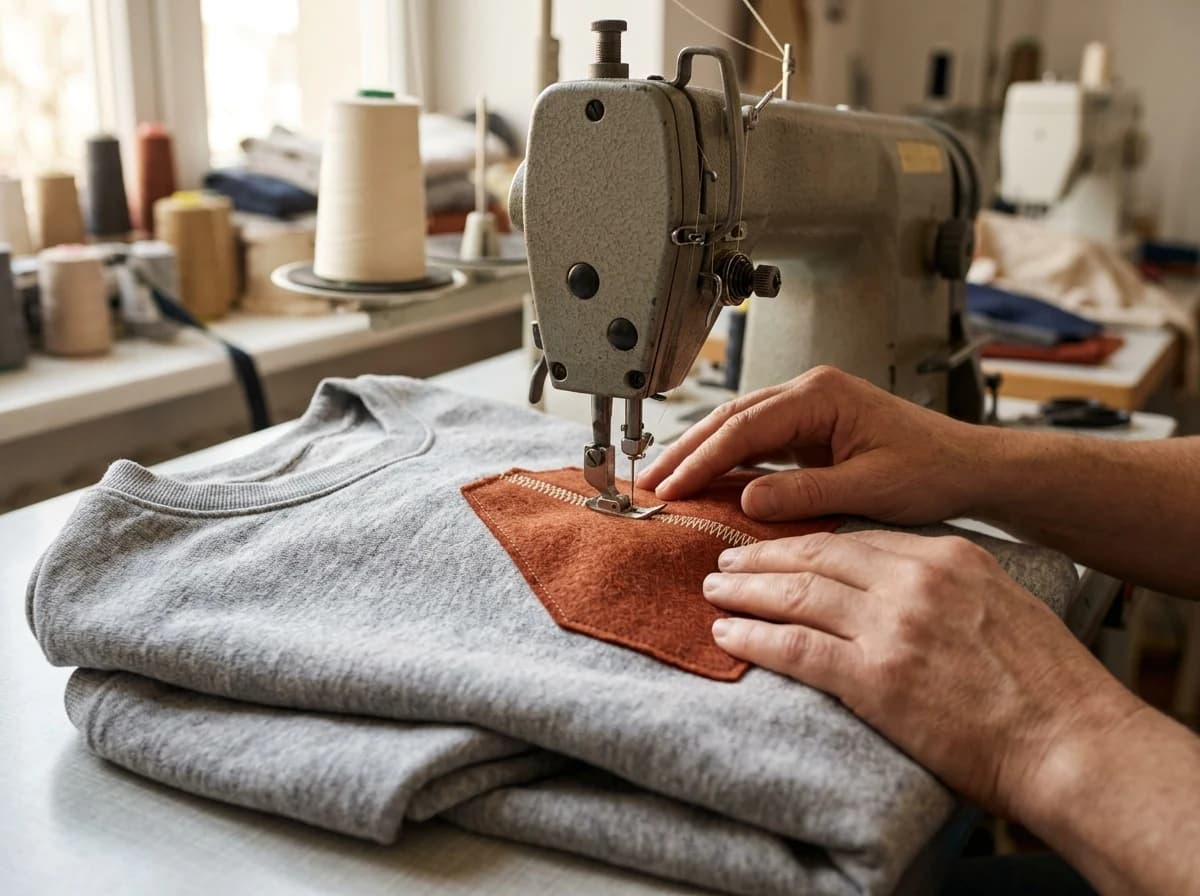
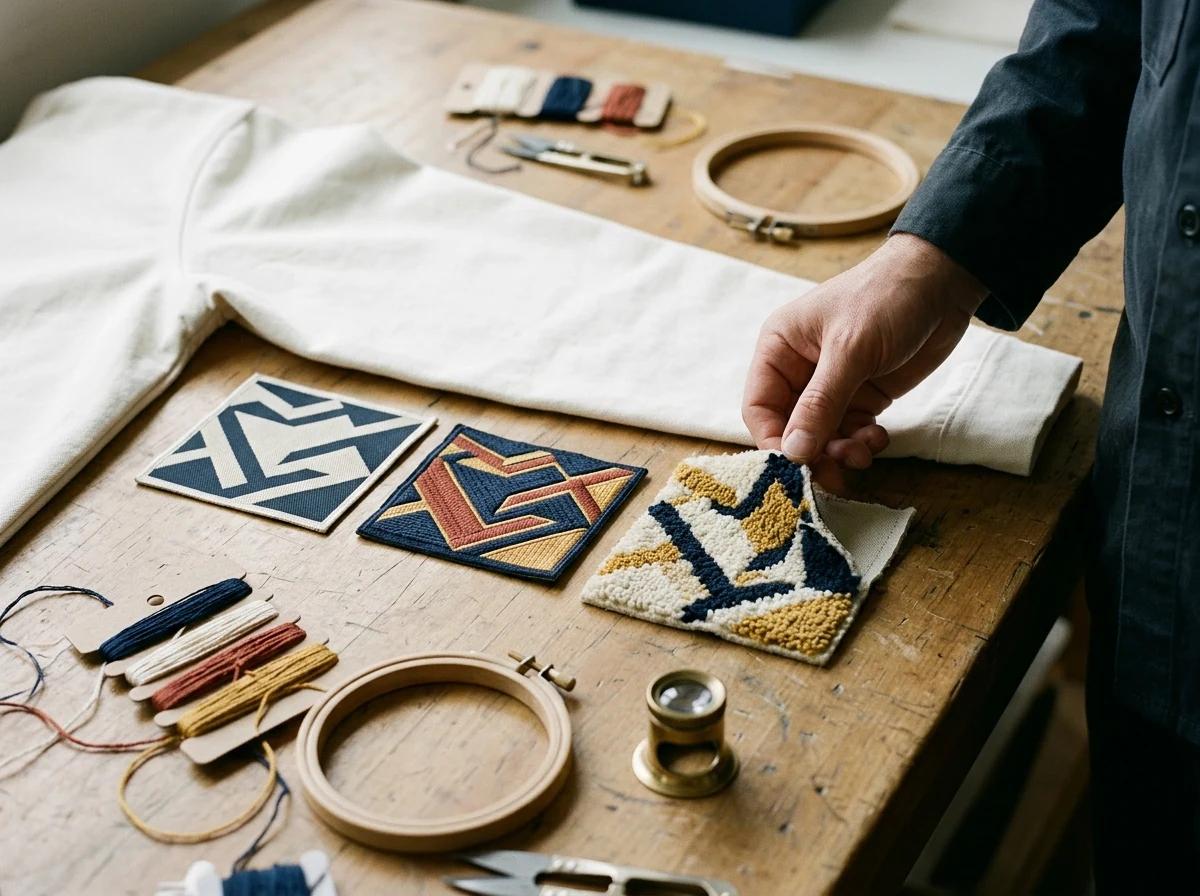
Large graphics
Supplier example- Method
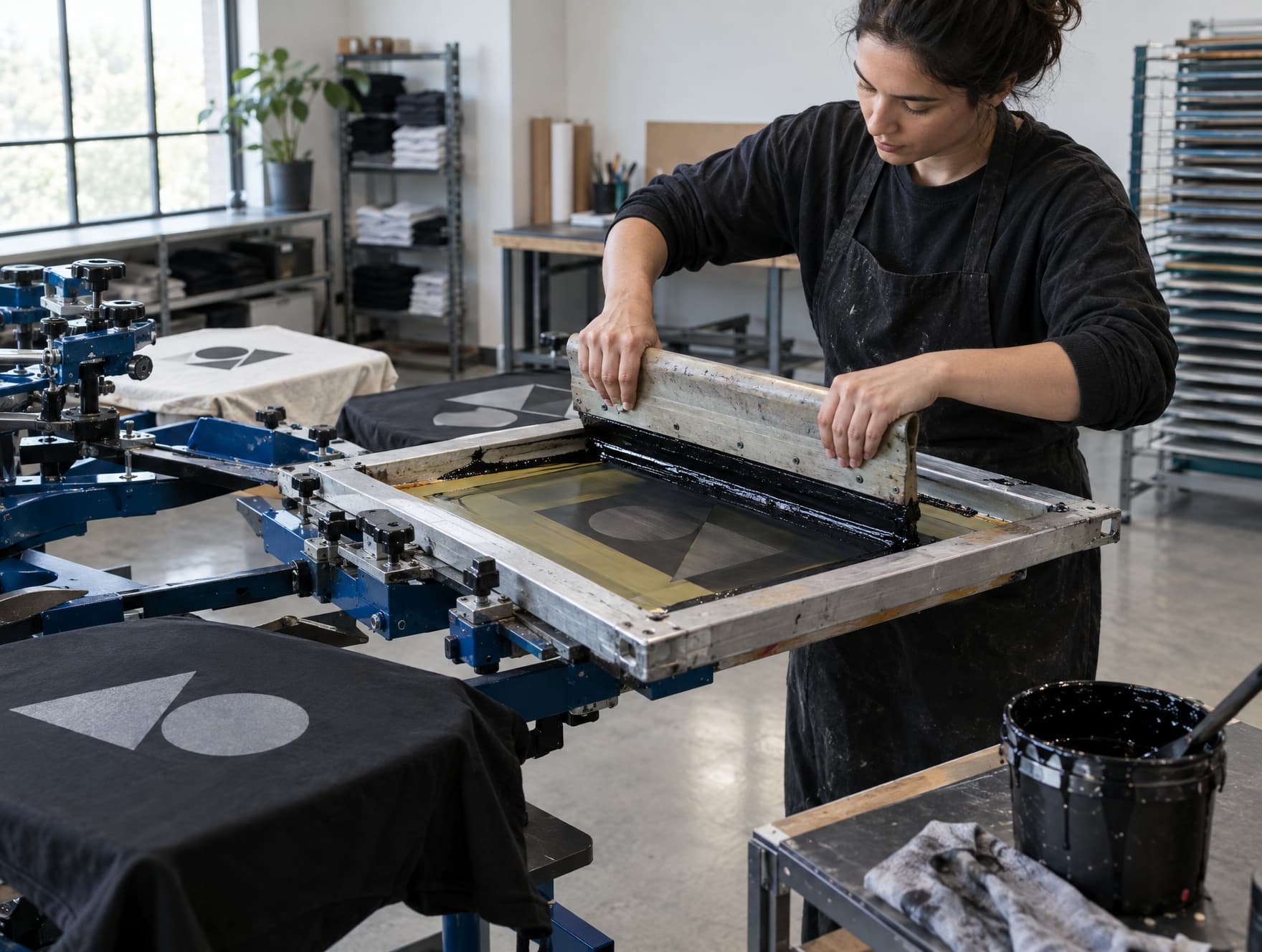
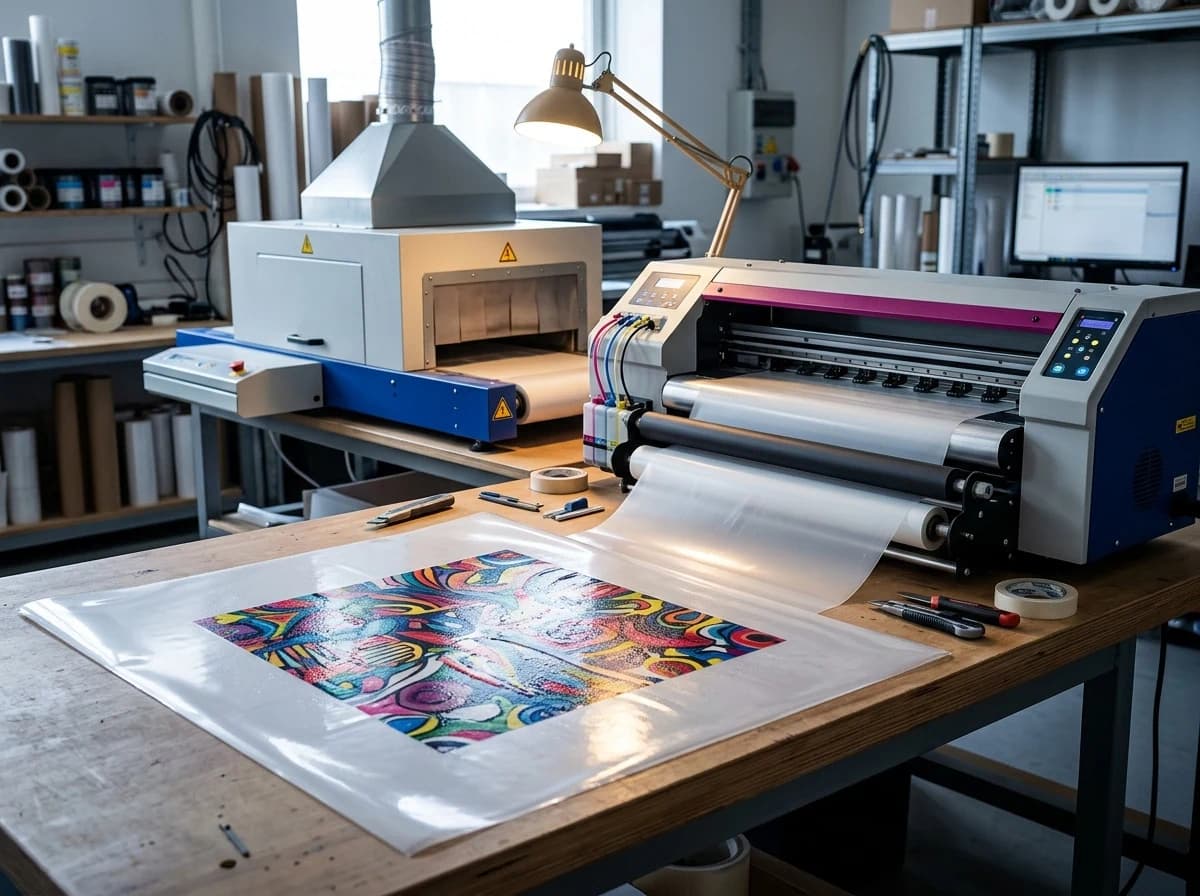
- Screen print, puff or DTF
- Trade-off
- A raised pile softens fine detail.
- Approve before bulk
- Prove on a strike off.
Loading page content
Product family
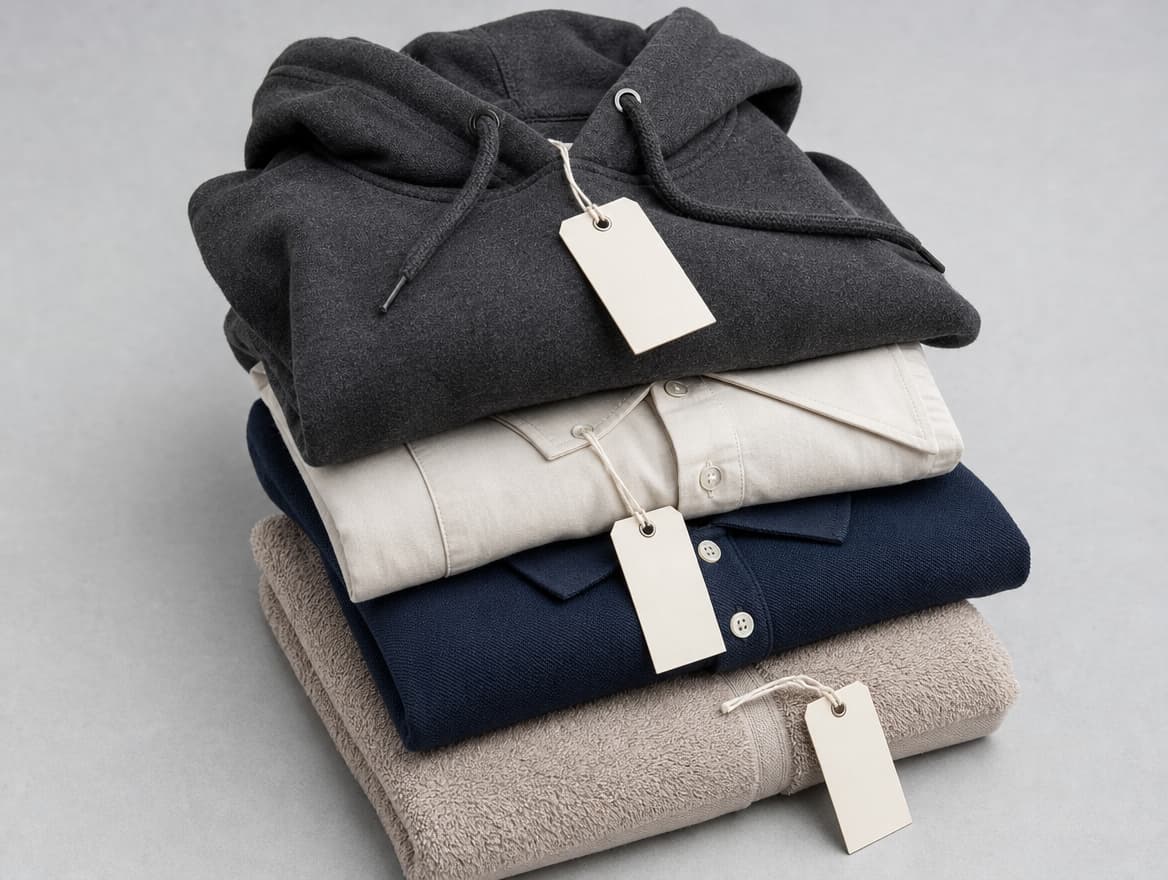
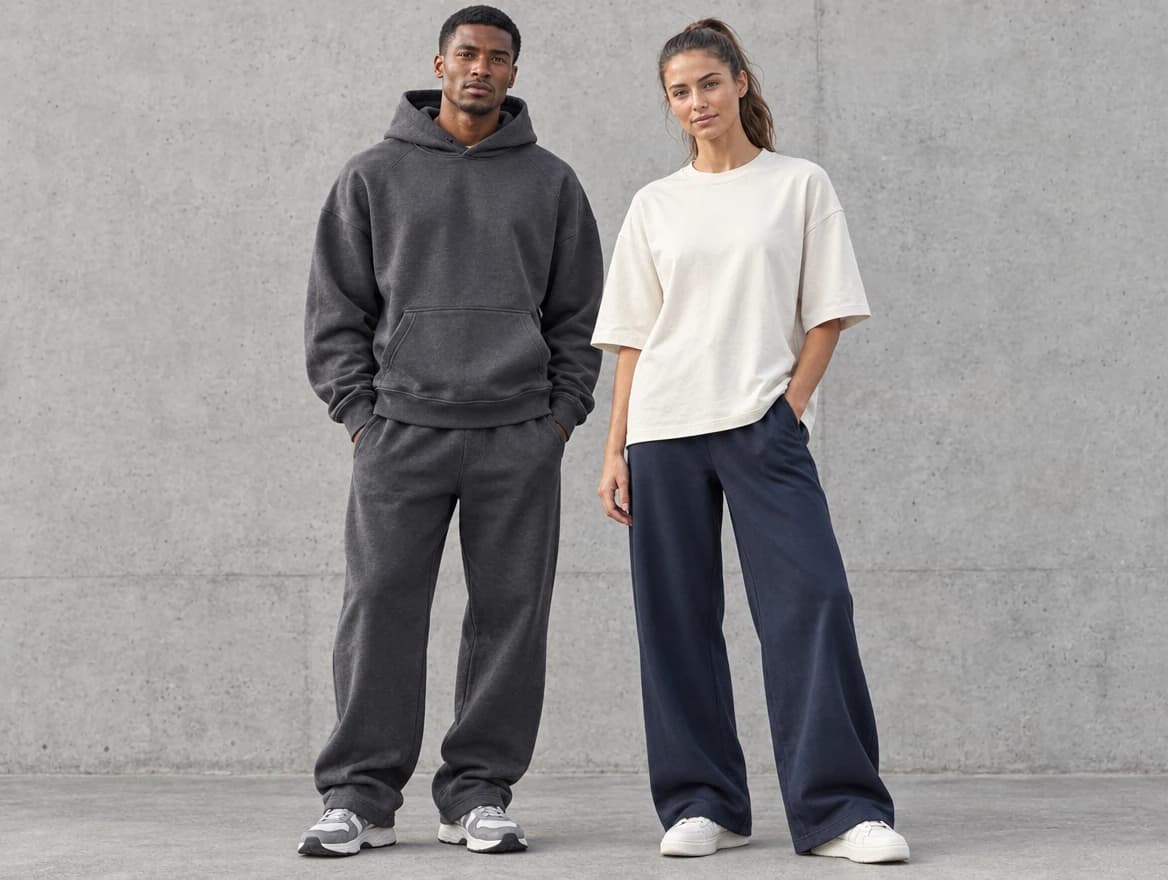
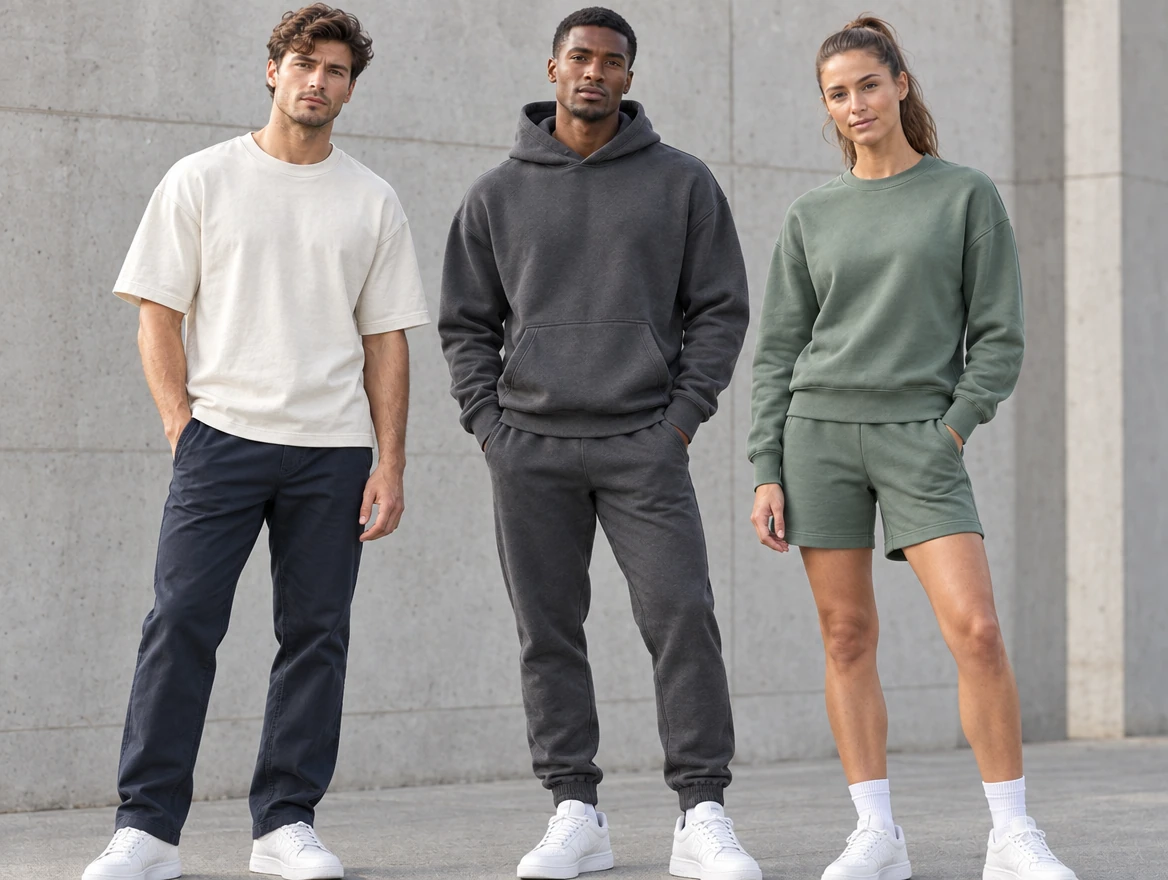
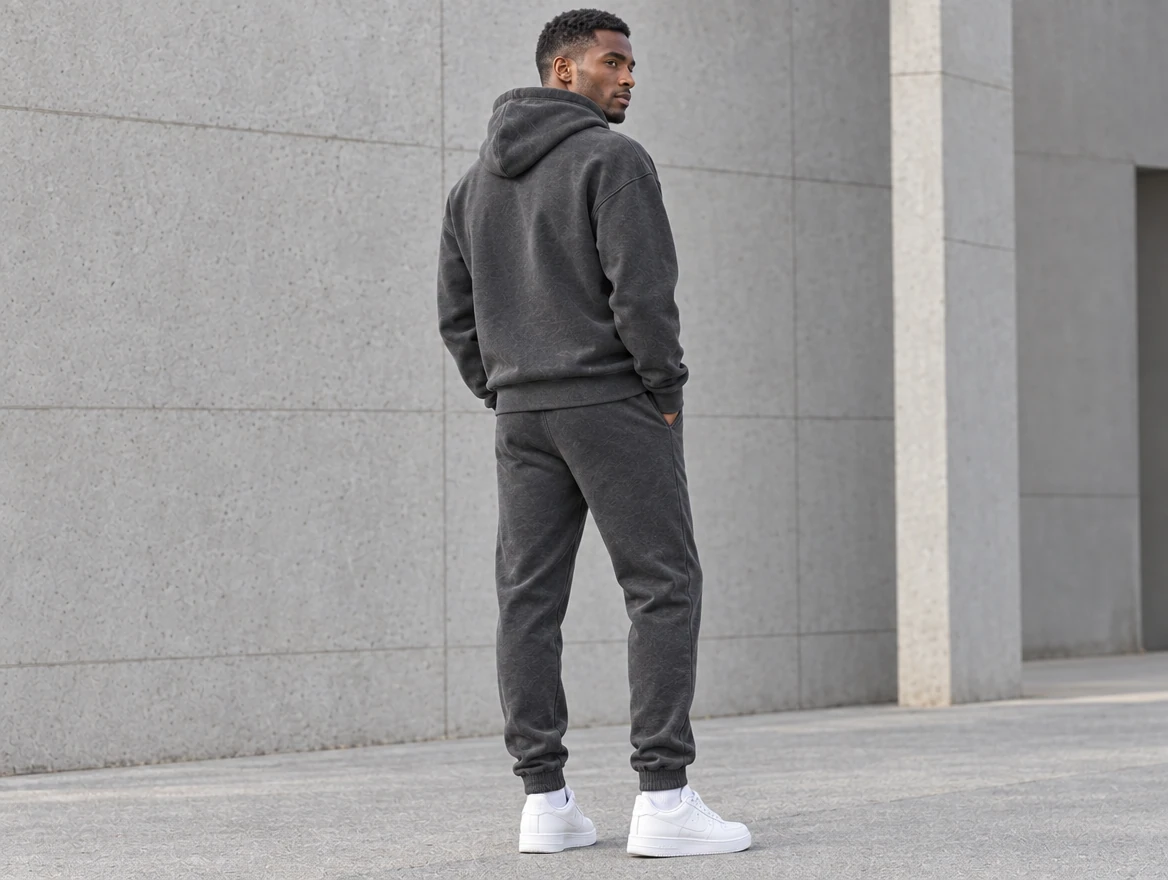
Heavyweight hoodies, oversized tees and boxy cut and sew pieces where fabric weight and finish carry the brand.
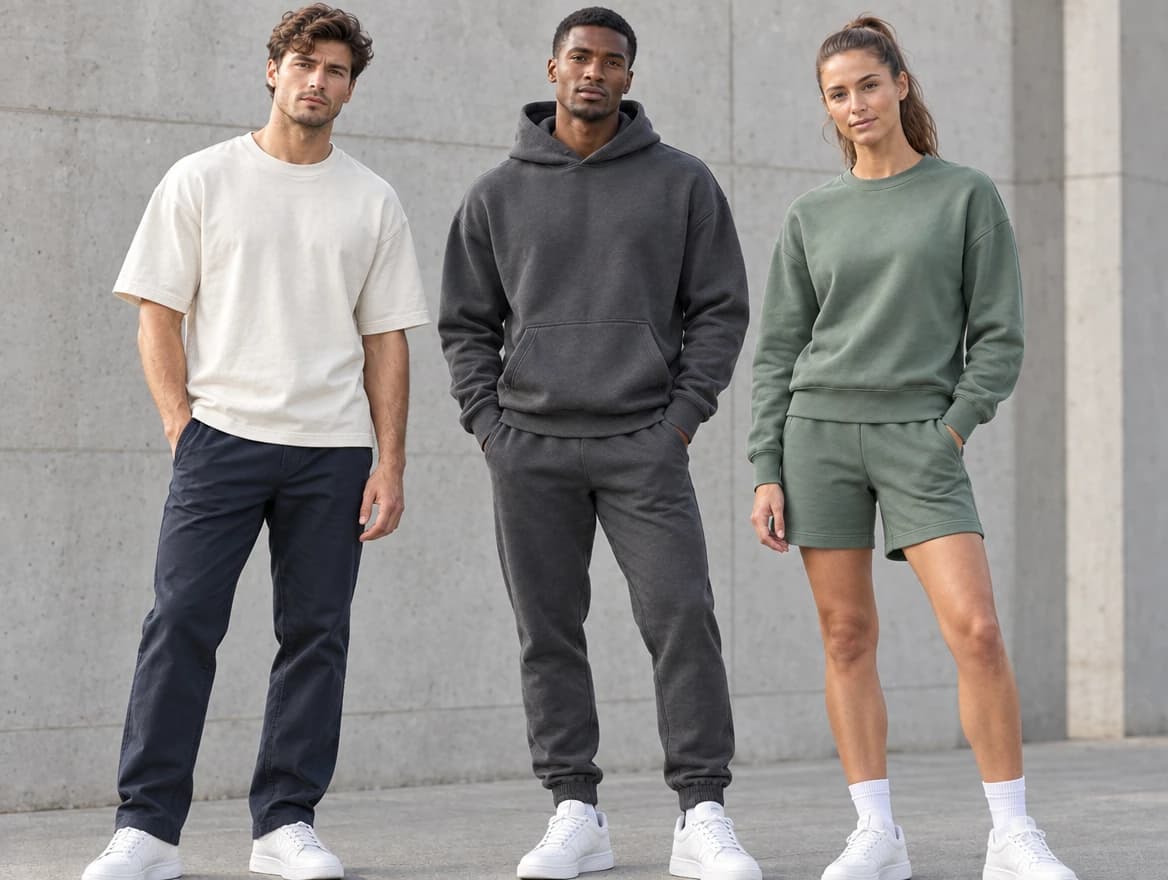
Streetwear is a construction category disguised as a style category. What separates a credible product from a printed blank is fabric weight, silhouette and finishing: the way a garment sits on the shoulders, whether it holds a boxy line, and whether the hem and cuff hold their shape after ten washes.
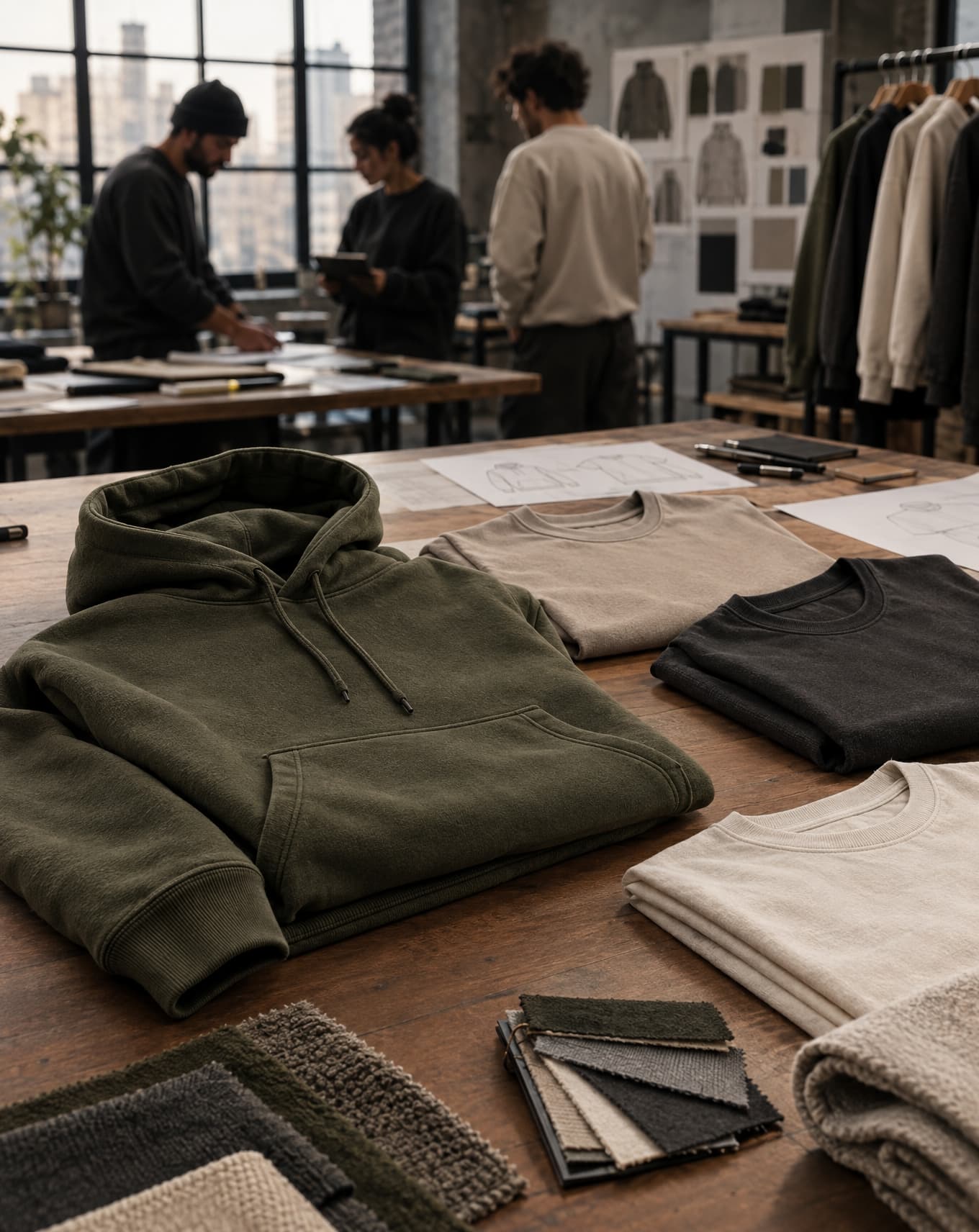
That means most streetwear projects are cut and sew from the start rather than decorated blanks. The pattern is drafted for the intended drop shoulder or boxy fit, and the fabric is chosen for weight rather than for cost per piece.
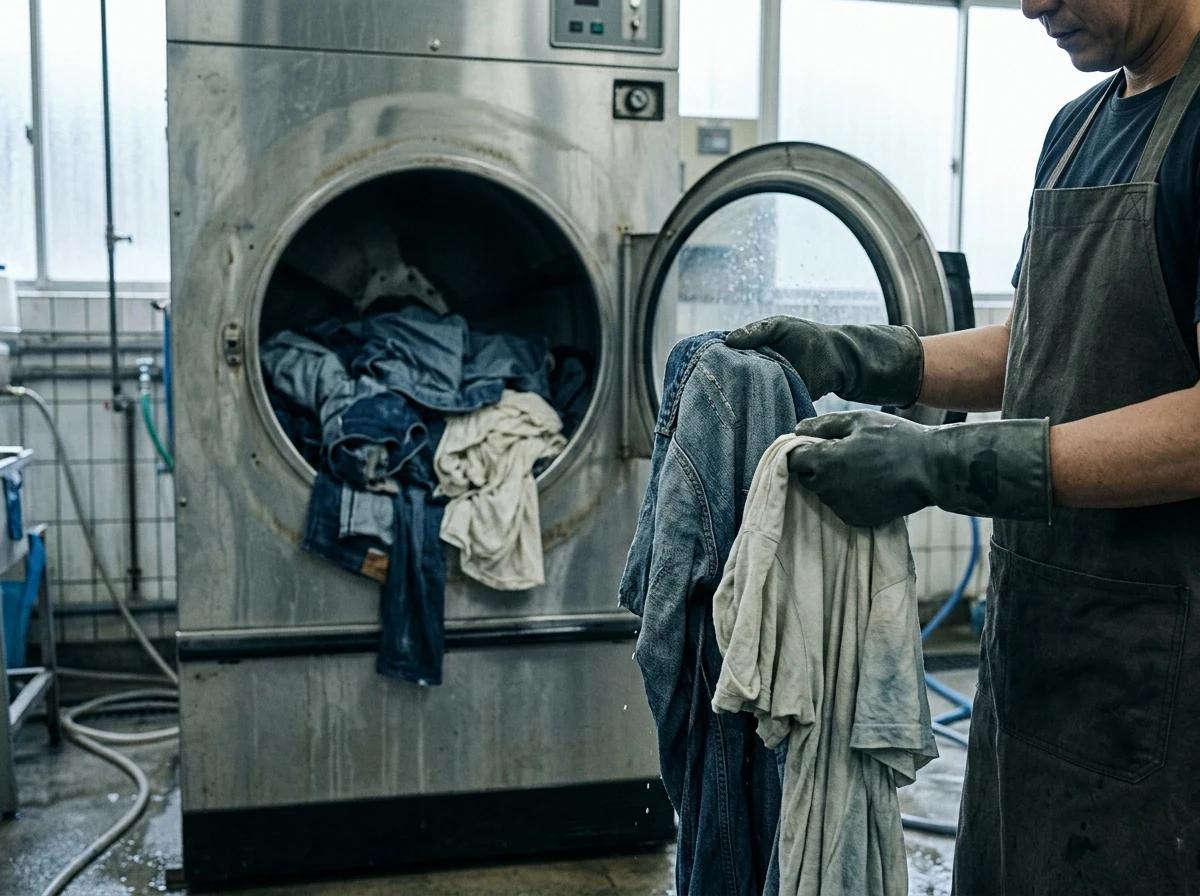
Garment washing is often part of the specification, because it sets the final handfeel and stabilises dimensions. When it is used, the wash standard is approved and retained so a second drop matches the first.
Product types
Representative products we manufacture in this category. Anything not listed can still be assessed on technical review.
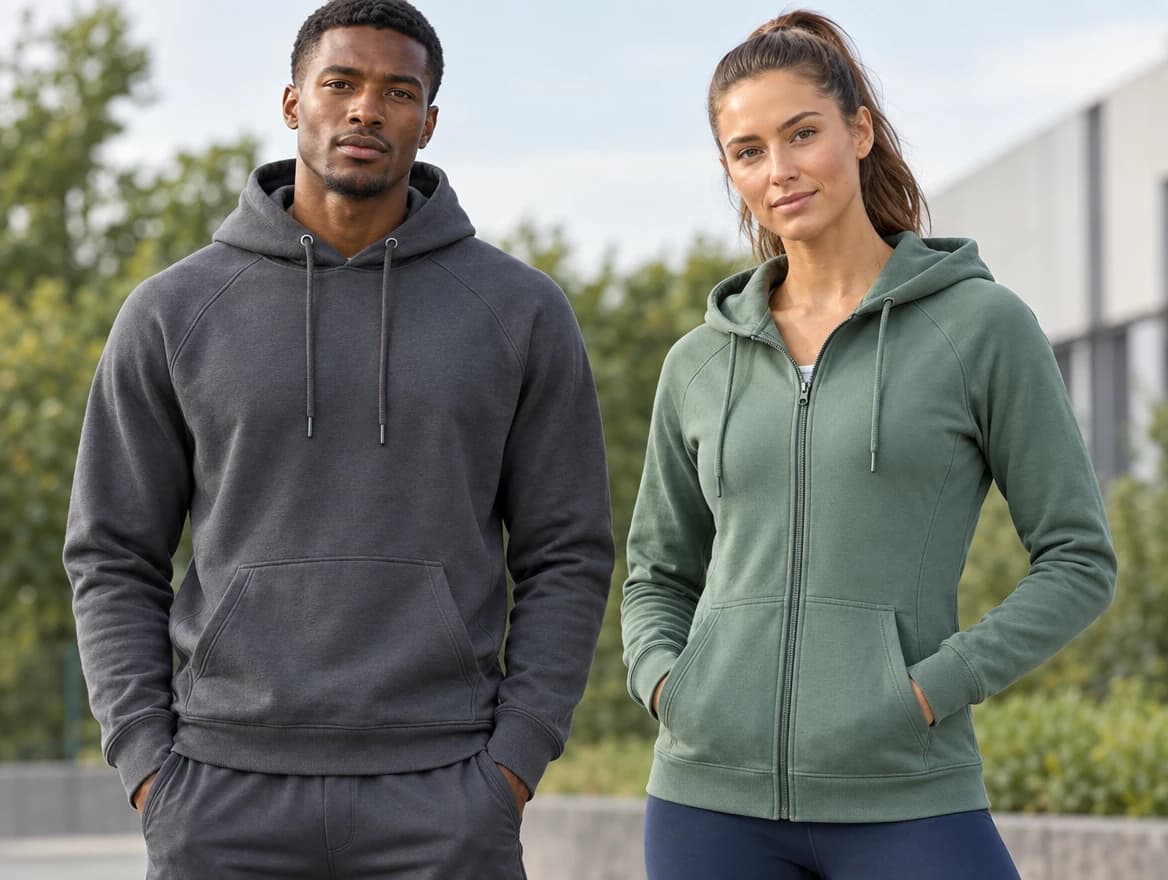
380 to 450 gsm fleece with double lined hoods and heavy ribbing.
Drop shoulder patterns cut for volume rather than sized up from a standard block.
Wide body, short length constructions with structured ribbing.
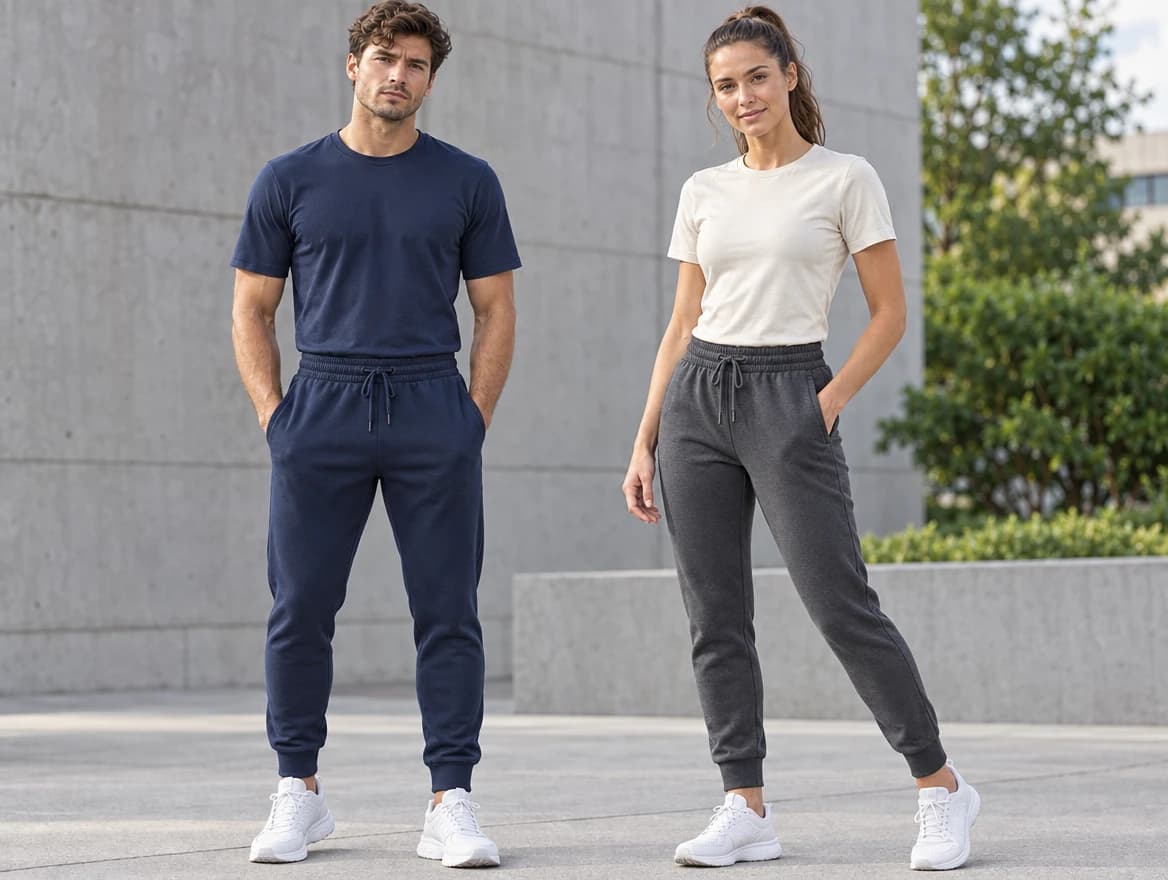
Terry or fleece bottoms with drawcord, elastic and pocket detailing.
Coach jackets, work jackets and overshirts in canvas, twill or heavy knit.
Structured and unstructured caps with embroidery or applied patches.
Specification
Weight ranges are typical for this category. The finished weight of your fabric is confirmed on the approved sample rather than guaranteed to a figure.
Ranges are typical. The exact specification is confirmed on your approved sample before production.
Component-level guidance for streetwear. Any ranges are indicative sourcing references, not guaranteed order specifications. Different components can need different fabrics, weights and units; the selected materials, construction and finished measurements are confirmed on the approved sample.
| Component | Weight, unit or setting | Construction choices | Check on the sample |
|---|---|---|---|
| Heavyweight fleeceIndustry guidance | 380 to 450 gsm typical range. | Double lined hoods, heavy 2x2 rib. | Pilling. |
| TerryIndustry guidance | 300 to 360 gsm typical range. | Garment washed finishing. | Shrinkage. |
| Jacket canvasIndustry guidance | 280 to 400 gsm typical range. | Contrast stitching. | Seam strength. |
Decoration
Decoration is matched to the fabric and the artwork rather than applied by default. Each method links to its own page with limits stated.
Which method suits each placement on streetwear, its trade-offs and what to approve before bulk. Compatibility is checked against the actual fabric, stretch, coating and heat tolerance; approval on one component does not establish suitability on another.
Materials
Composition, weight guidance and decoration compatibility for each fabric are on its own page.
What each part of streetwear is usually made from, why, where it falls short and what to check. This is industry guidance, not a TextileWays specification: the fabric and components for your order are confirmed on technical review.
Ordering
Neither figure is published as a universal number, because neither one is true across every specification.
MOQ depends on material availability, colour count, construction, decoration and packaging. Cut and sew streetwear can begin from approximately 50 pieces per style following technical review, though garment washing and custom fabric weights raise the practical minimum because a wash recipe is developed per style.
Silhouette is confirmed on a proto sample before fabric is committed, since fit is the defining feature of the category. Where garment washing is specified, an approved wash standard garment is retained by both parties.
Detailed product guidance
Materials, manufacturing routes and buying considerationsStreetwear is a construction category disguised as a style category. What separates a credible product from a printed blank is fabric weight, silhouette and finishing: how a garment sits on the shoulders, whether it holds a boxy line, and how it feels after washing.
The pattern is drafted for the drop shoulder or boxy line you want, and the fabric is chosen for weight, so the garment holds its shape when worn and washed.
Cut and sew pieces give you a silhouette no one else has. We develop the pattern with you, then confirm the fit on a sample before bulk.
Weight is the first thing a streetwear customer notices when they pick up a hoodie. Heavier fabric drapes differently and signals quality before any label is read.
Heavyweight terry and fleece give the structured, boxy fit that streetwear is known for. We agree the exact weight and finish on the sample so every drop feels the same.
Enzyme, stone and acid style washes change how a garment looks and feels. We approve the wash on a sample and keep it as the standard for reorders.
A streetwear brand is built on drops. That needs a manufacturer who can repeat a fit and a wash precisely, so the second drop matches the first.
Your labels, trims, packaging and artwork go on the finished garment. Embroidery, puff print, screen print and appliqué are all options, subject to the fabric.
If you want to launch quickly, a developed heavyweight base style can be branded as your own (ODM, often called white label), with your fabric colour, labels and decoration.
Small drops are a normal way to test a design. Approximately 50 pieces per style is possible after technical review, with larger runs available as a drop sells.
You approve a fit sample and a pre production sample before bulk is cut, so the drop you announce is the drop you receive.
We sign an NDA before you share artwork or patterns.
Questions
Answers relevant to this product family. The full list covers ordering, sampling, materials, decoration, compliance and logistics.
Minimum order quantity depends on material availability, colour count, construction, decoration and packaging. Projects can begin from approximately 50 pieces per style following technical review. Where a fabric has to be knitted or dyed specifically for a project, the practical minimum is set by the mill rather than by us, and we tell you that before you commit.
Sampling normally runs in stages: a proto sample to confirm construction, a fit sample against your measurement chart, and a pre production sample that fixes fabric, colour, decoration, labelling and packaging. Each stage needs written approval before the next one starts. Sample charges and courier costs are quoted before work begins.
It depends on the fabric, the artwork and the quantity. Screen printing suits solid colour artwork at volume. DTG and DTF suit detailed or low volume artwork. Sublimation works on polyester rich fabrics. Embroidery suits logos and durable branding. We confirm the method against your artwork and fabric during technical review rather than applying one method to everything.
An approved pre production sample and the signed specification become the reference for repeat orders. Reorders are checked against that reference rather than reinterpreted, which is what keeps a second run consistent with the first. Where a fabric or trim has changed availability, we tell you before production instead of substituting quietly.
Pick a design as your starting point. Colours, fabric and branding are set in the quote.
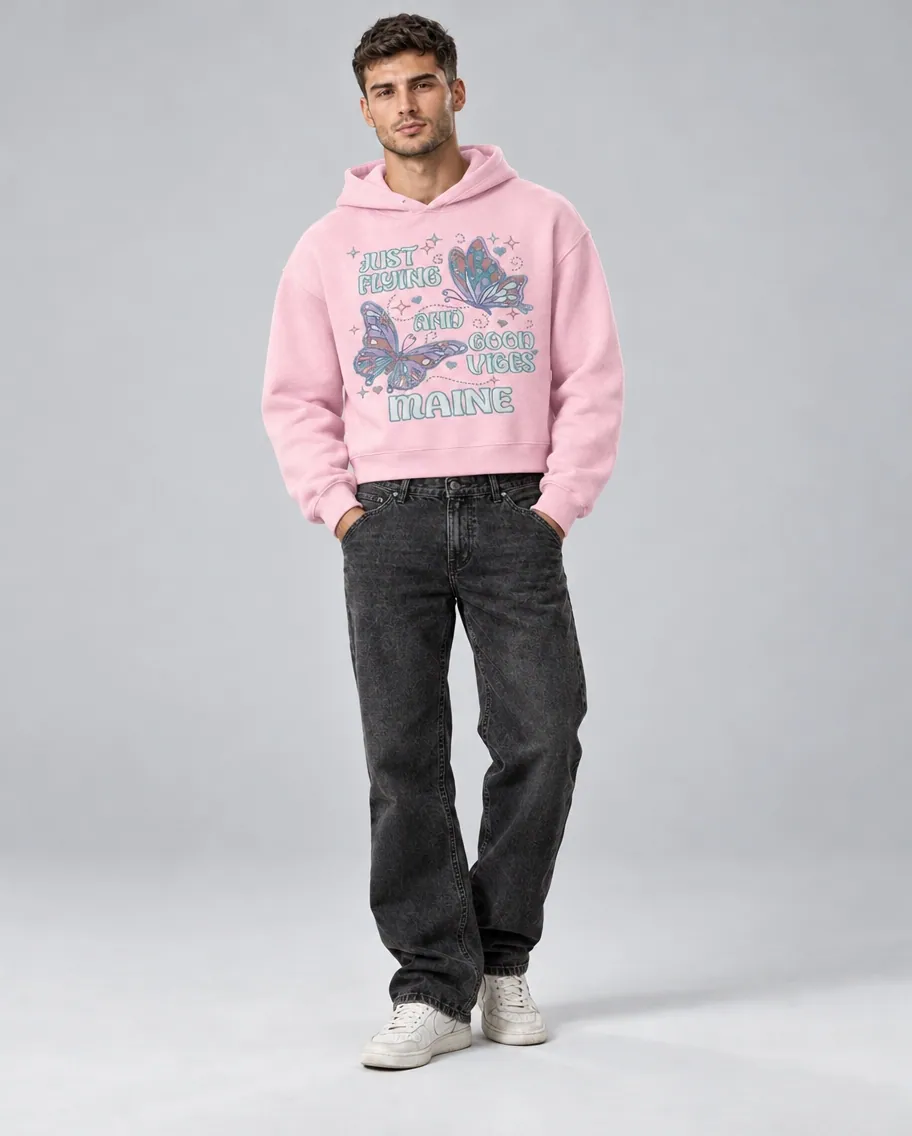 Pink hoodie with butterfly graphicAsk for this design
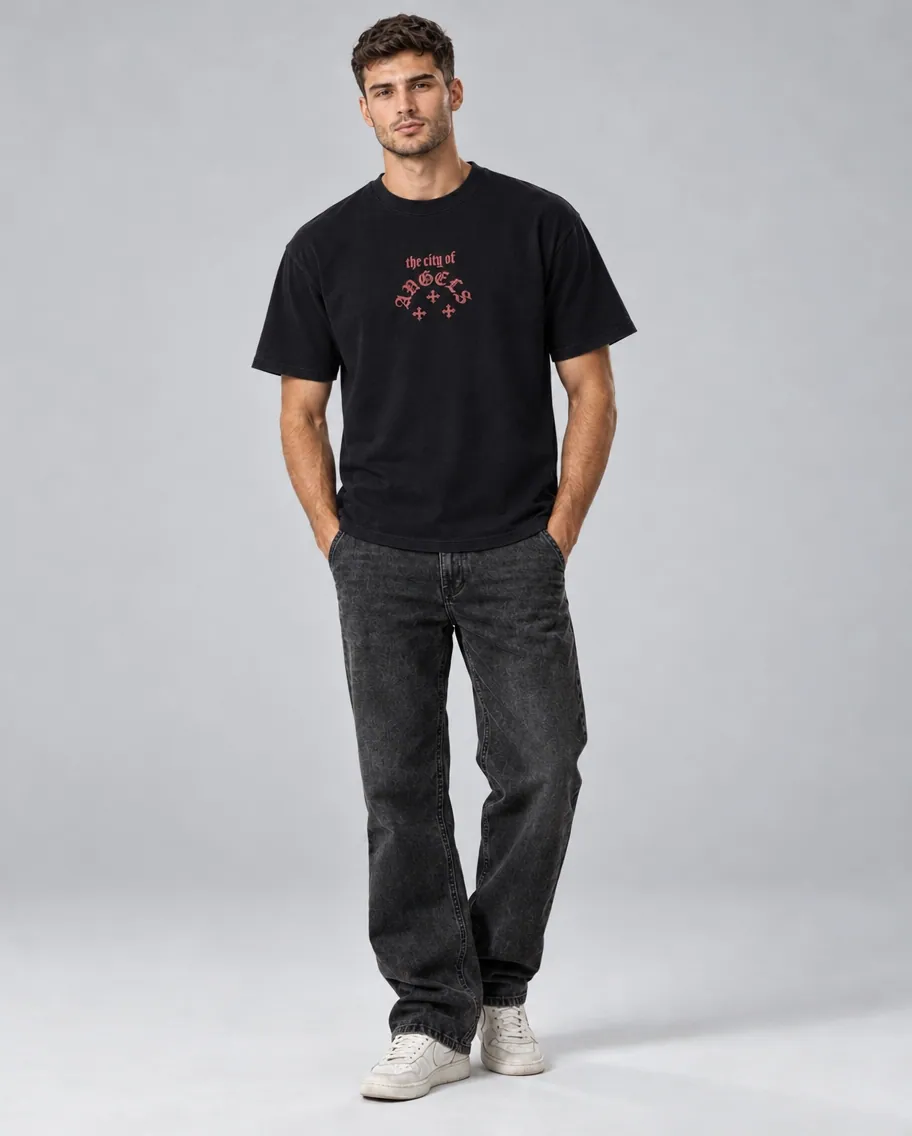 Black tee with small chest printAsk for this design
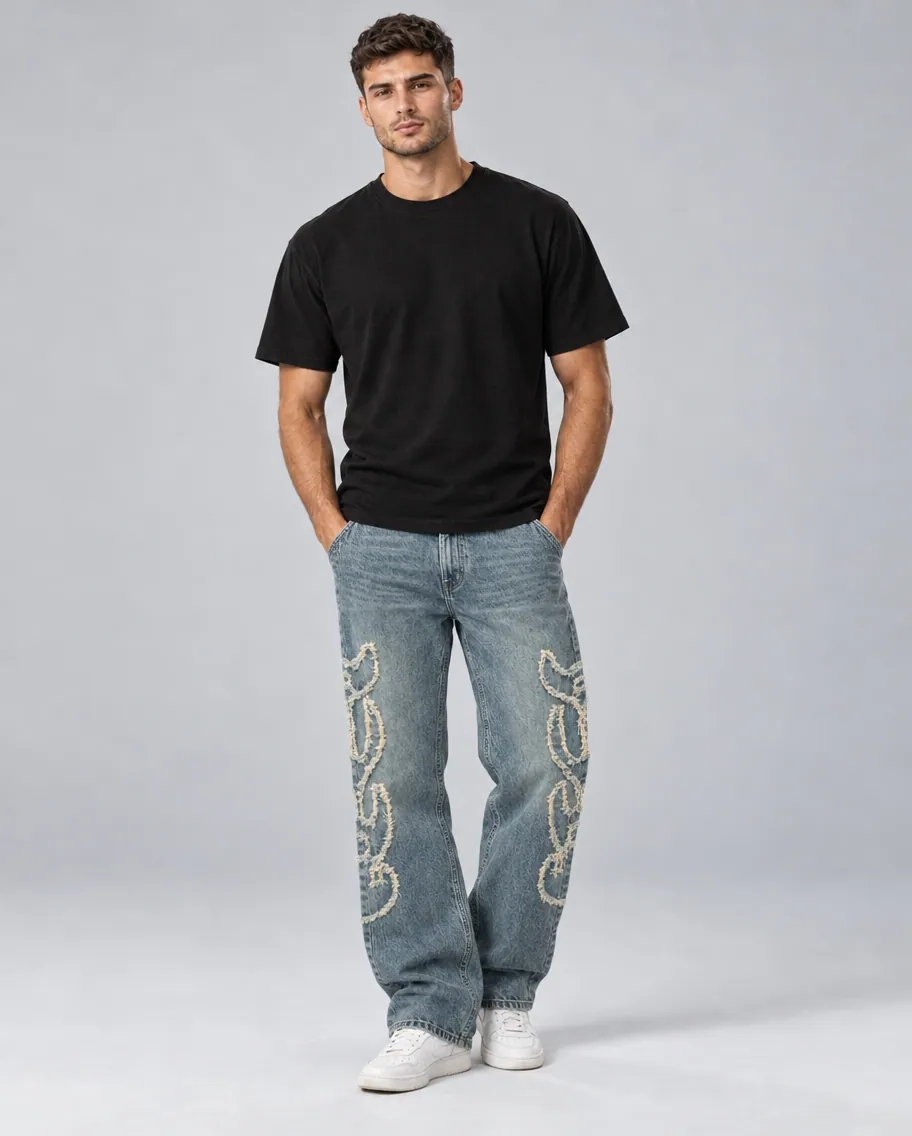 Light blue jeans with rope-stitch embroideryAsk for this design
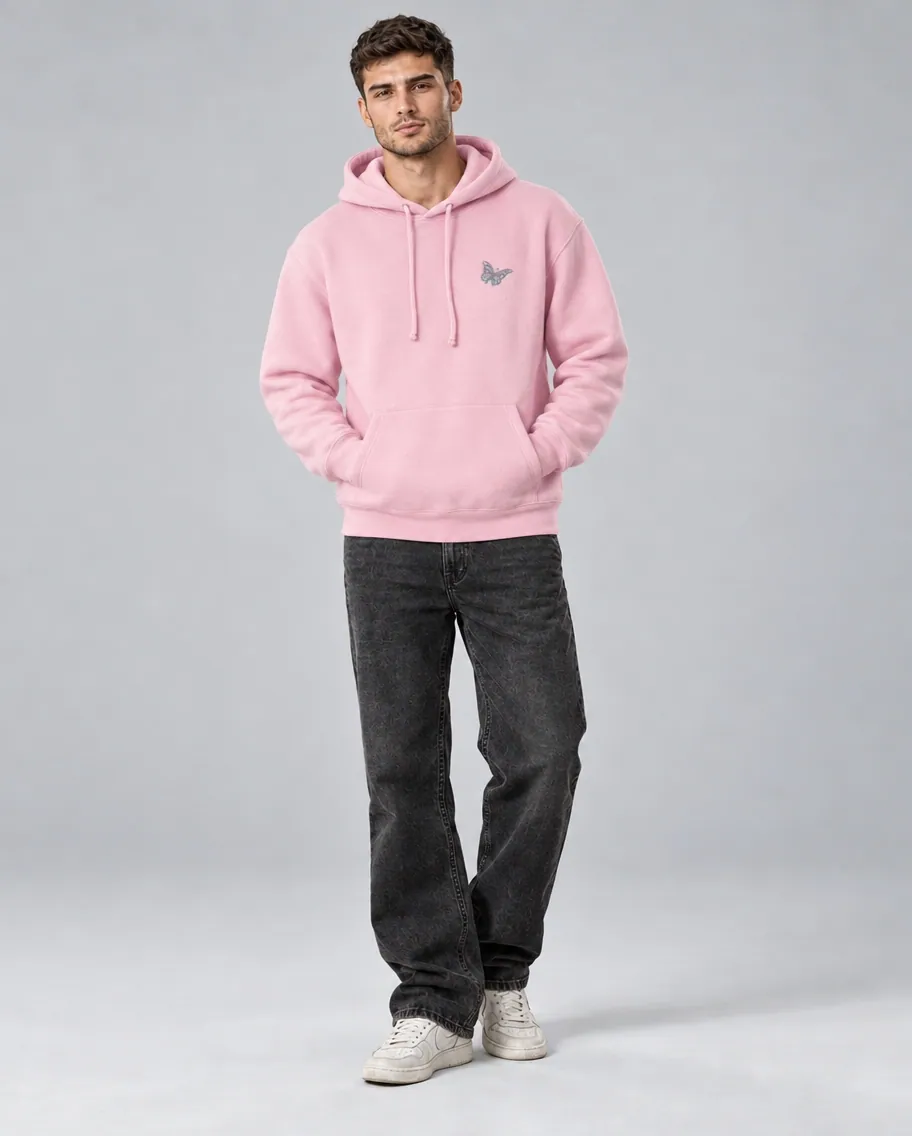 Pink hoodie with small butterfly emblemAsk for this design
Sampling comes before bulk. From approximately 50 pieces per style, subject to technical review.
Tell us your designShare your product details, target quantity and delivery requirements. We will confirm feasibility, materials and construction before quoting.
Contact our team