
Loading page content
Loading page content
Sustainability
Material, packaging, sampling and shipping choices are reviewed at order level, where their cost, availability, documentation and practical impact can be understood.
Bring your material or sourcing policy into the brief
If your programme has requirements for fibre origin, recycled content, packaging, testing or documentation, share them before material sourcing begins.
Options can then be assessed against availability, minimum quantity, production route, evidence requirements, cost and delivery timing.
Order-level decisions
Each area explains the available production choices and the evidence required before a measurable environmental claim can be made.
Recycled and organic material options are available where a certified supply chain can be evidenced. Where it cannot, we say so rather than allowing an unsupported claim onto a label.
Approach described. No measured outcomes are published because none have been independently verified.
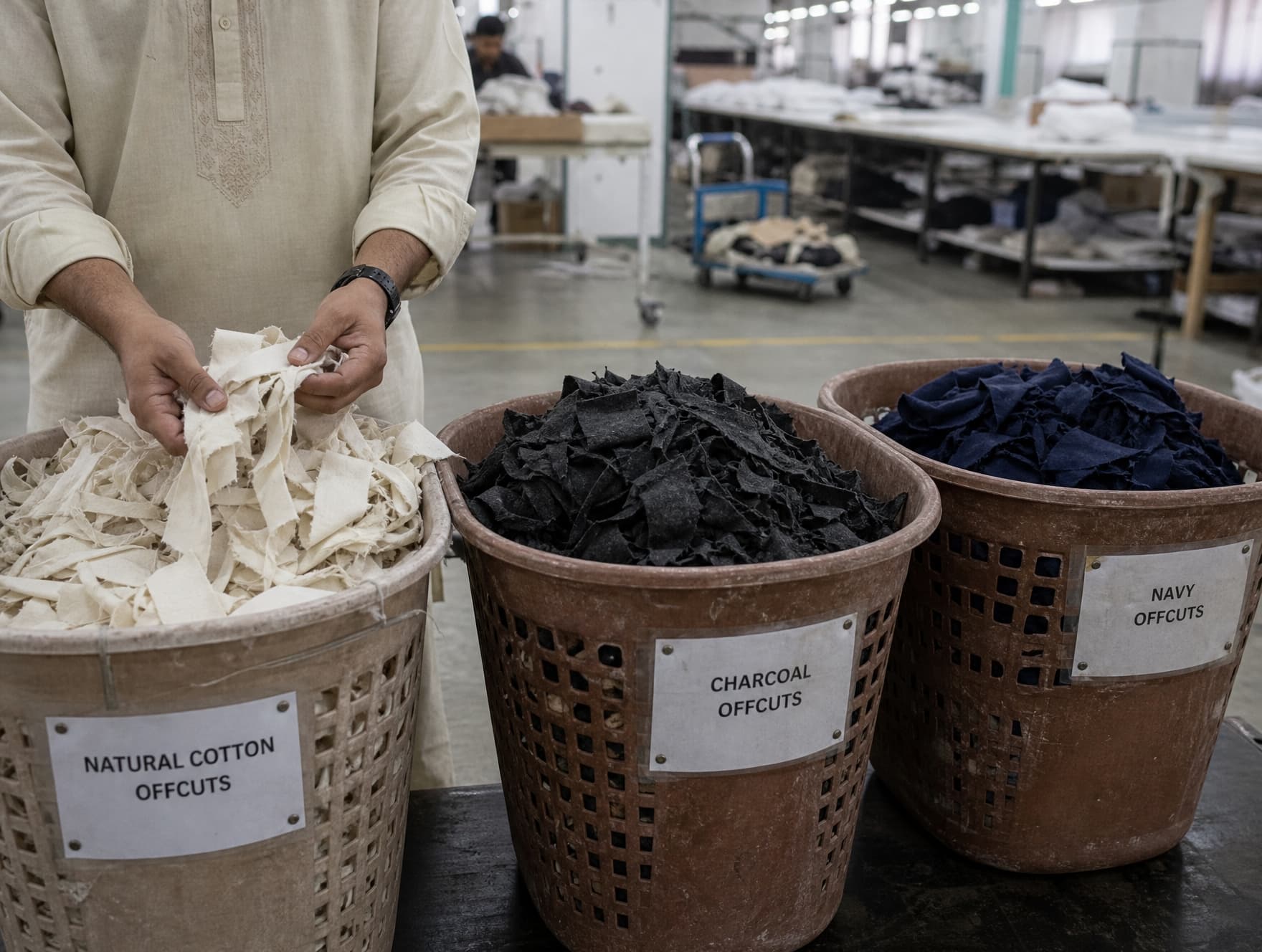
Cutting waste is segregated at source. Marker planning is used to improve fabric utilisation, which reduces waste before it is created rather than managing it afterwards.
Approach described. Waste reduction percentages require a measurement method and reporting period before publication.
Reduced and paper based packaging alternatives are offered where the distribution route supports them. Packaging is specified per programme rather than applied by default.
Options available. Uptake is a buyer decision made per programme.
Wet processing is the most resource intensive stage of textile production. Where a specification allows a lower impact finishing route, it is proposed alongside the conventional one.
Approach described. Consumption figures are not published because none have been measured and verified.
Working conditions and treatment of staff are a legitimate buyer question. We support buyer audits and provide the information an audit requires.
Audit support available. No social compliance certification is claimed because none has been supplied for publication.
Where production runs through a partner facility, that is stated on the relevant product pages rather than obscured. Buyers are told where their product is made.
Disclosure policy in effect across all product pages.
Material origin and processing steps are recorded during development, so a buyer asking where a fabric came from receives an answer from records rather than an estimate.
Records maintained per project and available on request.
Targets are only meaningful with a baseline, a method and a reporting period. None are published here because no baseline has been independently established.
Not published. Publishing a target without a baseline would be a claim without evidence.
Evidence
A useful environmental figure needs enough context to be reviewed, compared and repeated.
The number itself, stated precisely rather than approximately.
What the number measures, so it can be compared with anything else.
The dates the figure covers. A figure without a period is meaningless.
Which facility, product or process the figure applies to.
How it was measured, so the same method can be repeated.
The record that supports it, available to a buyer who asks.
Who checked it, and whether they were independent.
What you can do
These are choices you can make on your order today. They are options rather than outcomes, and we do not claim otherwise.
Available where a certified supply chain can be evidenced for your specific order, with transaction certificates supplied. Usually raises the minimum quantity, because certified fabric is held in fewer qualities and colours.
Specified per programme rather than applied by default, because not every distribution route supports it without damage in transit.
A complete specification at the start reduces the number of physical samples shipped internationally. This is the least discussed and most immediate reduction available on most projects.
Combining orders into fewer shipments reduces freight impact and usually cost. It requires planning at the order stage rather than at dispatch.
Send it with your inquiry. We will tell you which parts can be evidenced for your order and which cannot, before you commit to anything.