
Loading page content
Loading page content
Materials
Values here are typical ranges and general behaviour, not guaranteed properties of a specific fabric. The same nominal quality can finish differently depending on yarn, structure and finishing, which is why anything you rely on is confirmed against an approved physical swatch.
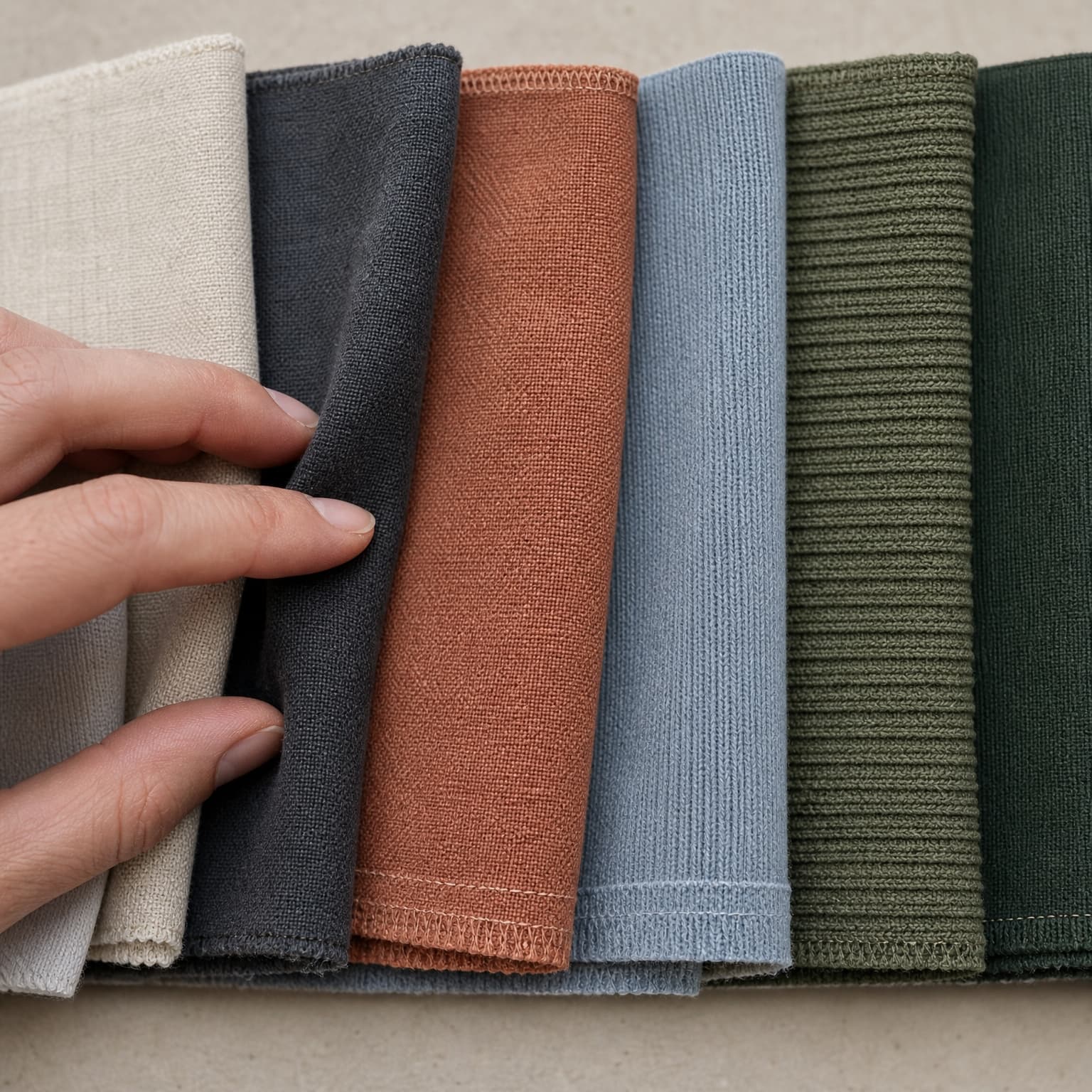
Showing all 13 materials
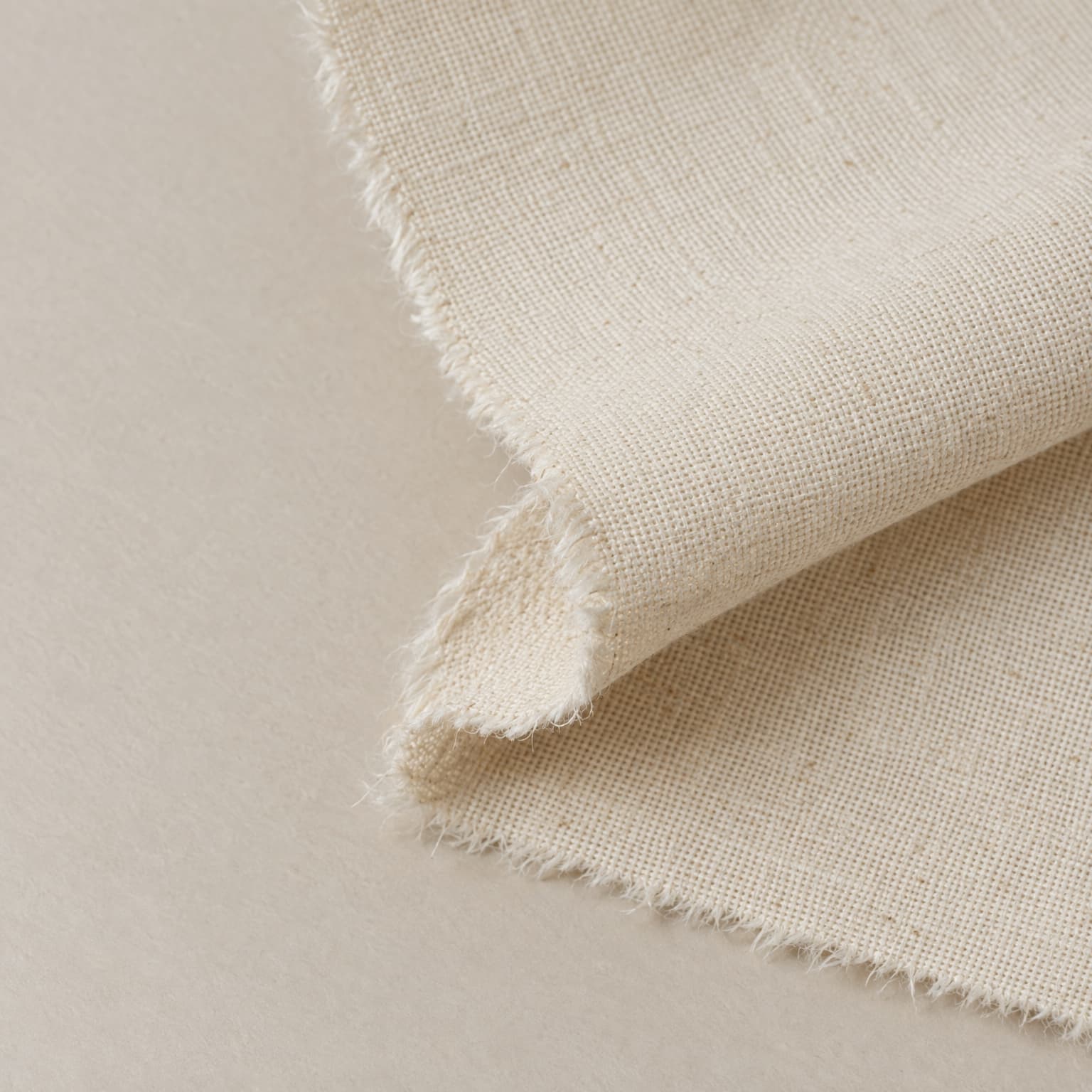
Natural fibers
The default fibre for everyday apparel. Comfortable, printable and available in a wide range of qualities.
Typically 120 to 220 gsm for jersey, 240 to 400 gsm for fleece and terry, and 100 to 200 gsm for woven shirting.
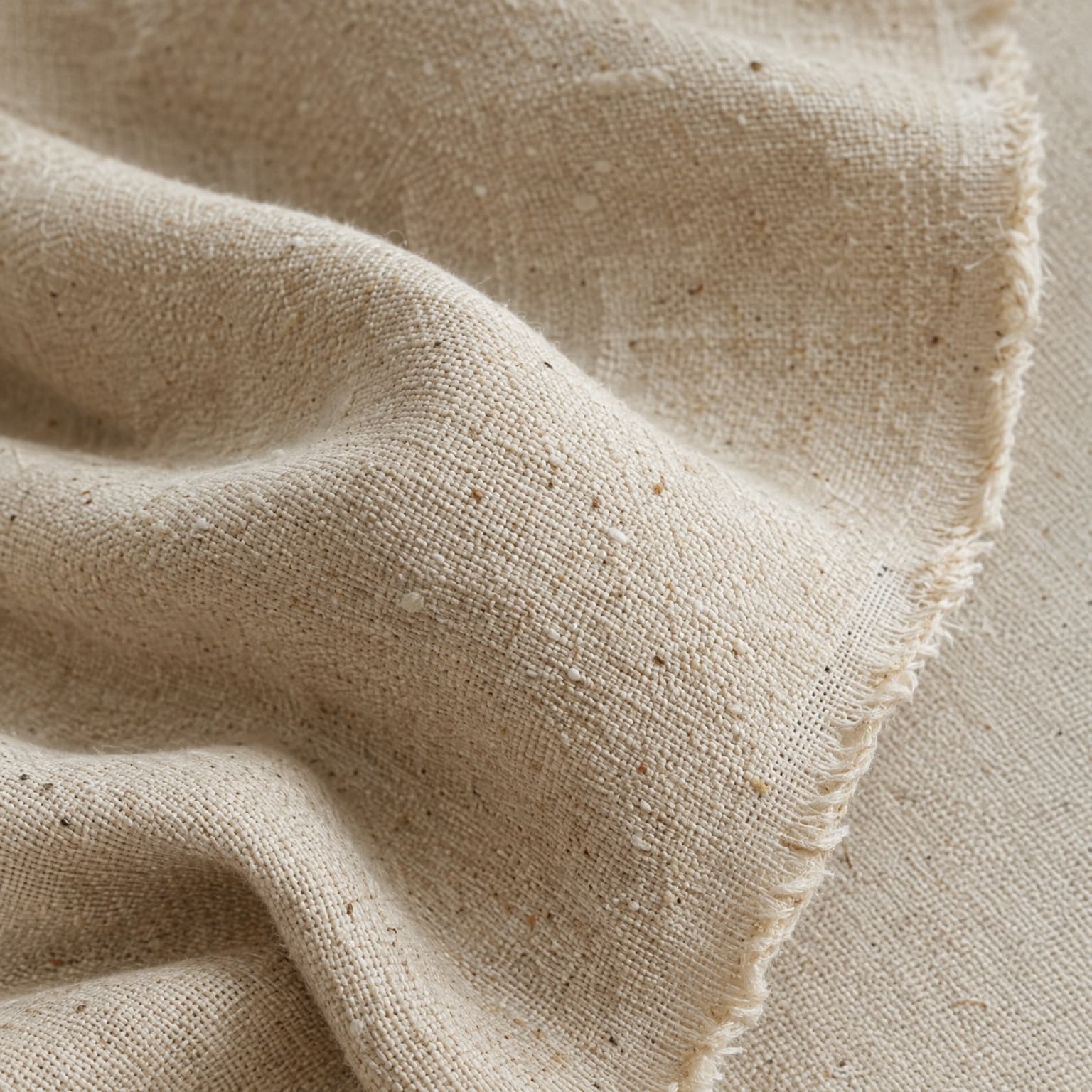
Recycled and lower impact materials
Cotton grown to an organic standard. Only meaningful when the certification chain is intact and documented.
Comparable to conventional cotton at the same construction.
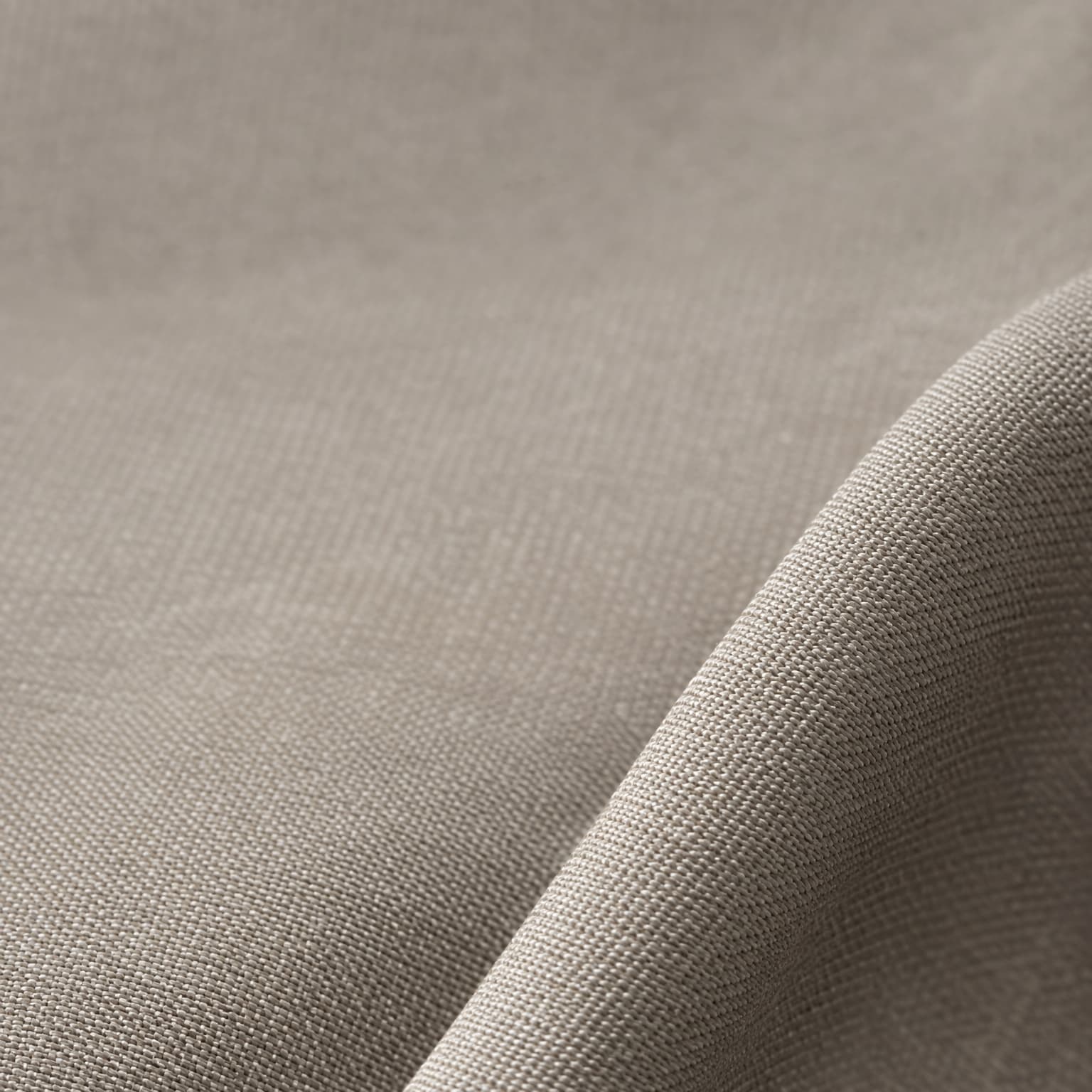
Synthetic and performance fibers
The base fibre for performance apparel. Holds colour, dries quickly and accepts sublimation printing.
Typically 100 to 180 gsm for performance jersey and mesh, and 180 to 300 gsm for heavier training and outerwear fabrics.
Recycled and lower impact materials
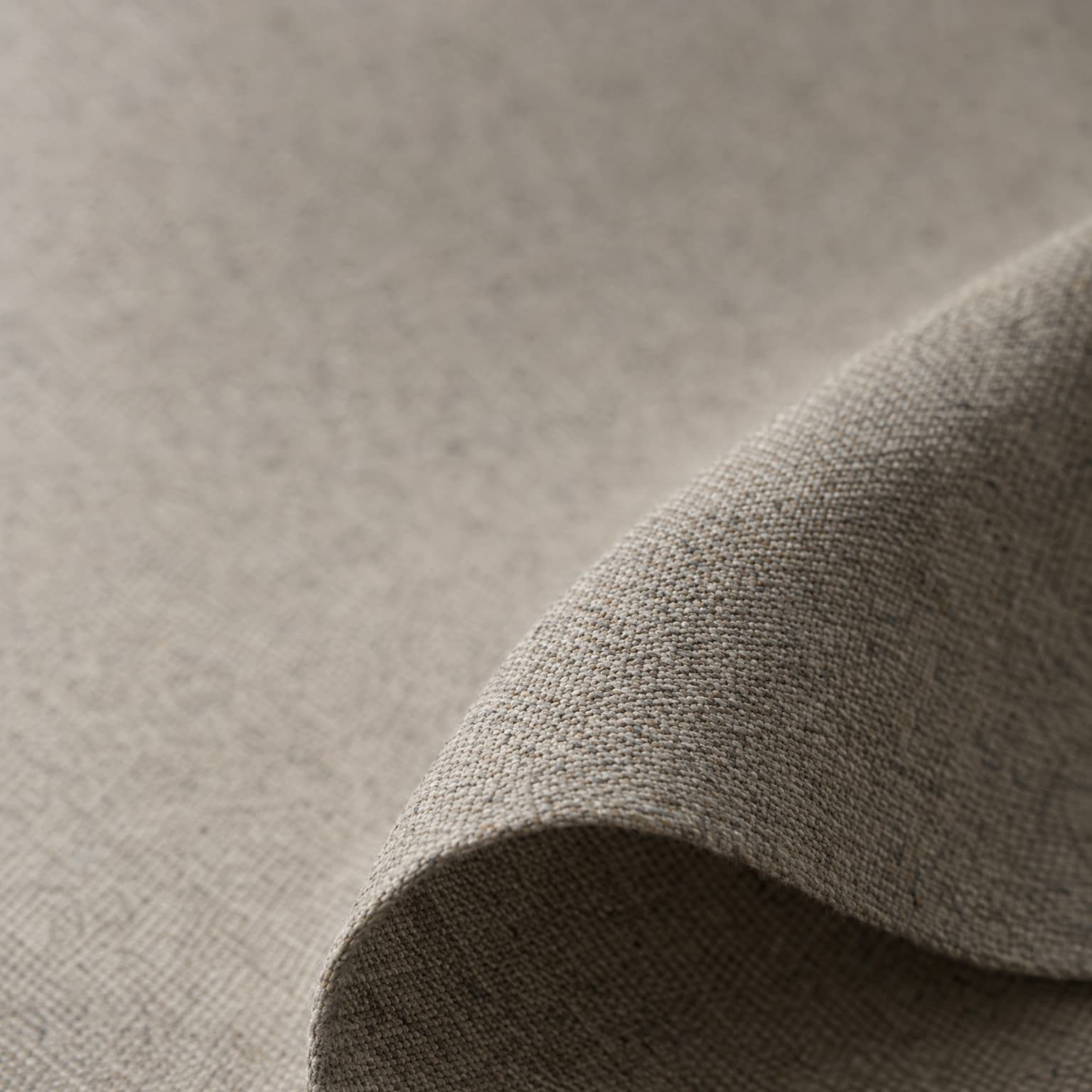
Polyester produced from recycled feedstock. Performs comparably to virgin polyester when the quality is specified properly.
Comparable to virgin polyester at equivalent construction, typically 100 to 300 gsm.
Knitted fabrics
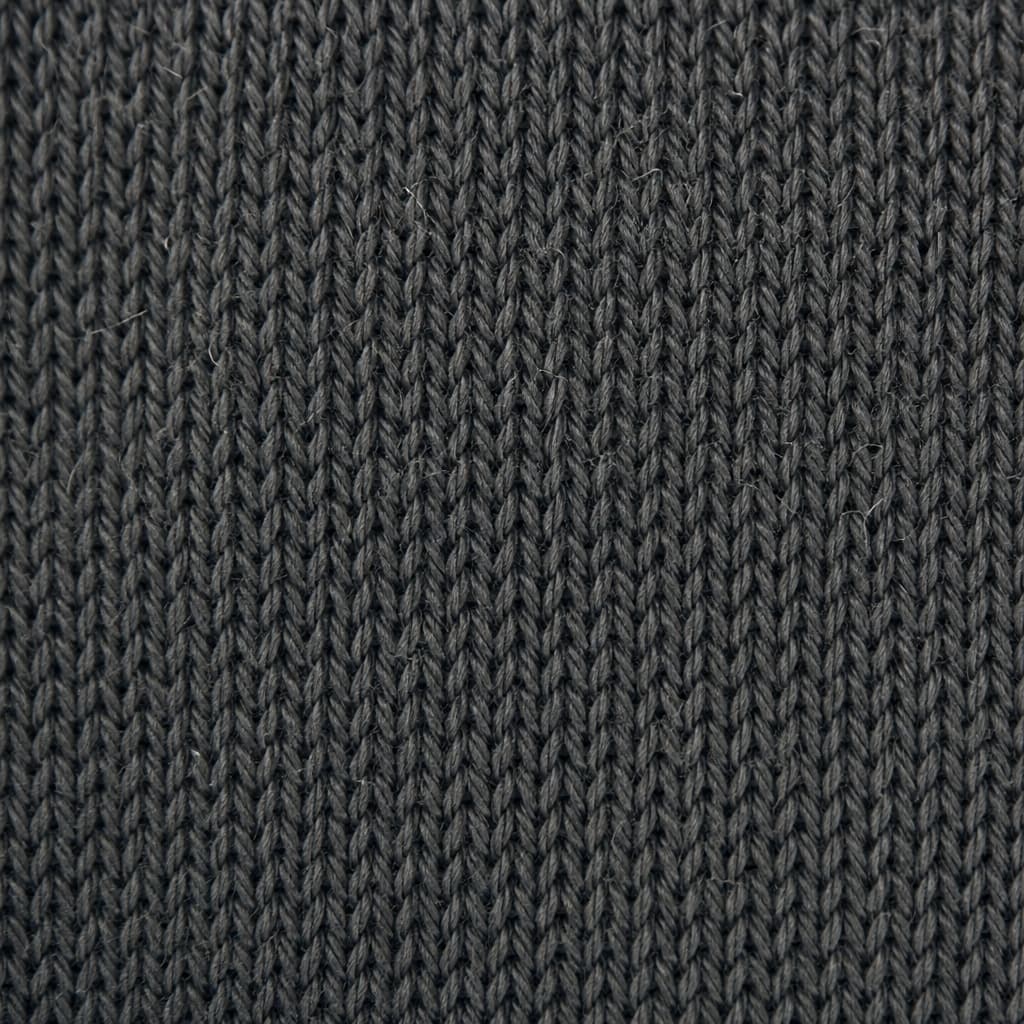
The workhorse blend for uniforms and heavy use apparel. Balances comfort against durability and shrinkage control.
Typically 150 to 220 gsm for pique and jersey, and 260 to 340 gsm for fleece used in uniform programmes.
Knitted fabrics
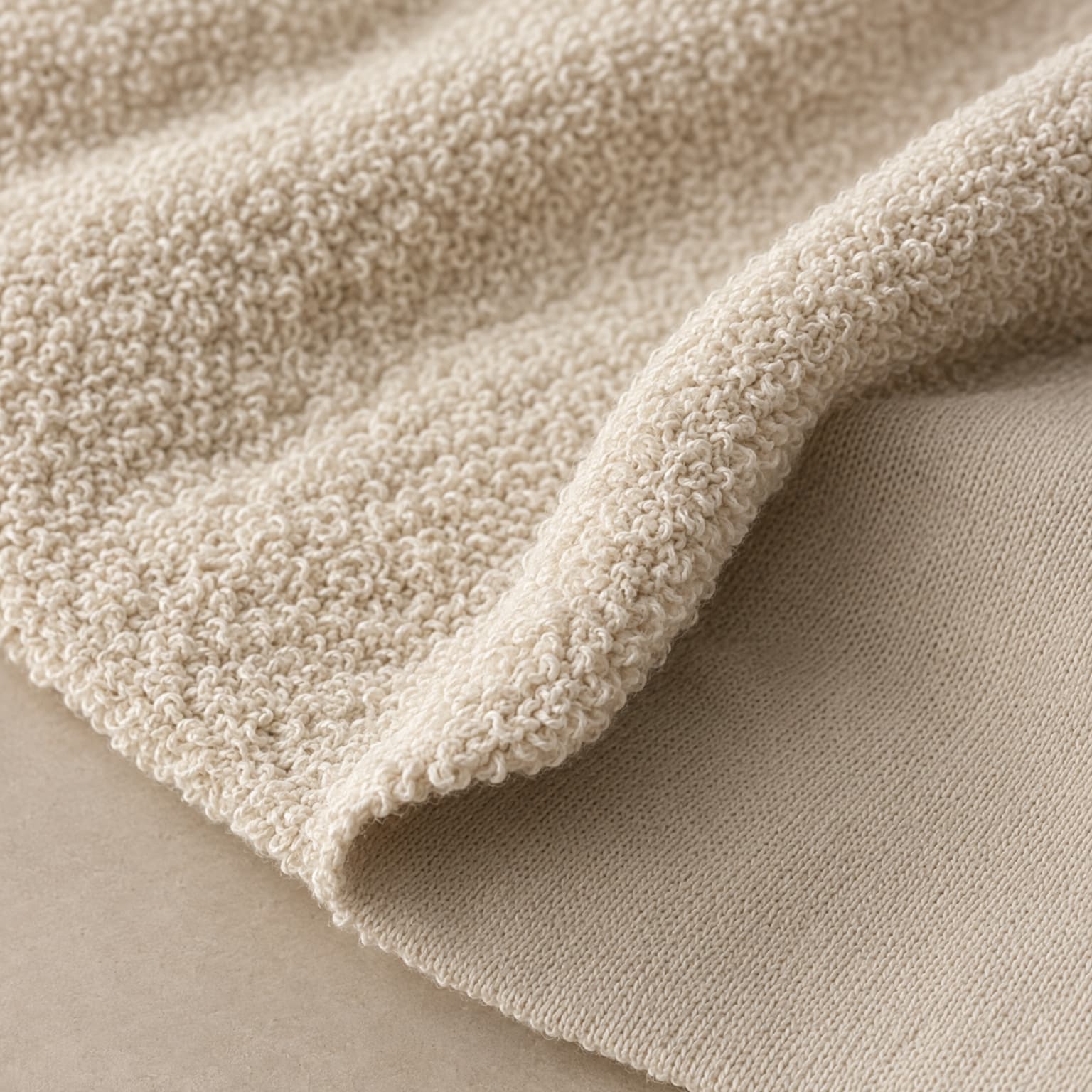
Looped back knit used for sweatshirts and mid weight streetwear. Structured without the bulk of brushed fleece.
Typically 240 to 400 gsm.
Knitted fabrics
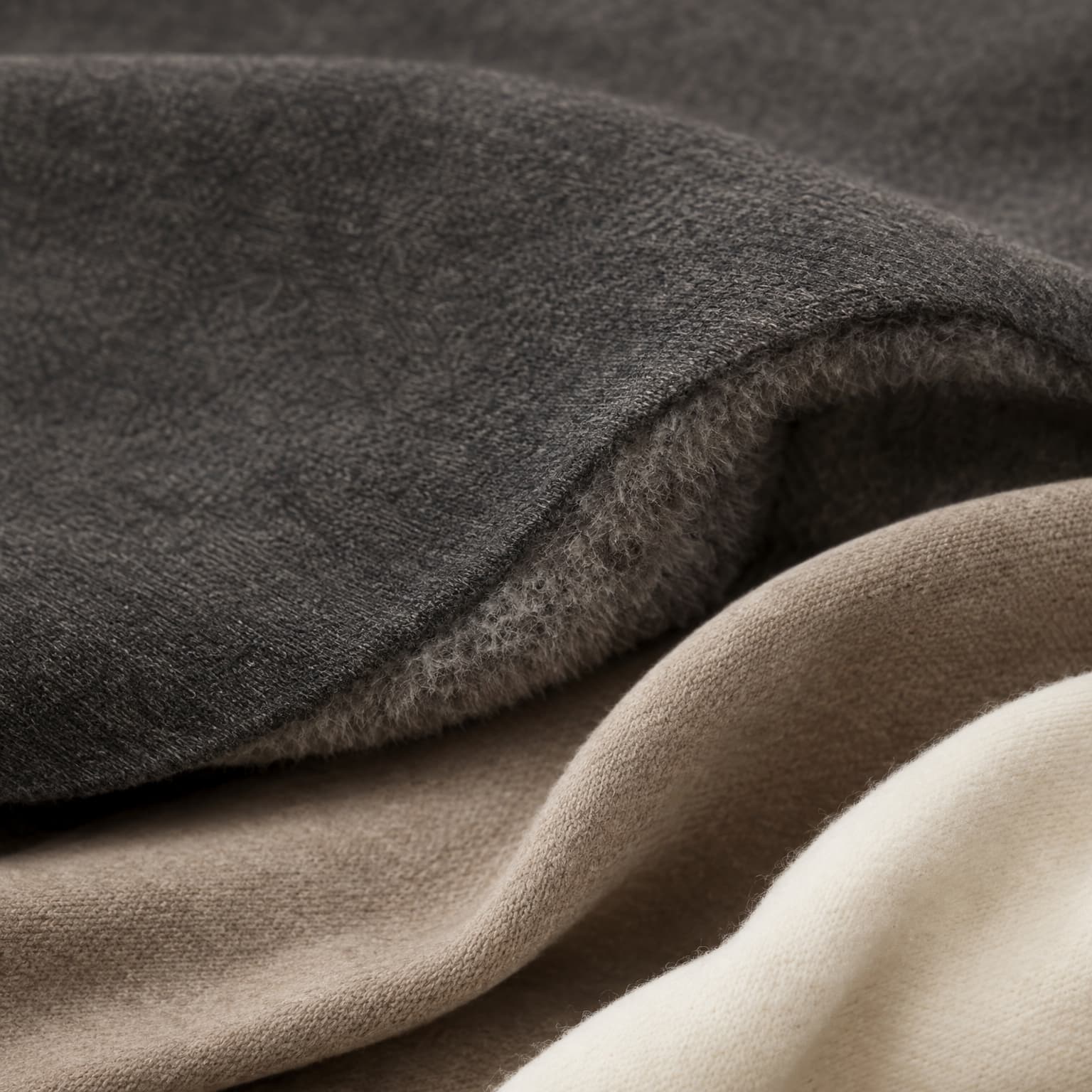
Terry with a brushed reverse. Warmer and softer than french terry, with a fuller, heavier hand.
Typically 280 to 450 gsm.
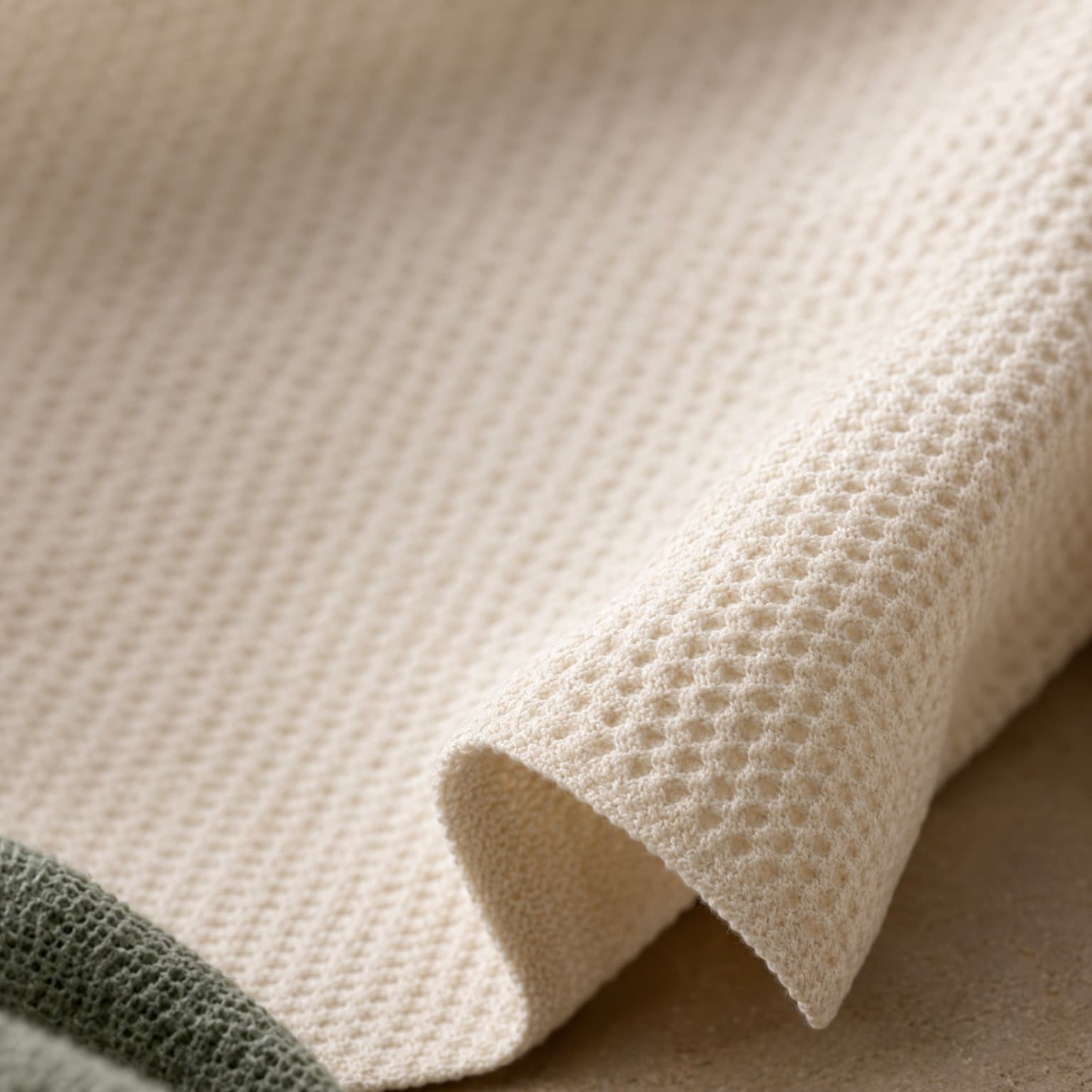
Knitted fabrics
Textured knit used for polo shirts. Holds shape through repeated laundering, which is why uniforms rely on it.
Typically 170 to 240 gsm.
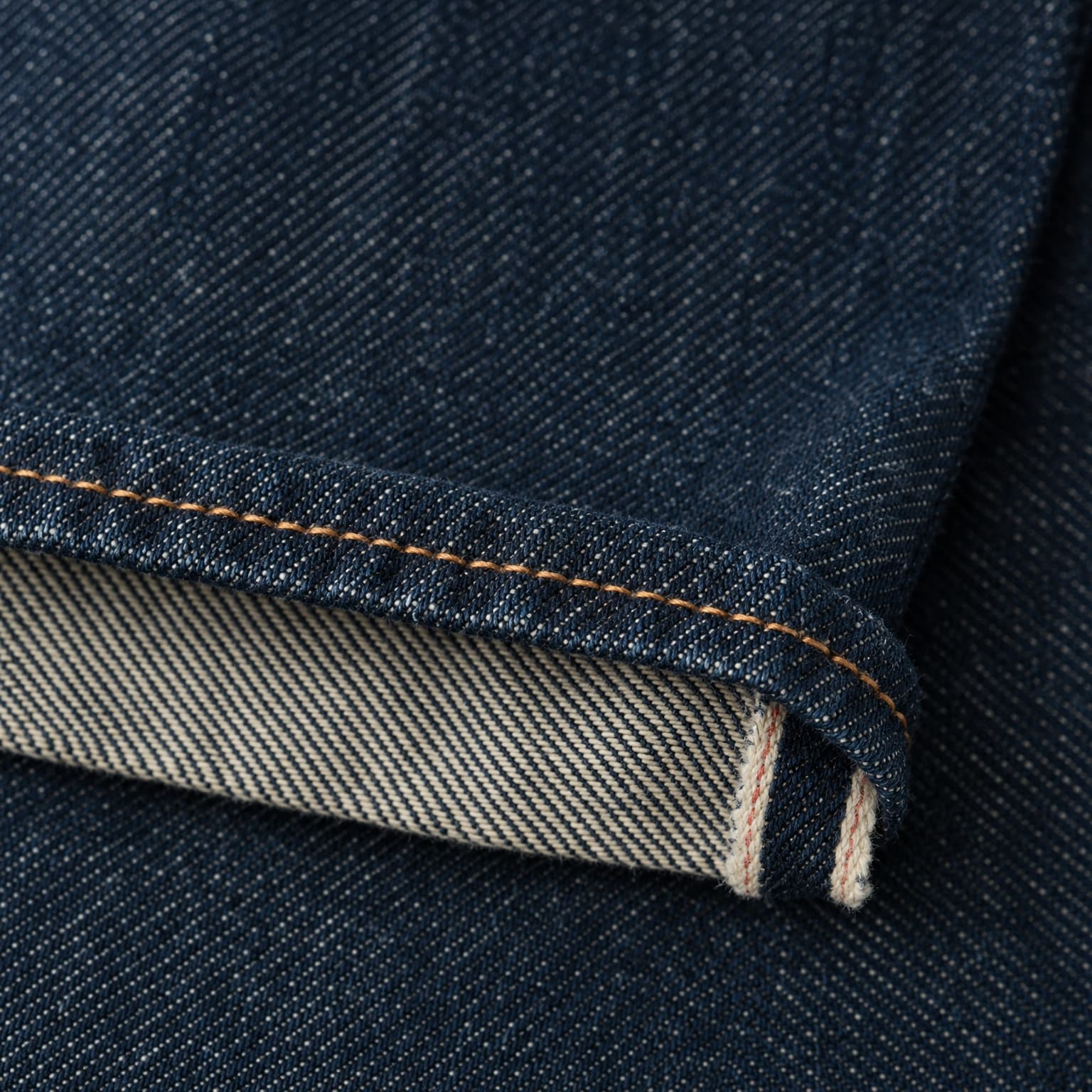
Woven fabrics
Twill woven cotton. Character comes from the weave, the yarn and the wash rather than from the base fabric alone.
Commonly expressed in ounces per square yard.
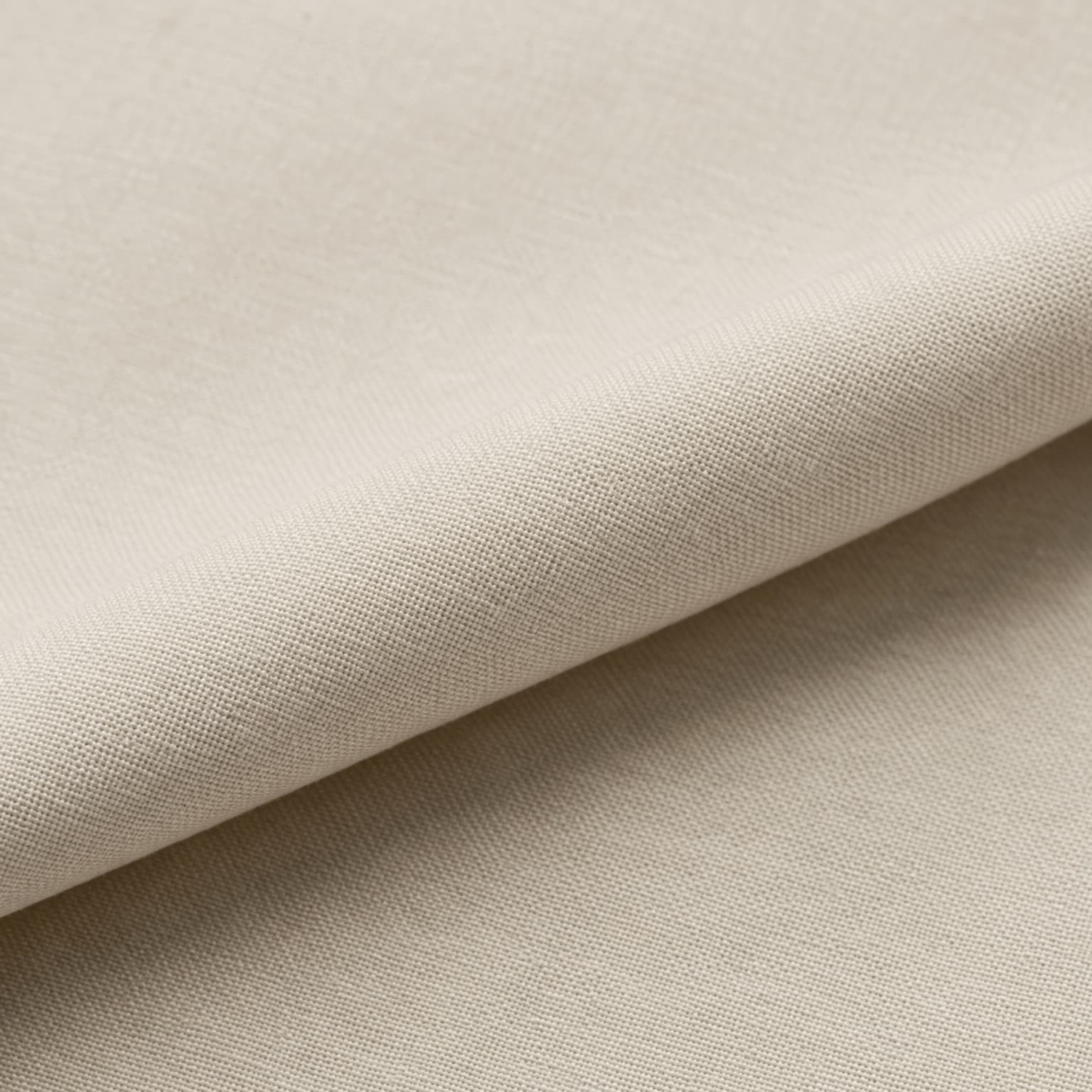
Woven fabrics
Fine plain weave shirting. Smooth, crisp and the default for formal and corporate shirts.
Typically 100 to 140 gsm for shirting weight poplin.
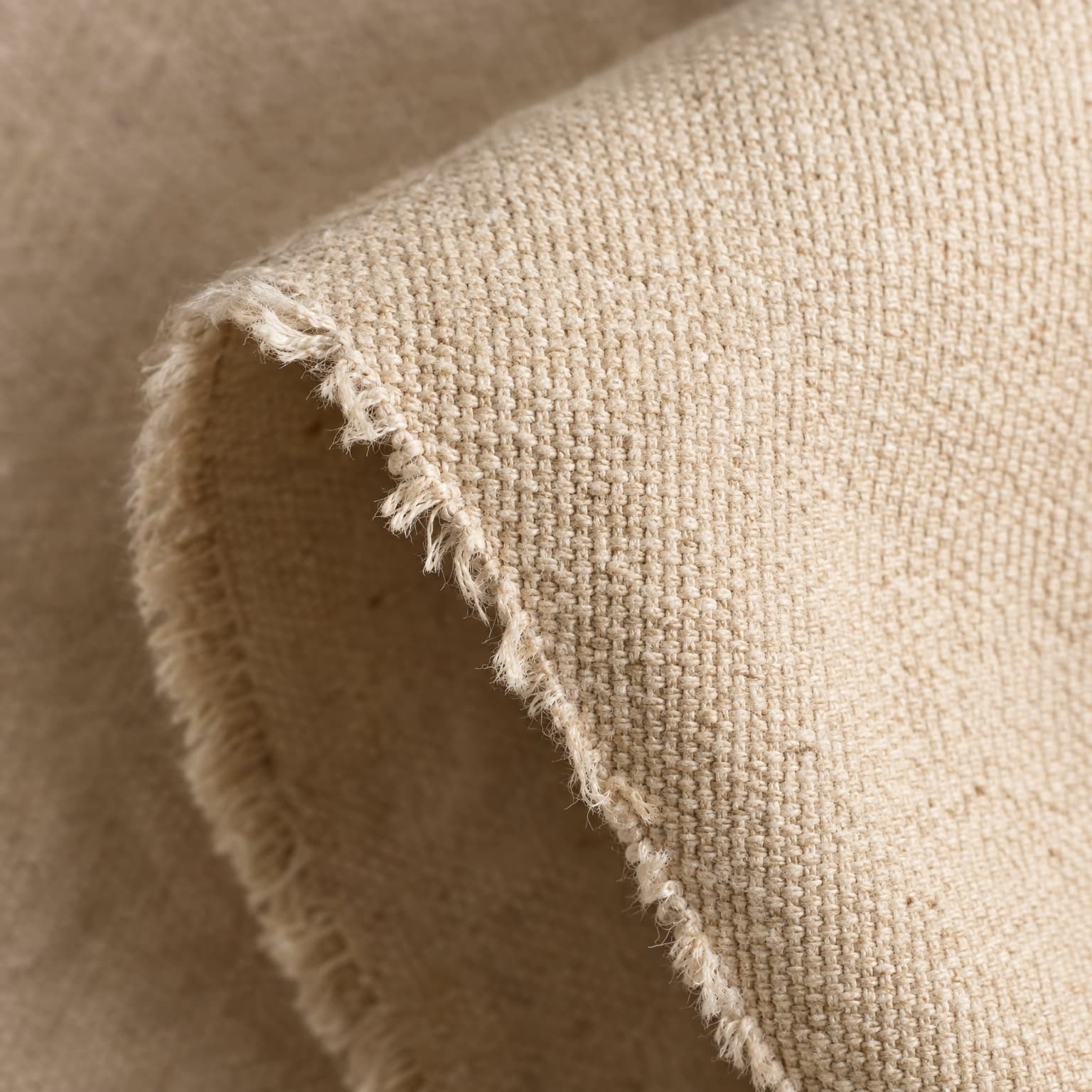
Woven fabrics
Heavy plain weave cotton. Structural, hard wearing and the base for bags, aprons and durable workwear.
Typically 250 to 500 gsm depending on end use.
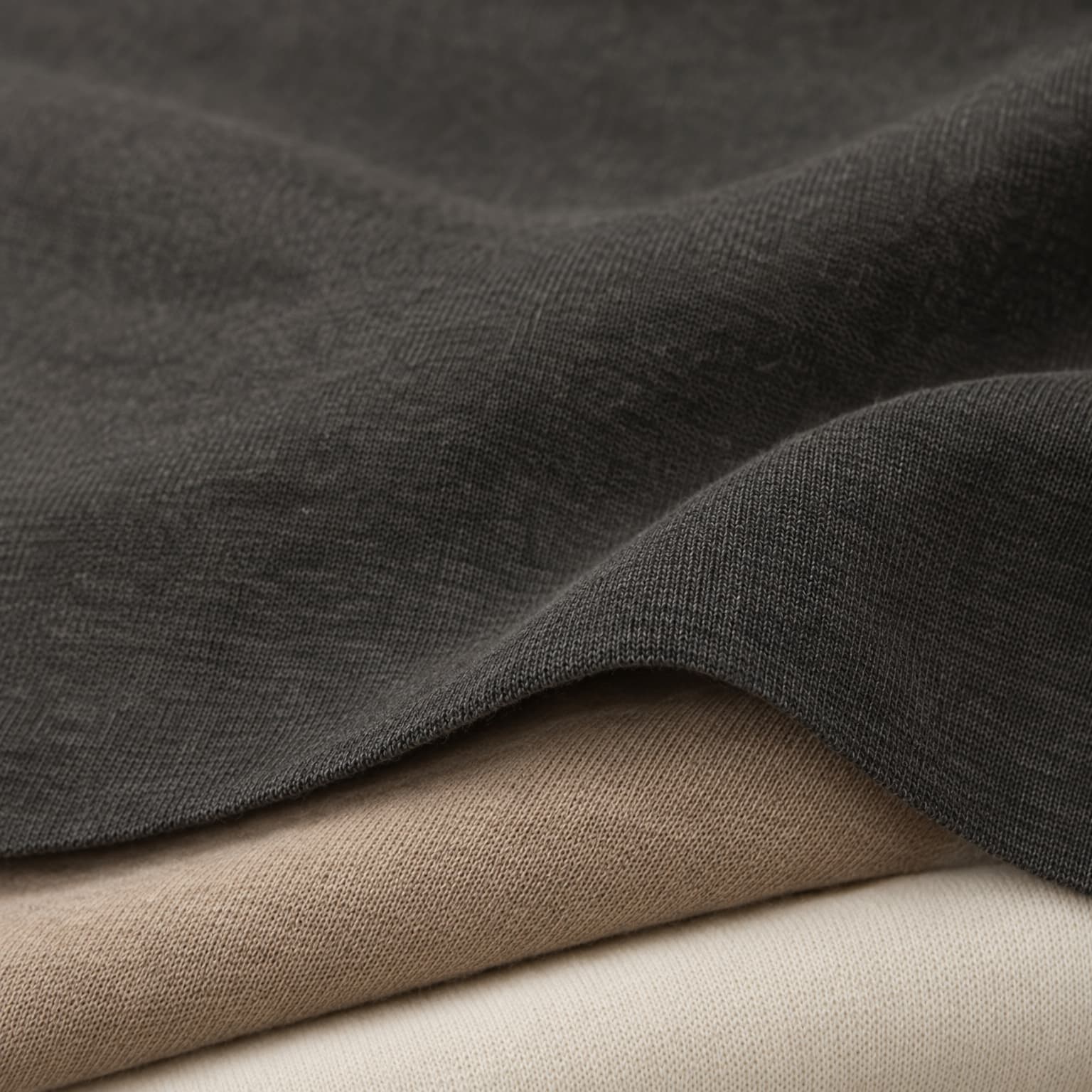
Synthetic and performance fibers
Small elastane content added to a base fibre to provide stretch and recovery. The percentage changes the garment considerably.
Determined by the base fabric rather than by the elastane content.
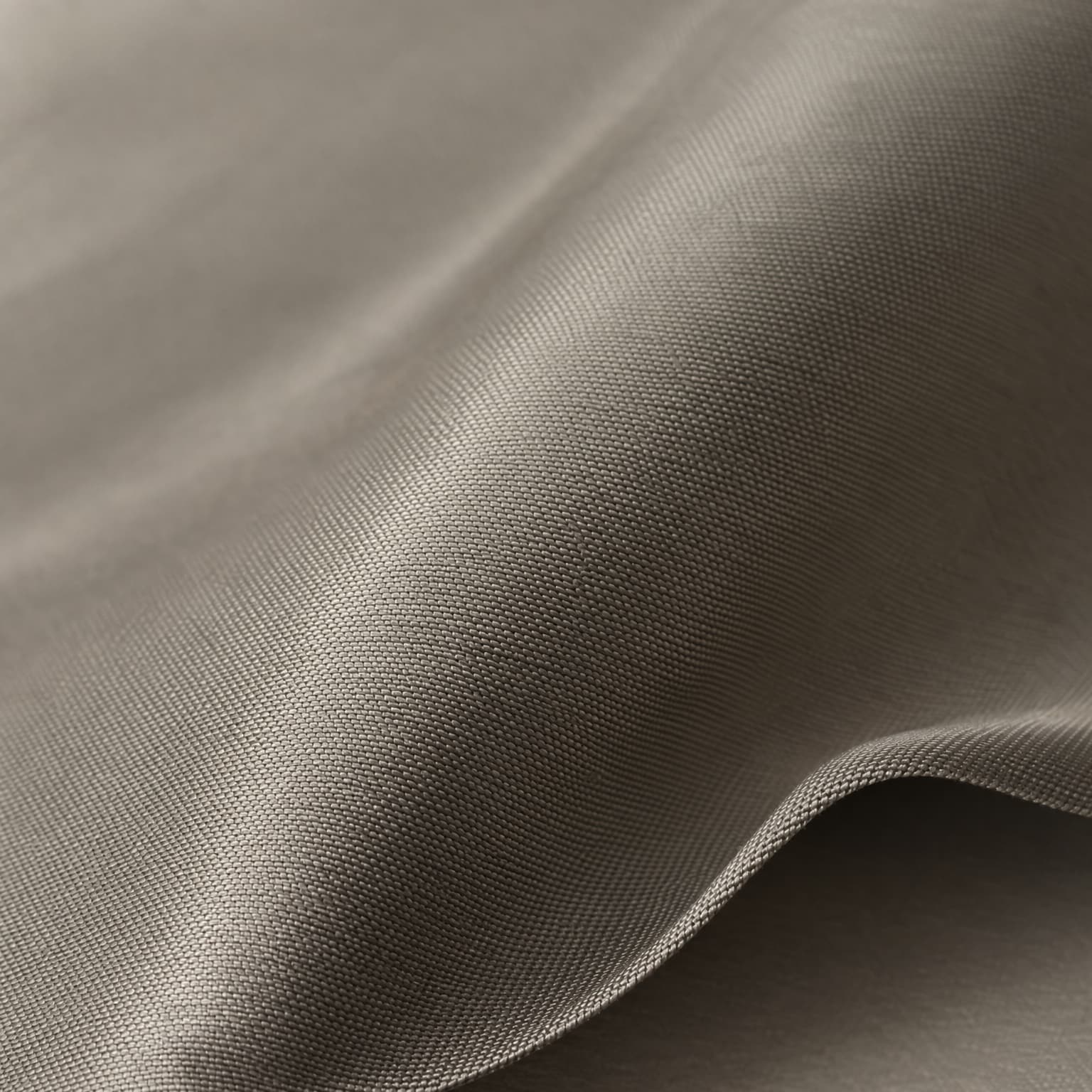
Synthetic and performance fibers
Strong, abrasion resistant synthetic used for outerwear shells, swimwear and technical accessories.
Typically 40 to 120 gsm for shell fabrics and linings, and 150 to 220 gsm for swim knits.
Tell us the end use, the target market, the handfeel you want and your price position. We propose options with composition and weight ranges, then confirm on a physical swatch.