Towels
Supplier example- Method
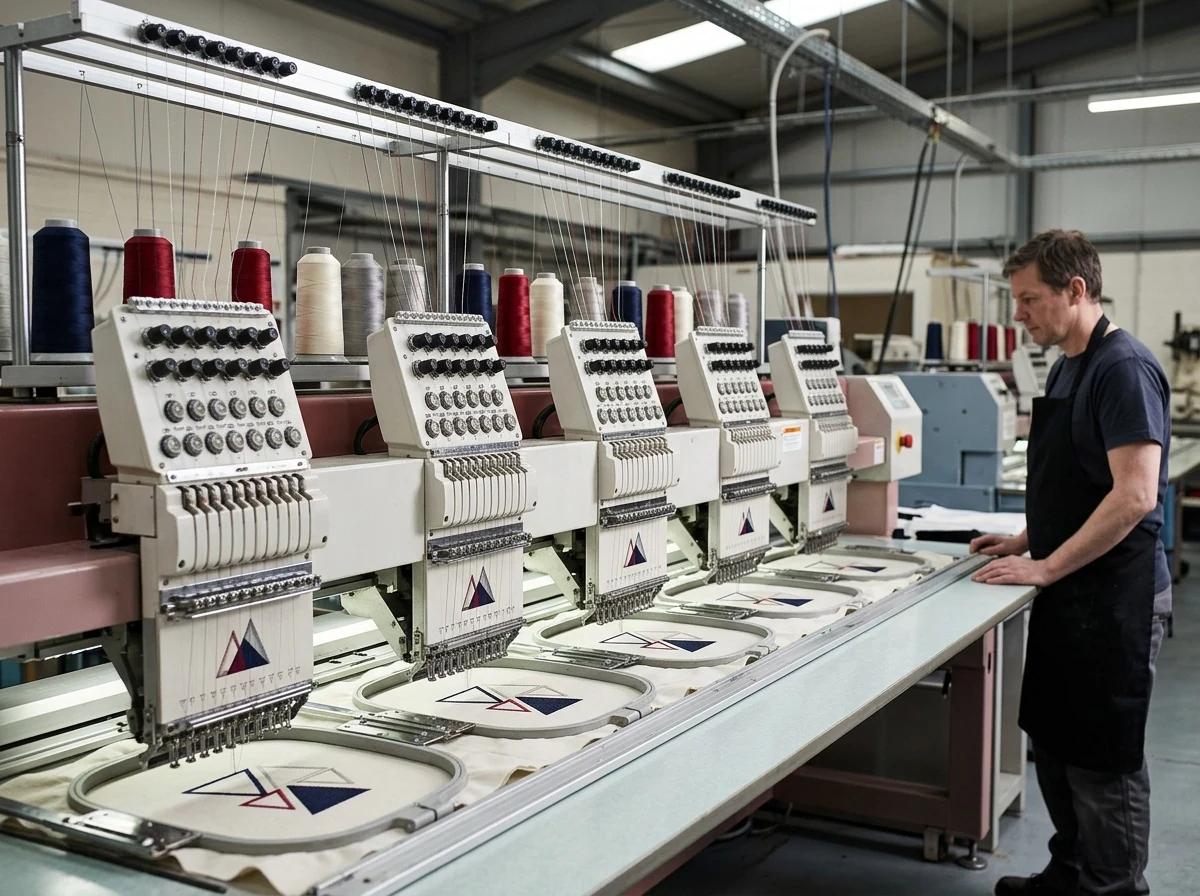
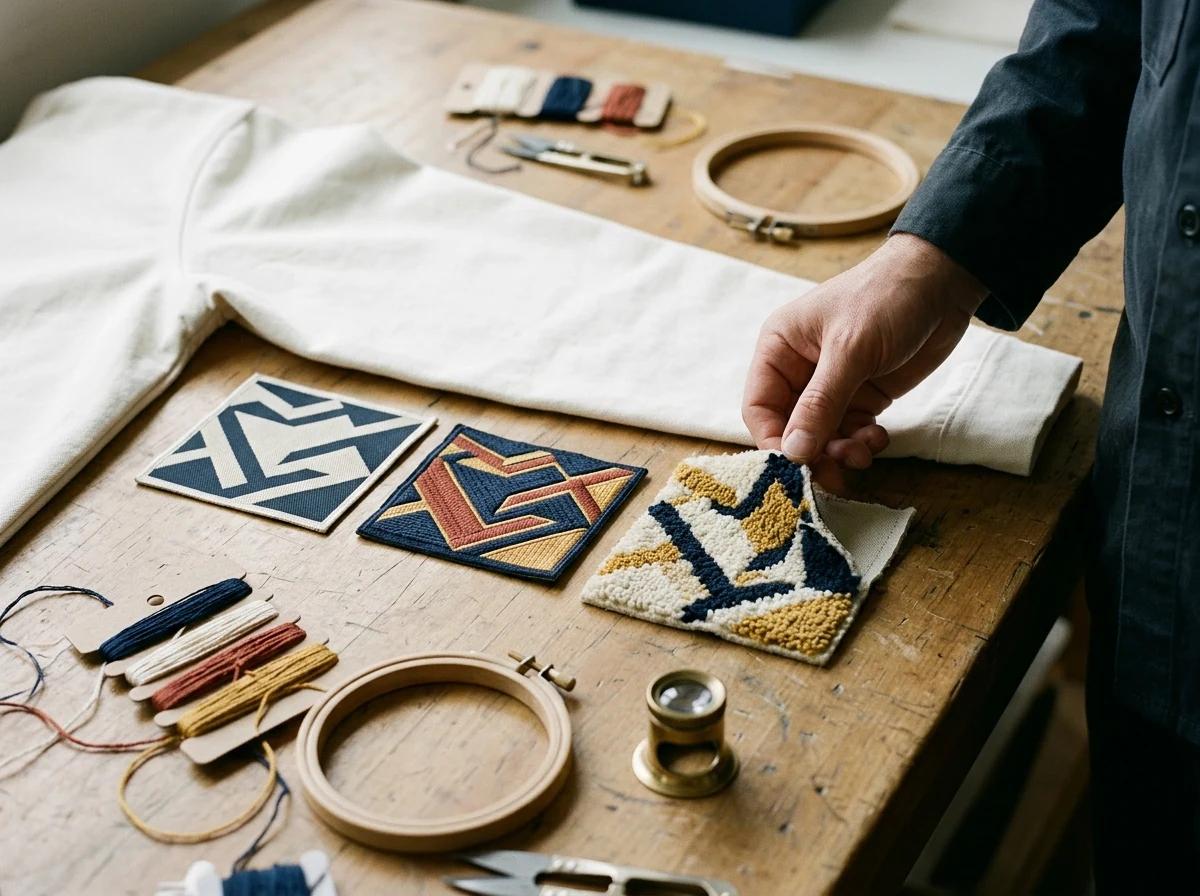
- Embroidery or woven borders
- Trade-off
- Terry loops swallow fine detail.
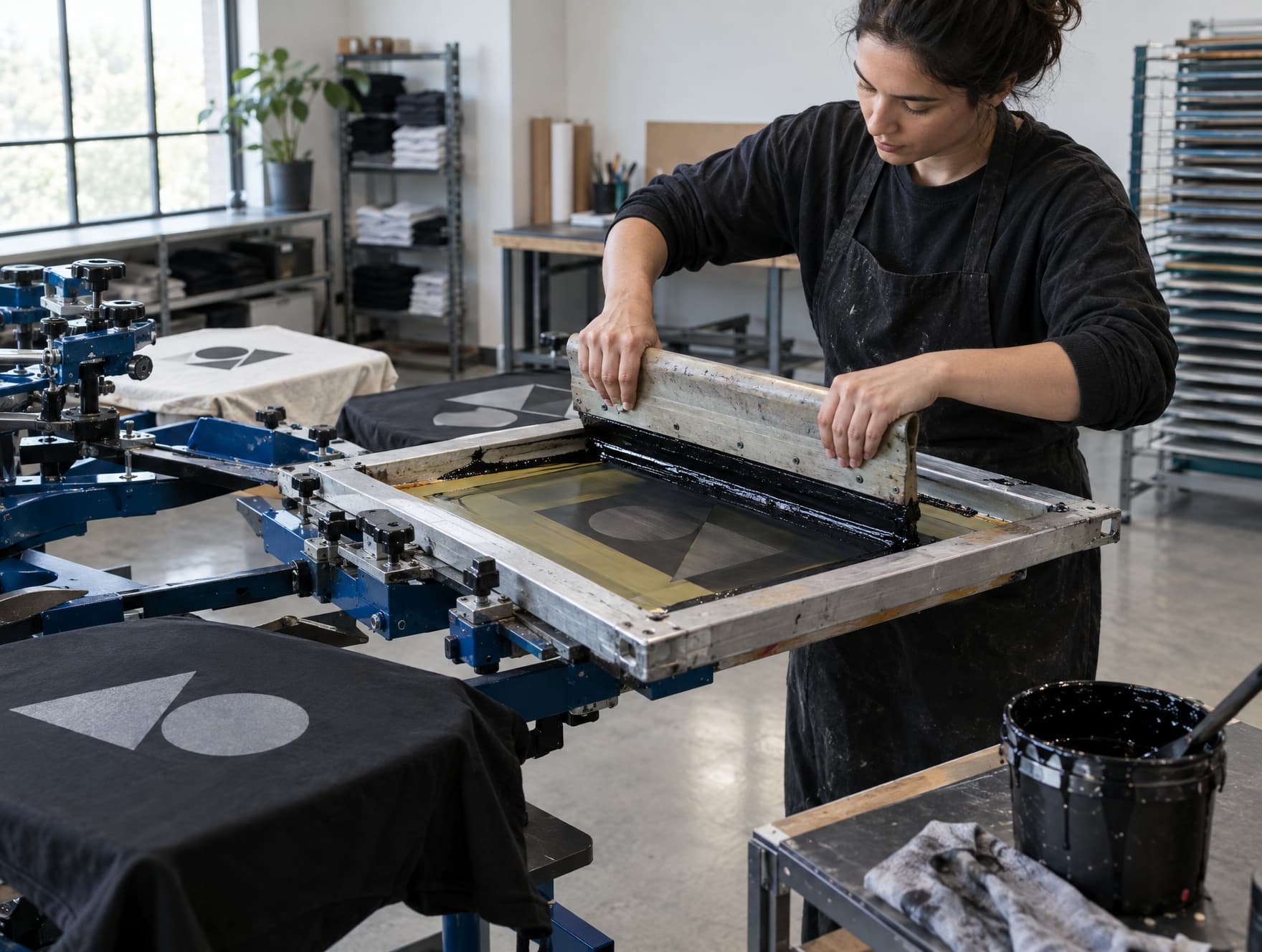
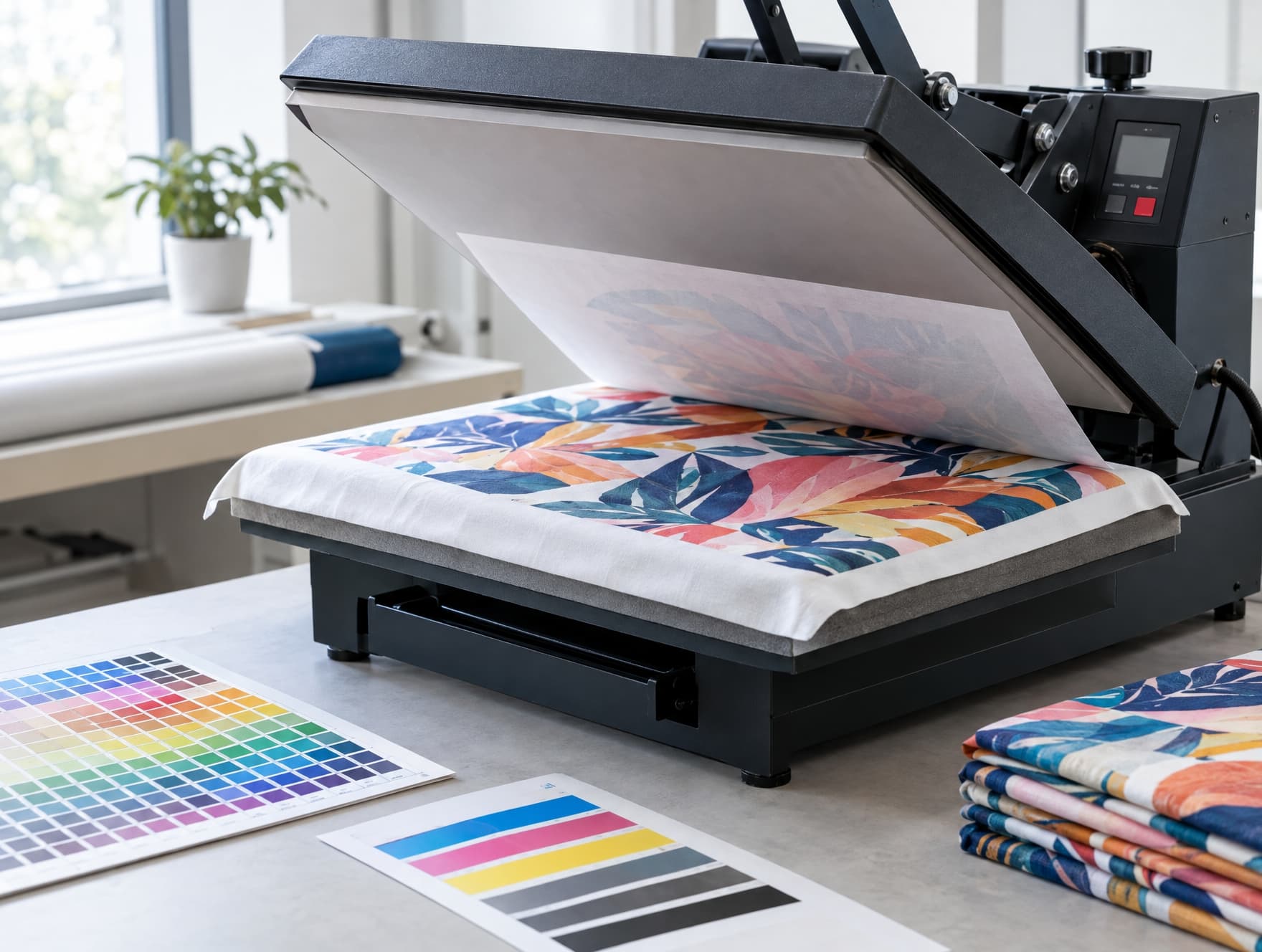
- Approve before bulk
- Test on terry.
Loading page content
Product family
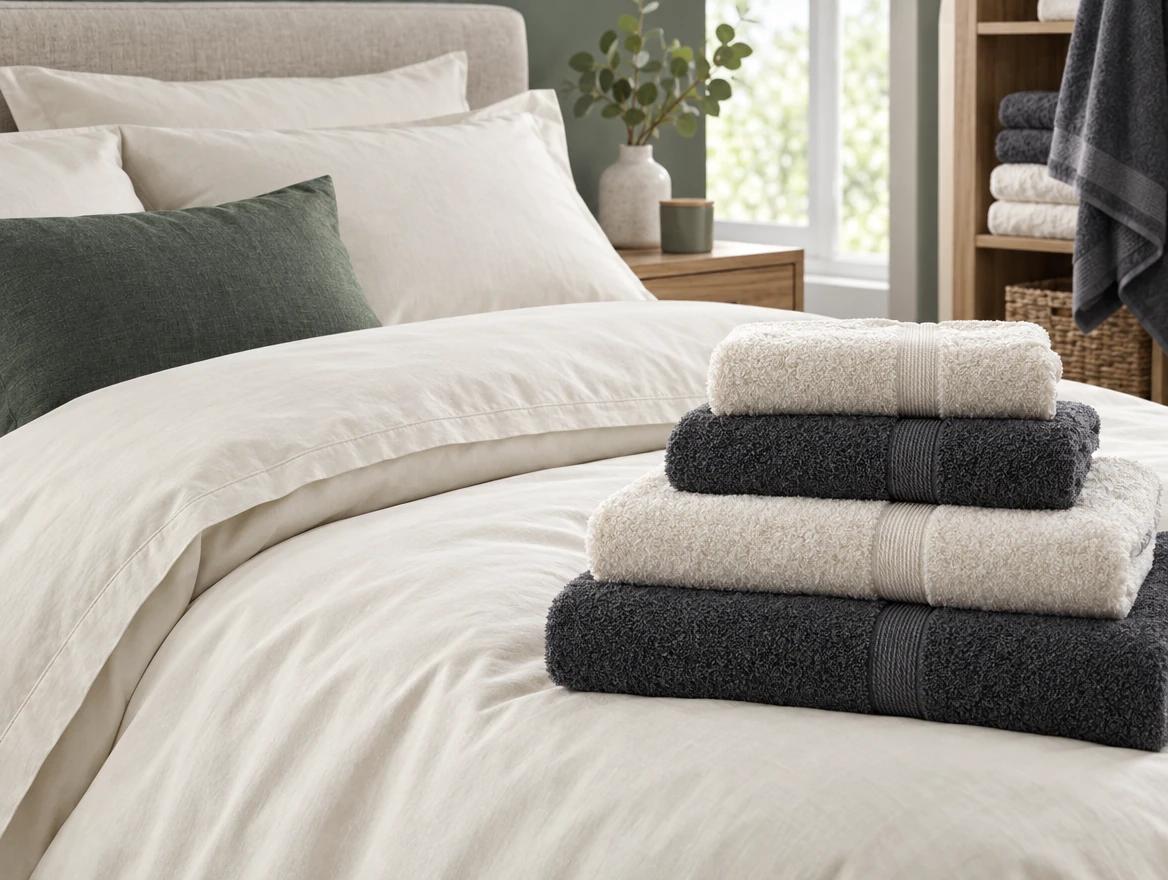
Towels, bed linen and table linen, where absorbency, dimensional stability and laundering performance matter most.
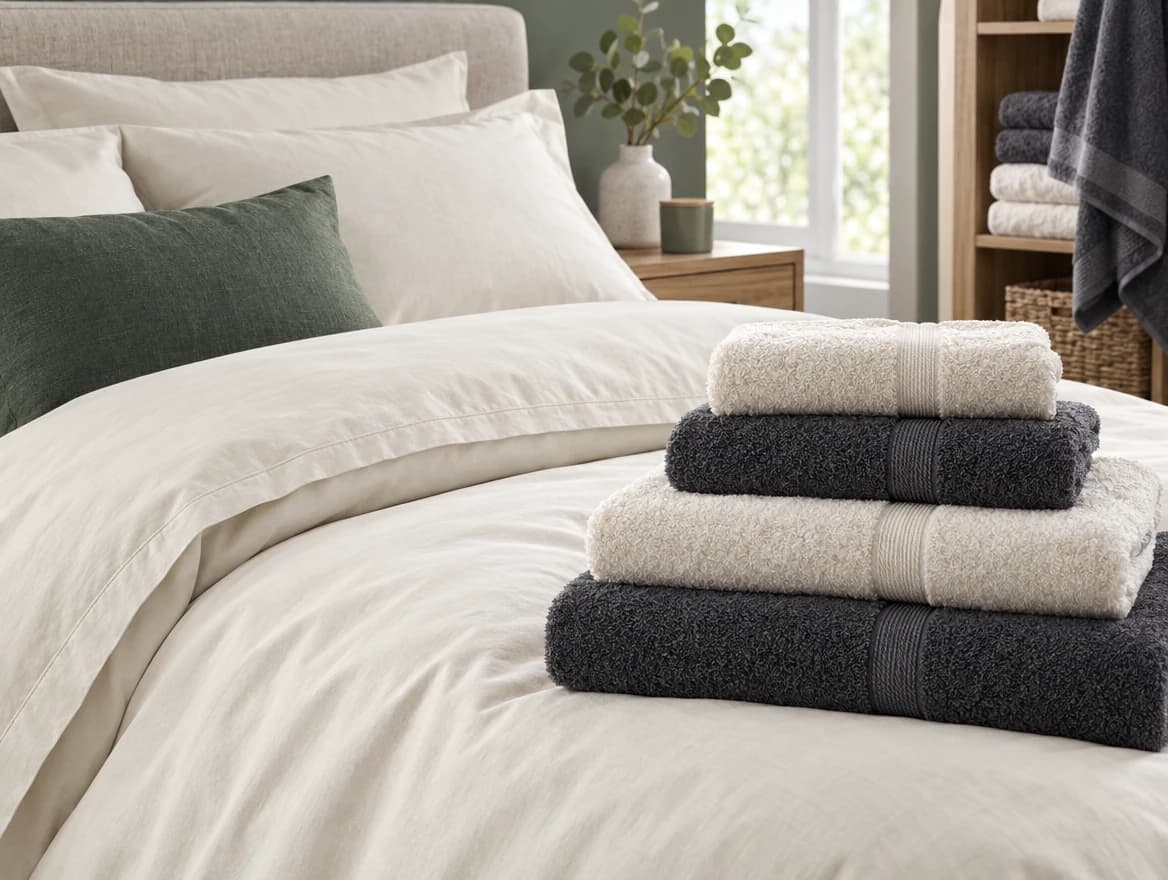
Home textiles are bought on tactile qualities and judged on durability. A towel is assessed by absorbency and handfeel; bed linen is assessed by how it feels after twenty washes rather than on the day it arrives.
Dimensional stability is the recurring technical issue. A fitted sheet that shrinks stops fitting the mattress, and a napkin that shrinks unevenly cannot be presented on a table, so shrinkage is controlled and confirmed post wash.
Hospitality buyers add a further requirement: commercial laundering at high temperature, which ages fabric far faster than domestic washing and has to be specified for from the start.
Product types
Representative products we manufacture in this category. Anything not listed can still be assessed on technical review.
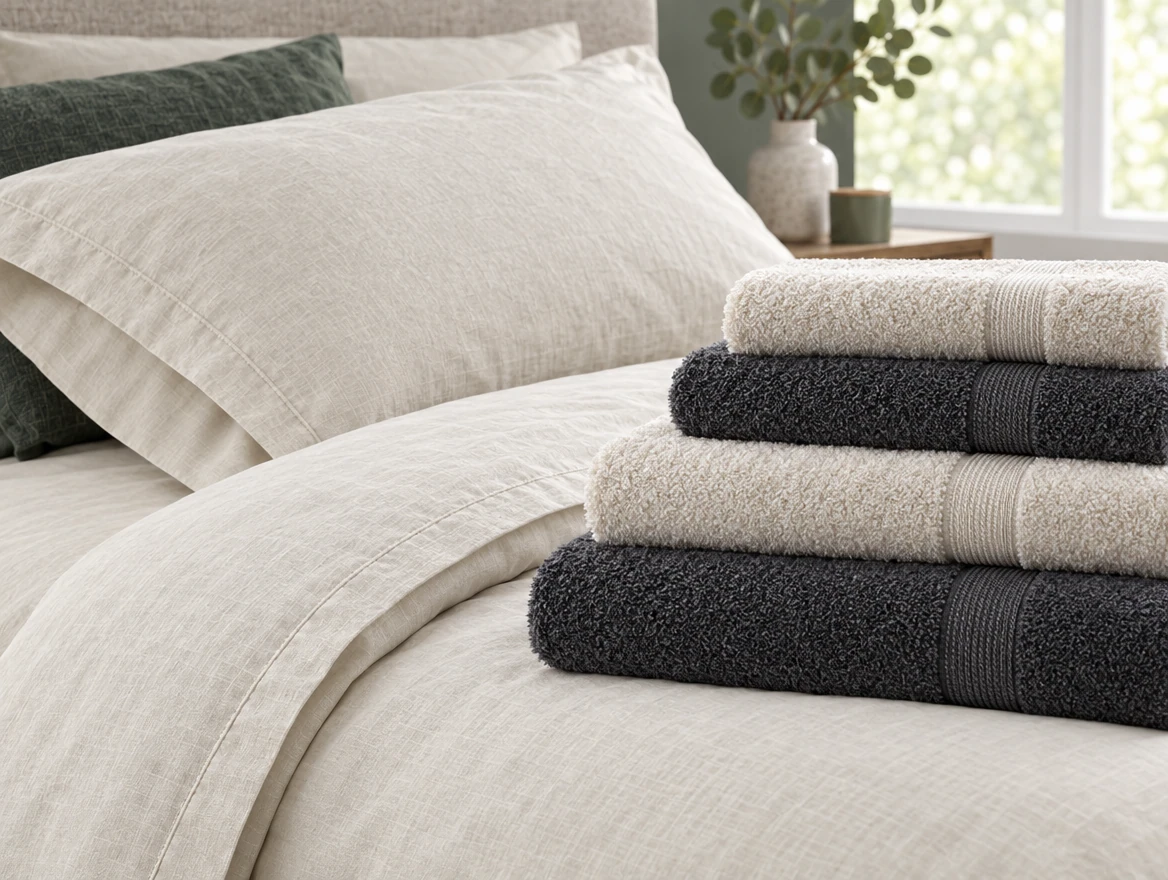
Terry towelling in a range of weights with hemmed or dobby borders.
Larger format towels, often printed or velour finished on one face.
Flat sheets, fitted sheets and pillowcases in woven cotton or blends.
Covers with button or zip closures in matched fabric.
Tablecloths, runners and napkins with hemmed or mitred corners.
Covers with concealed zip or envelope closures.
Specification
Weight ranges are typical for this category. The finished weight of your fabric is confirmed on the approved sample rather than guaranteed to a figure.
Ranges are typical. The exact specification is confirmed on your approved sample before production.
Component-level guidance for home textiles. Any ranges are indicative sourcing references, not guaranteed order specifications. Different components can need different fabrics, weights and units; the selected materials, construction and finished measurements are confirmed on the approved sample.
| Component | Weight, unit or setting | Construction choices | Check on the sample |
|---|---|---|---|
| Hand and bath towelsIndustry guidance | 400 to 500 gsm and 500 to 650 gsm typical ranges; suppliers list light, medium and heavy tiers from about 300 to 700 gsm. | Dobby borders. | Absorbency after washing. |
| PercaleIndustry guidance | 110 to 160 gsm typical range. | Fitted corners. | Shrinkage. |
Decoration
Decoration is matched to the fabric and the artwork rather than applied by default. Each method links to its own page with limits stated.
Which method suits each placement on home textiles, its trade-offs and what to approve before bulk. Compatibility is checked against the actual fabric, stretch, coating and heat tolerance; approval on one component does not establish suitability on another.
Materials
Composition, weight guidance and decoration compatibility for each fabric are on its own page.
What each part of home textiles is usually made from, why, where it falls short and what to check. This is industry guidance, not a TextileWays specification: the fabric and components for your order are confirmed on technical review.
Ordering
Neither figure is published as a universal number, because neither one is true across every specification.
MOQ depends on material availability, colour count, construction, decoration and packaging. Towelling is produced by specialist partners with their own batch minimums, and custom border designs are set at the loom rather than in finishing.
Absorbency and handfeel are assessed on washed samples rather than on unwashed ones, since finishing chemistry on new towelling masks its true performance until it has been laundered.
Detailed product guidance
Materials, manufacturing routes and buying considerationsHome textiles are bought on tactile qualities and judged on durability. A towel is assessed by absorbency and handfeel, and bed linen by how it feels after many washes.
Terry towelling is made in a range of weights, with hemmed or dobby borders, by specialist partners that TextileWays audits and supervises.
Woven cotton or blended bed linen, with closures and sizes made to the destination market's dimensions.
Dimensional stability is the recurring technical issue: a fitted sheet that shrinks stops fitting the mattress.
Higher weight terry generally means greater absorbency and slower drying. Absorbency is assessed on washed samples, since finishing on new towelling masks true performance.
Percale is crisp and cool, while other weaves are softer. Thread weight and finishing decide handfeel.
Hospitality buyers need textiles that survive commercial laundering at high temperature, which ages fabric far faster than domestic washing.
Tablecloths, runners and napkins with hemmed or mitred corners, with shrinkage controlled and confirmed after washing.
A developed product can carry your labels, colours and packaging (ODM, often called white label).
Production runs at partner facilities, so minimums follow their batch sizes.
Samples are judged after washing, which shows how the product will really perform.
Towelling partners have their own batch minimums, and custom border designs are set at the loom, so we confirm quantities on review.
Home textiles are made for two quite different buyers: hospitality businesses that need durable linen in volume, and retail brands that sell to consumers. Both depend on dimensions, weight and finish being exactly as specified.
Hospitality linen is washed at high temperature repeatedly, so towel weight, weave and colour fastness are chosen for that life. Dimensions and weights are checked against the specification, because an inconsistent towel is easy to notice.
Retail brands care about handfeel, presentation and packaging. Towels and bed linen can be banded, boxed or bagged for retail, with your labels and size information.
Bed sizes and labelling conventions differ between markets, and a product made to the wrong dimensions is a returns problem.
Bed sizes differ substantially between the USA, the UK and continental Europe, and products are made to the destination market's dimensions.
Labels carry fibre content, care and size information in the wording you approve for your market.
Questions
Answers relevant to this product family. The full list covers ordering, sampling, materials, decoration, compliance and logistics.
Minimum order quantity depends on material availability, colour count, construction, decoration and packaging. Projects can begin from approximately 50 pieces per style following technical review. Where a fabric has to be knitted or dyed specifically for a project, the practical minimum is set by the mill rather than by us, and we tell you that before you commit.
Sampling normally runs in stages: a proto sample to confirm construction, a fit sample against your measurement chart, and a pre production sample that fixes fabric, colour, decoration, labelling and packaging. Each stage needs written approval before the next one starts. Sample charges and courier costs are quoted before work begins.
We build labelling into the specification and apply exactly what you approve, including fibre content, care symbols, country of origin and identification details. Responsibility for confirming what your market and your product category legally require stays with you as the brand owner. We flag anything that looks inconsistent before production.
Share your product details, target quantity and delivery requirements. We will confirm feasibility, materials and construction before quoting.
Contact our team