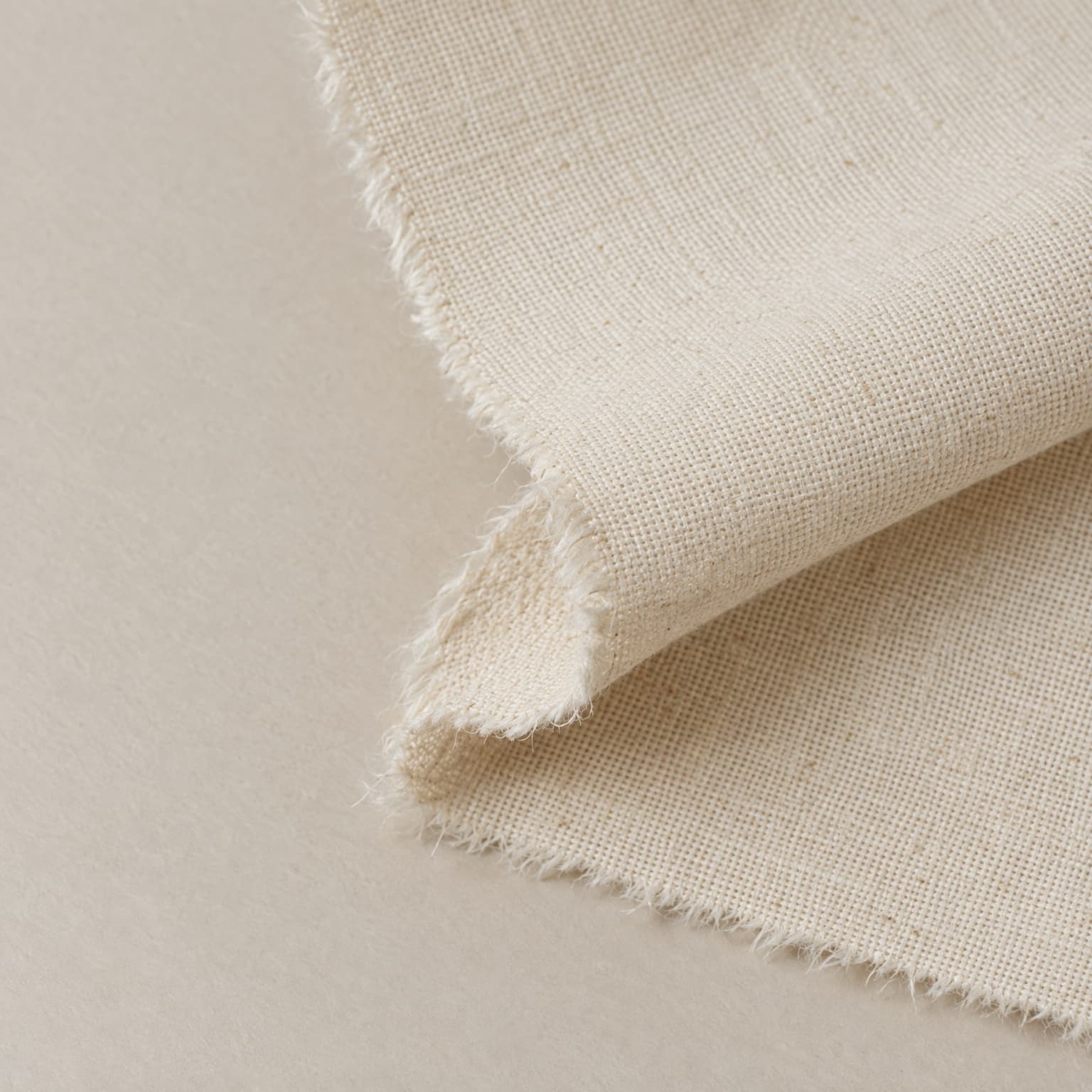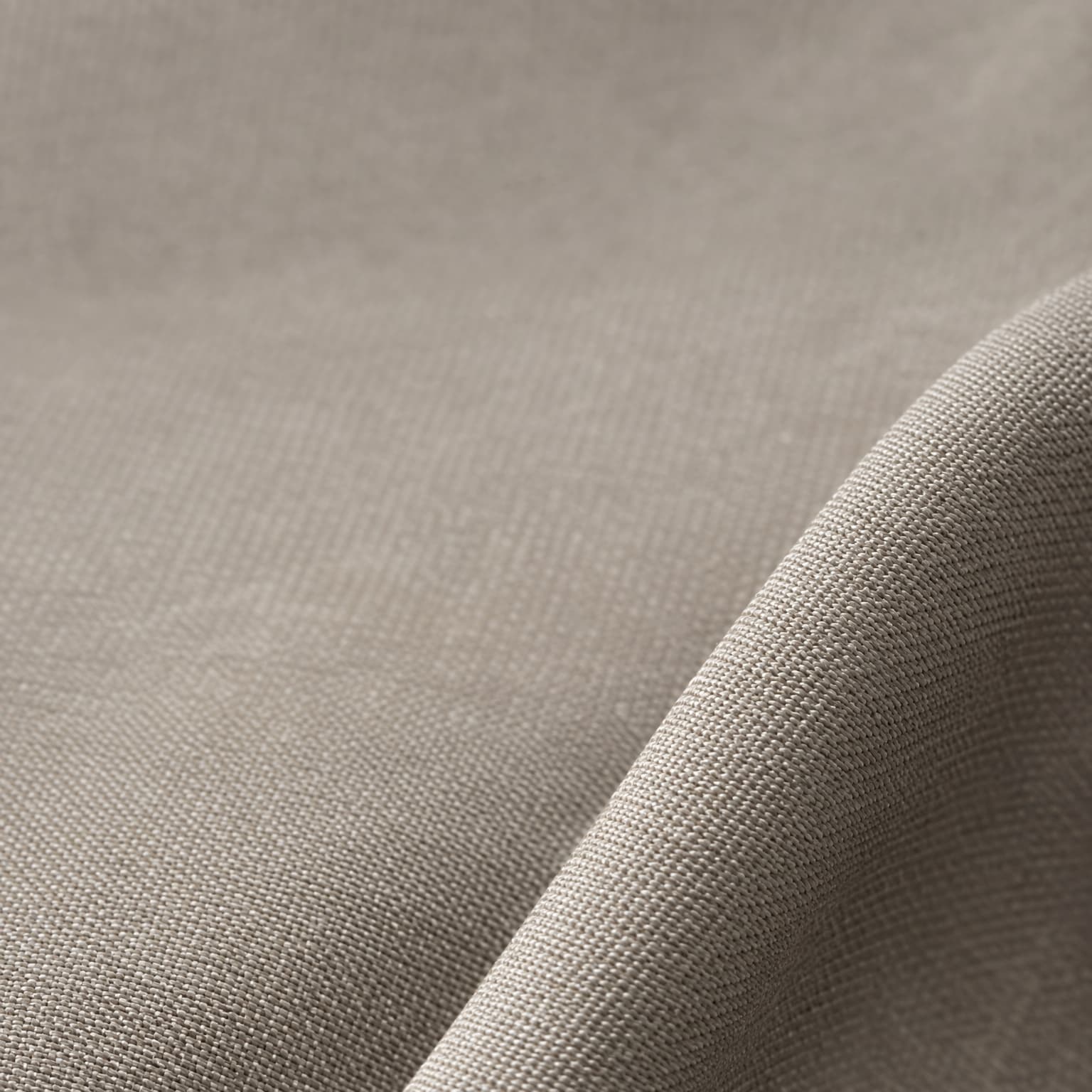
The short answer
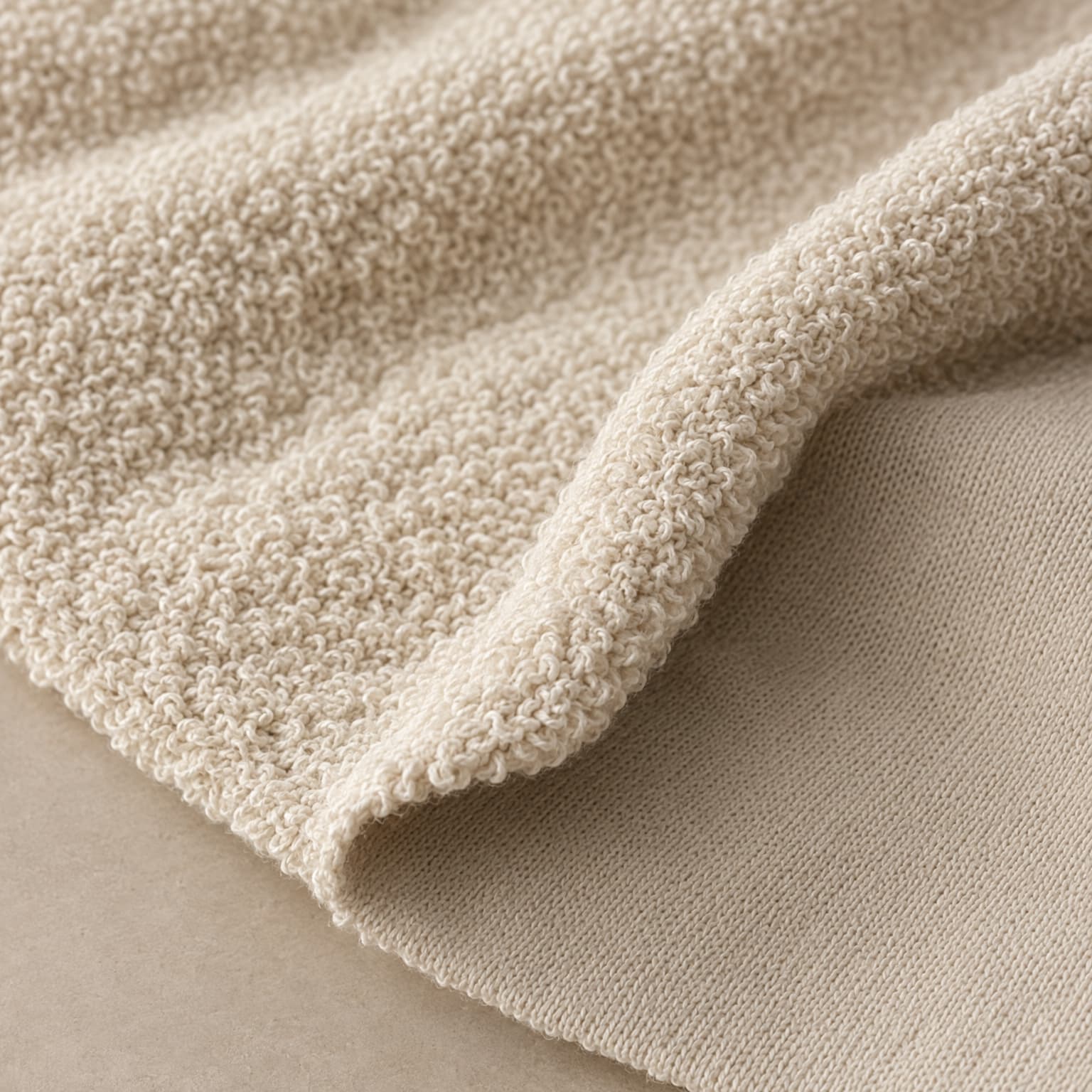
French terry and fleece start as the same kind of knit: a cotton or cotton blend fabric with a flat face and loops of yarn on the back. The difference is what happens to the back. French terry leaves the loops as they are. Fleece brushes them to raise a soft, insulating pile.
That one finishing step changes weight, warmth, drape and how the garment behaves in the wash, which is why the two fabrics suit different products.
How each fabric is built
French terry is a loopback knit. The inside shows small, even loops, and the outside is smooth like a jersey. Because the loops are open, the fabric breathes well and feels cool against the skin.
Fleece begins as a similar loopback or terry structure and is then brushed on the inside with fine wires or rollers. Brushing opens the loops into a dense nap that traps air, which is why fleece feels soft and warm.
- French terry: visible loops inside, smooth face, lighter and drier to wear.
- Brushed fleece: raised soft pile inside, thicker and warmer, with a heavier hand.
- Both can be 100% cotton or cotton polyester blends, so check the composition as well as the name.
Weight and warmth
Weight is quoted in grams per square metre (gsm). As a typical guide, French terry for sweatshirts and joggers often sits in a mid weight range, while premium heavyweight hoodies in brushed fleece are commonly specified at a much higher weight. Ranges vary by mill, so treat any number as a starting point and confirm the finished weight on the approved sample.
Heavier does not automatically mean better. A very heavy fleece can feel stiff and bulky in warm climates, while a light French terry can look flimsy on a streetwear silhouette that depends on body.
Choosing by product
A useful rule is to start from where and how the garment will be worn.
- Spring and autumn sweatshirts, joggers and loungewear: French terry.
- Heavyweight hoodies and cold weather streetwear: brushed fleece.
- Garments that need a clean, structured drape: French terry.
- Garments that need maximum softness and insulation: fleece.
- Markets with mild winters or year-round sales: French terry usually wins on versatility.
Printing, embroidery and wash behaviour
The raised pile of brushed fleece affects fine detail. Small text and thin lines can lose sharpness on fleece, so confirm artwork on a strike off before committing to bulk. French terry holds detail more crisply.
Both fabrics are cotton knits, so they relax and shrink after laundering. Record post wash measurements against your chart, and decide whether the garment will be washed before sale, since a garment wash changes both size and hand feel. Fleece can pill with wear if the yarn quality is low, which is another reason to approve a sample rather than a swatch alone.
What to put in the brief
To get an accurate quote and a sample that matches your intent, state the fabric structure by name, the composition, the target weight in gsm, whether the inside is brushed, the colour and the finish. Add a reference garment if you have one, because a physical reference removes more ambiguity than any description.