School crest
Supplier example- Method
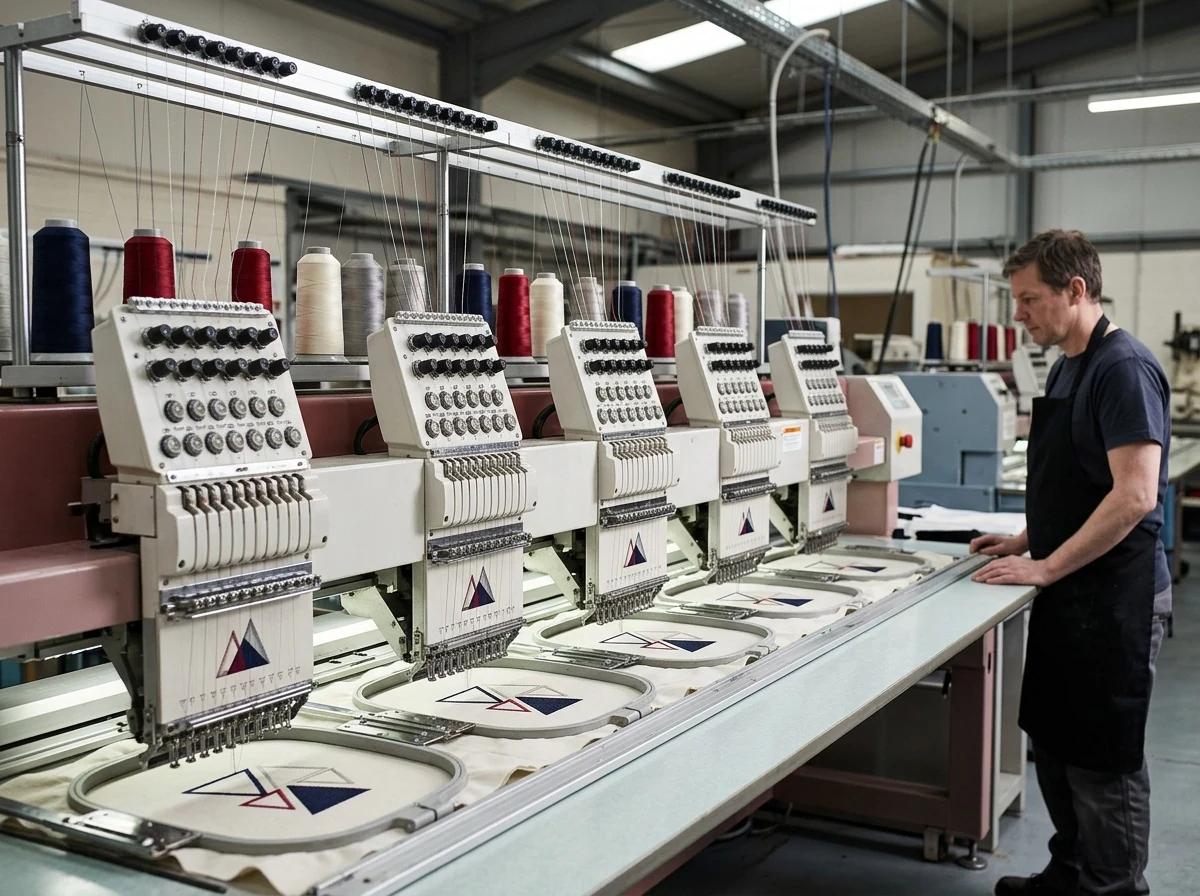
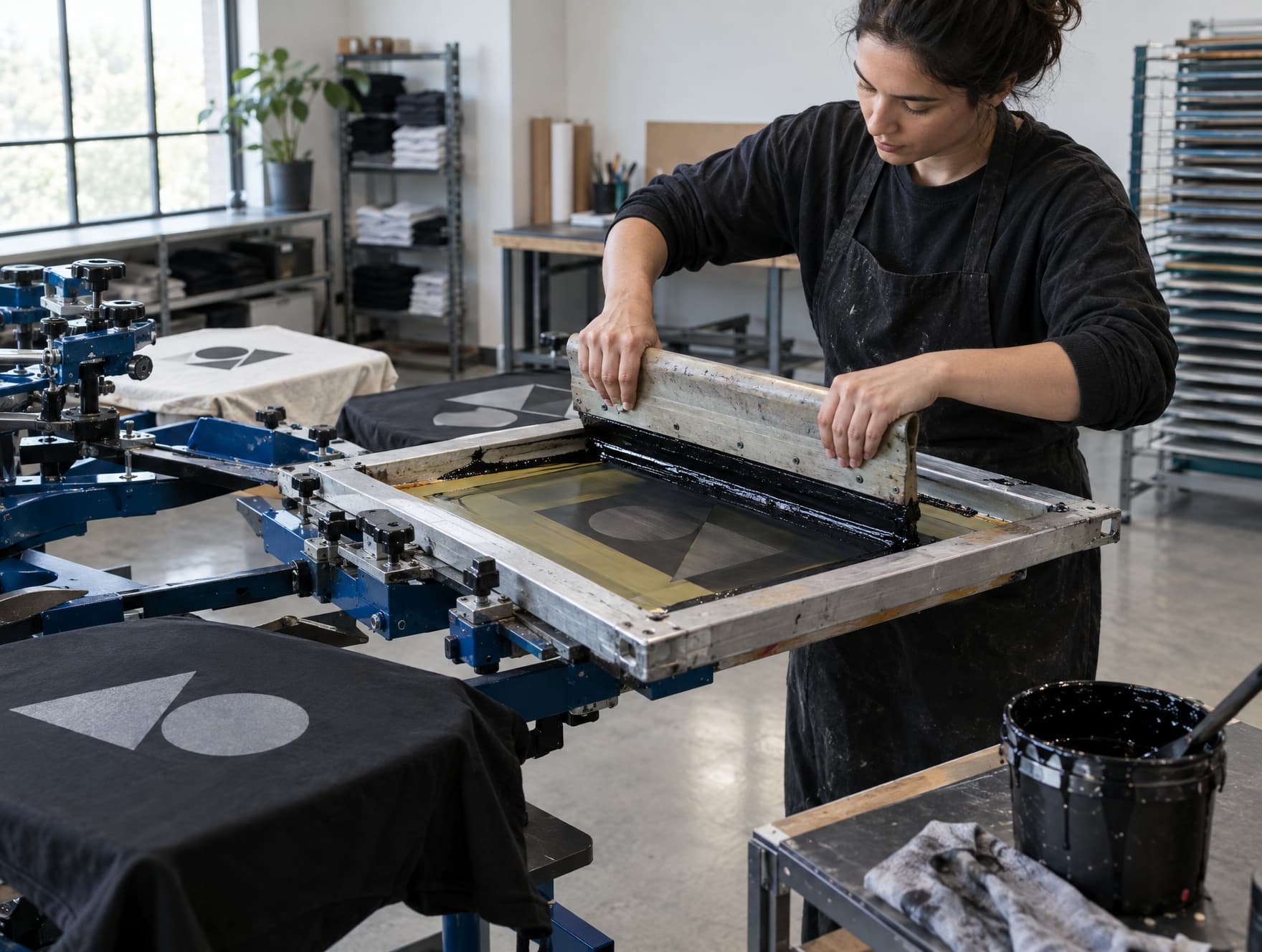
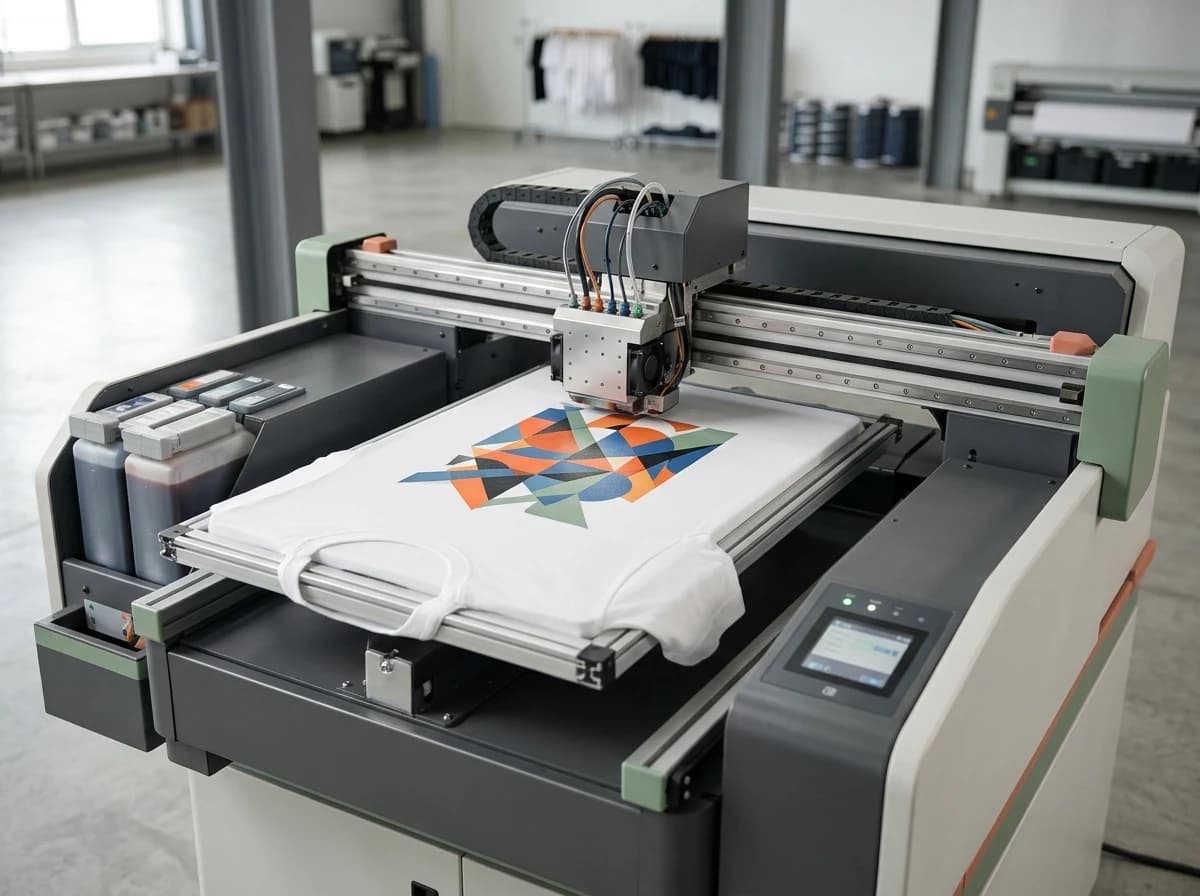
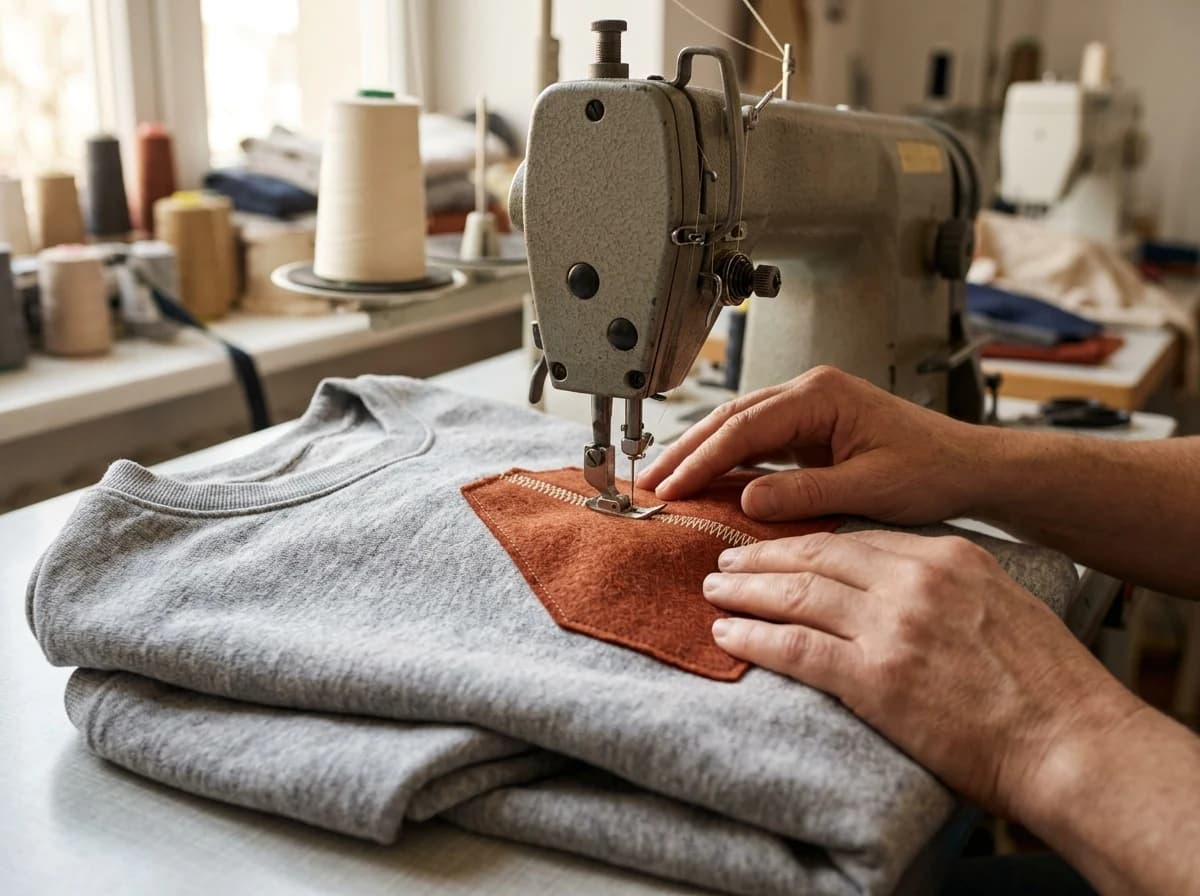
- Embroidery or patch
- Trade-off
- Crests are embroidered per programme.
- Approve before bulk
- Check against the crest file.
Loading page content
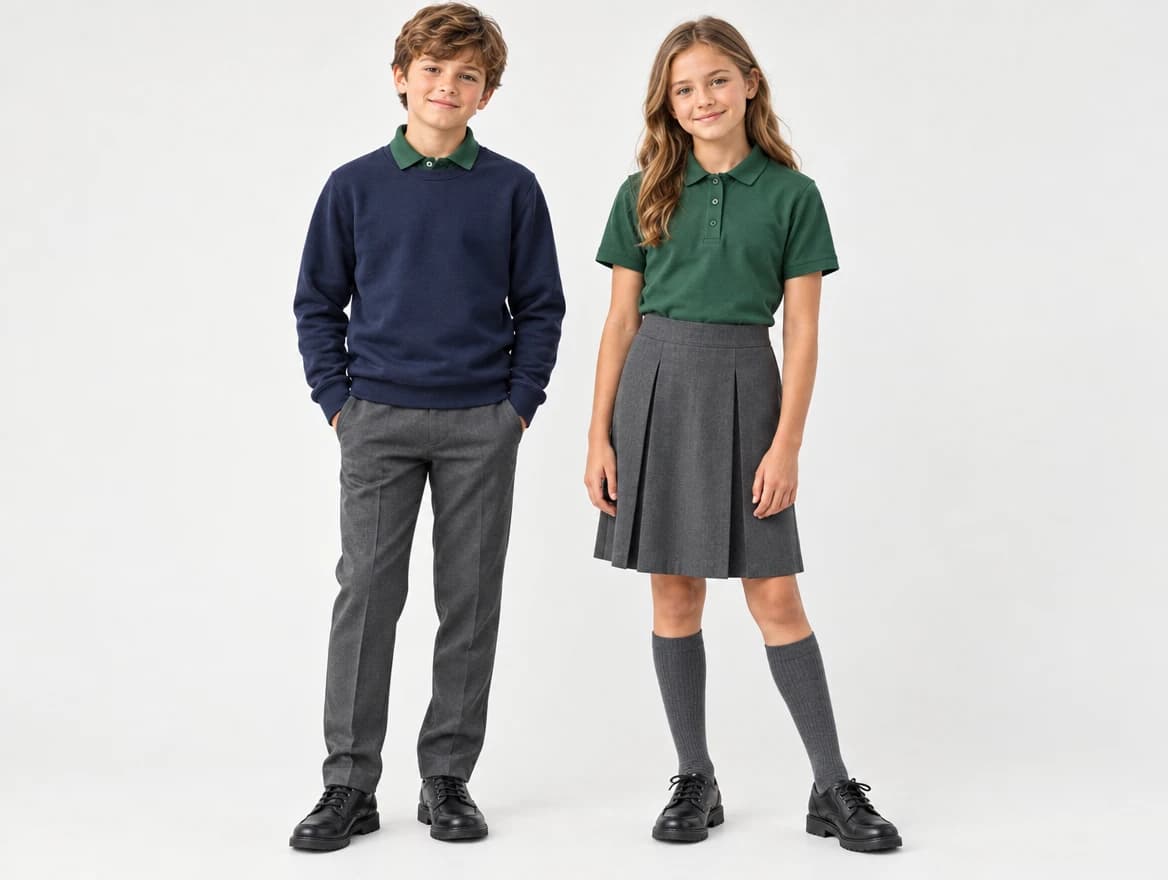
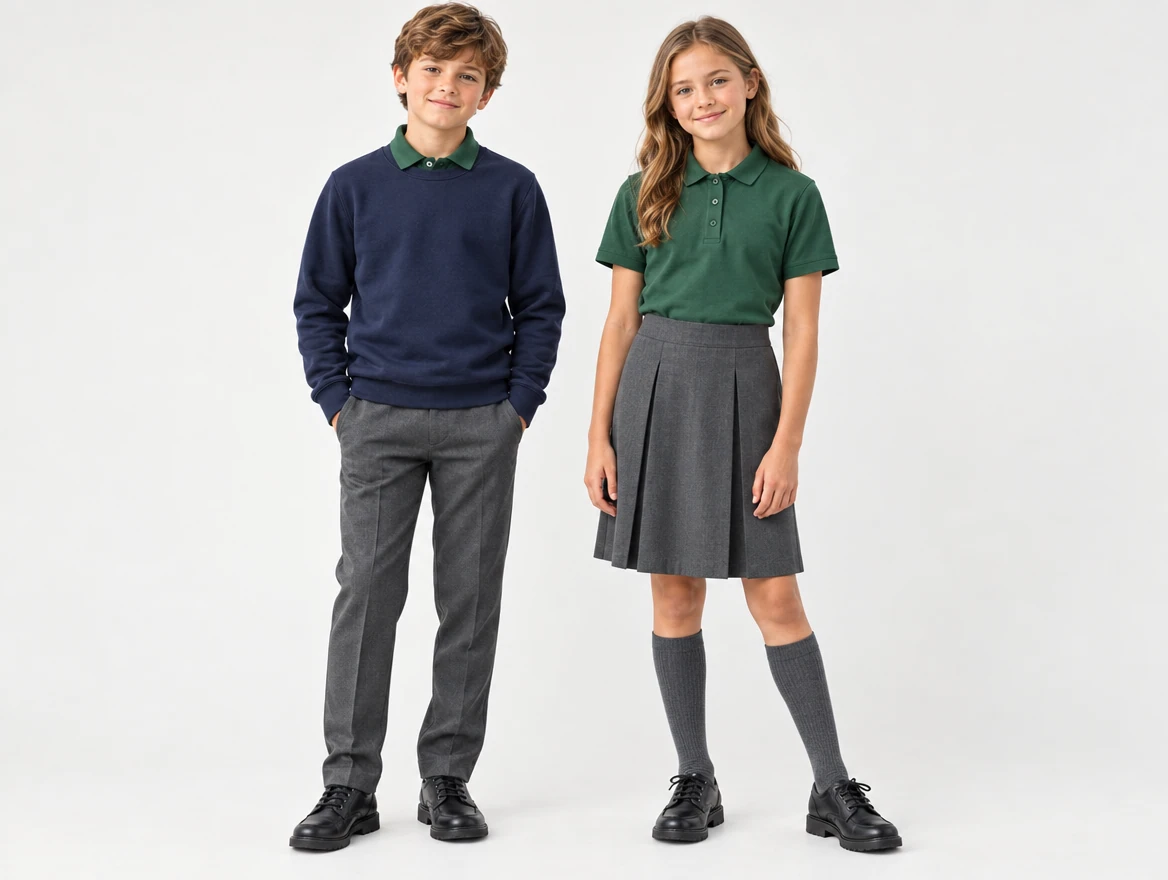
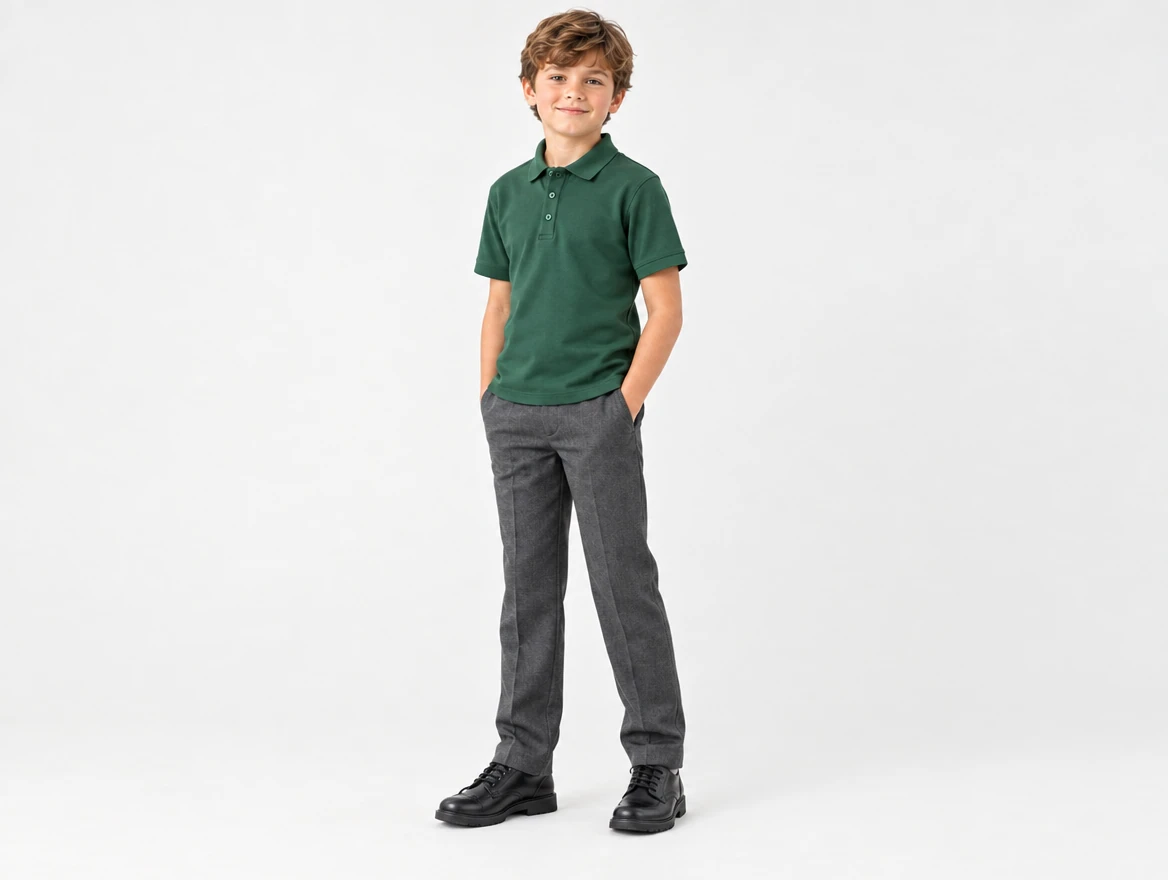
TextileWays manufactures school uniform programmes: durable polos, sweatshirts and trousers built for children's apparel's specific safety and construction requirements, supplied consistently across school years and student intakes.
School uniform sits at the intersection of two disciplines: uniform consistency (a reorder in year three has to match year one) and children's apparel safety (component and fastening choices are made with the applicable standard in mind, not treated as a final check). Responsibility for confirming which standards apply to your programme and market remains with the school or supplier as the brand owner.
Product types
Anything not listed can still be assessed on technical review.
Specification
Weight ranges are typical for this product. The finished weight of your fabric is confirmed on the approved sample rather than guaranteed to a figure.
Ranges are typical. The exact specification is confirmed on your approved sample before production.
Component-level guidance for school uniforms. Any ranges are indicative sourcing references, not guaranteed order specifications. Different components can need different fabrics, weights and units; the selected materials, construction and finished measurements are confirmed on the approved sample.
| Component | Weight, unit or setting | Construction choices | Check on the sample |
|---|---|---|---|
| Children's jerseyIndustry guidance | 150 to 190 gsm typical range. | Reinforced knees. | Pilling after washing. |
| Children's fleeceIndustry guidance | 260 to 320 gsm typical range. | Drawcord free hoods. | Shrinkage. |
Decoration
Decoration is matched to the fabric and the artwork rather than applied by default.
Which method suits each placement on school uniforms, its trade-offs and what to approve before bulk. Compatibility is checked against the actual fabric, stretch, coating and heat tolerance; approval on one component does not establish suitability on another.
Materials
Composition, weight guidance and decoration compatibility for each fabric are on its own page.
What each part of school uniforms is usually made from, why, where it falls short and what to check. This is industry guidance, not a TextileWays specification: the fabric and components for your order are confirmed on technical review.
Ordering
None of these figures are published as a universal number, because none is true across every specification.
MOQ depends on material availability, colour count, construction and packaging. School ranges span many sizes, so the effective minimum is the per style minimum multiplied across the size range offered.
Component safety testing is planned into the sampling schedule rather than treated as a final step, because a failed fastener test after production is expensive to correct.
Lead time depends on the factors above rather than a single published figure. An indicative schedule is confirmed with your quotation.
Detailed product guidance
Materials, manufacturing routes and buying considerationsSchool uniforms are ordered by season, in many sizes, and must match from year to year. That makes sizing accuracy and consistency the priorities.
Standard school garments are developed to your size chart, with crest embroidery and colours matched to your standard.
Programmes for schools and uniform suppliers, with sizes, crests and colours confirmed on samples.
Children are hard on clothes, and parents expect a uniform to last a school year.
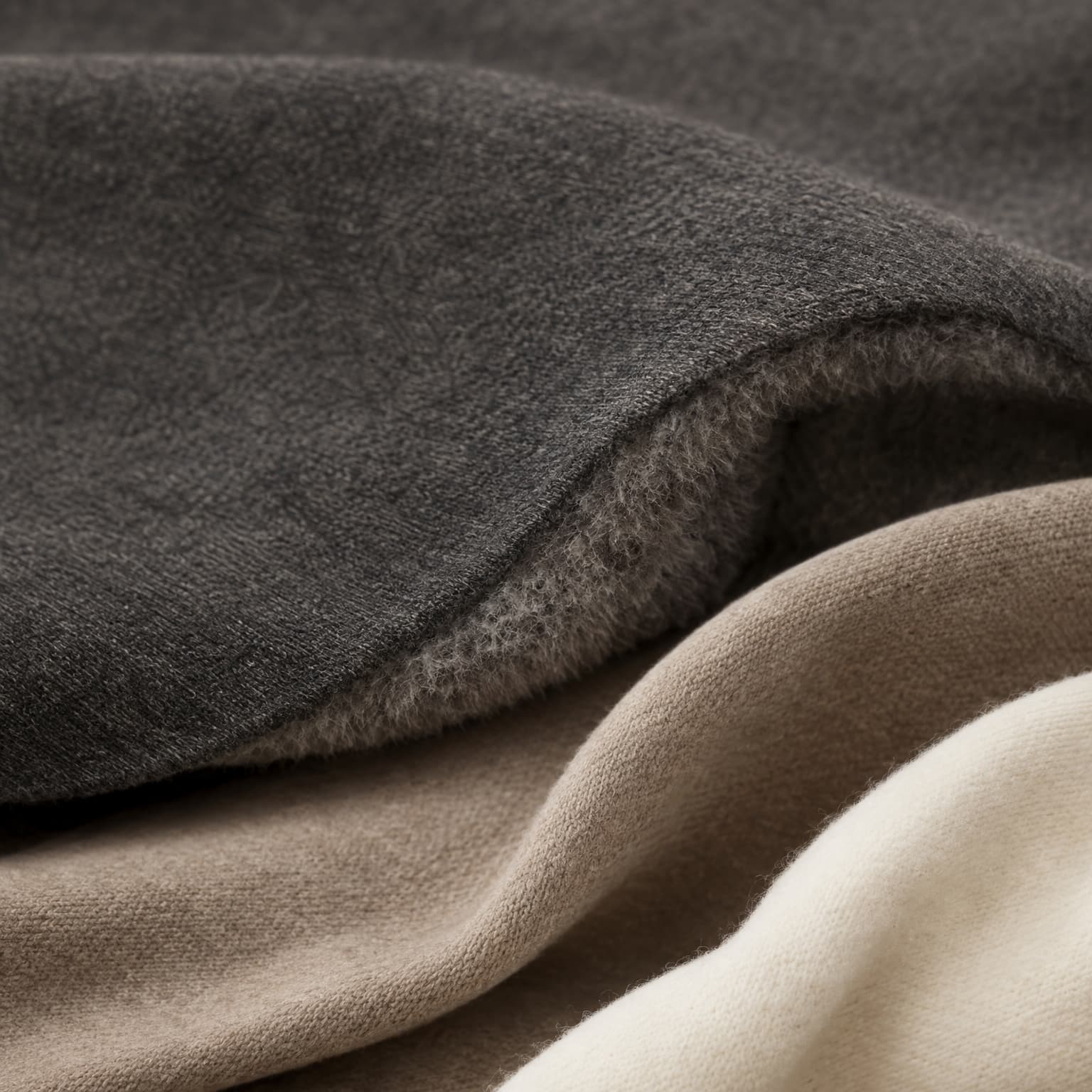
Hard wearing blends hold colour and shape through frequent washing and rough use.
Soft finishes and safe components matter for children, and requirements differ between markets.
Uniform retailers and distributors can have garments made under their own label, with their own packaging and size labelling.
Developed polo and sweatshirt blocks can be branded with your crest and labels (ODM, often called white label).
Crests are embroidered or applied, with placement approved on the sample.
Orders are timed to the school calendar, so sampling is planned early.
Measurements are confirmed on samples before bulk production.
Approved standards are retained for reorders, so replacements match.
A school uniform order succeeds or fails on planning. Sizes have to cover a wide range of pupils, crests and colours have to match the school's standard, and delivery has to land before term starts, so the order is built backwards from the date the garments are needed.
A uniform size run usually spans many age groups, with larger quantities in the common middle sizes and smaller ones at each end. We grade from the size chart you supply and confirm the key measurements on a fit sample, so a size labelled for one age group fits that age group.
Sampling, approval, bulk production and shipping each take time, and approval delays push everything after them. Sharing your delivery date at the start lets us plan the sample stages around it instead of discovering a clash late.
A school wants every pupil to look part of the same uniform, whether they bought a polo this year or two years ago. That is a consistency problem, and it is solved by recording standards rather than by trusting memory.
School colours such as navy, maroon and bottle green are easy to get slightly wrong. We match to the reference you provide, record the approved colour and keep the approved sample, so a reorder can be checked against it.
A crest has to sit in the same place on every garment. Position, size and stitch density are approved on the sample and repeated across the run, so garments from different batches look the same.
A school outfitter can sell developed polos and sweatshirts under its own label (ODM, often called white label), or supply its own pattern for a private label range. Either way the garments carry your labels, size marks and packaging.
Questions
We build labelling into the specification and apply exactly what you approve, including fibre content, care symbols, country of origin and identification details. Responsibility for confirming what your market and your product category legally require stays with you as the brand owner. We flag anything that looks inconsistent before production.
An approved pre production sample and the signed specification become the reference for repeat orders. Reorders are checked against that reference rather than reinterpreted, which is what keeps a second run consistent with the first. Where a fabric or trim has changed availability, we tell you before production instead of substituting quietly.
Sampling normally runs in stages: a proto sample to confirm construction, a fit sample against your measurement chart, and a pre production sample that fixes fabric, colour, decoration, labelling and packaging. Each stage needs written approval before the next one starts. Sample charges and courier costs are quoted before work begins.
Pick a design as your starting point. Colours, fabric and branding are set in the quote.
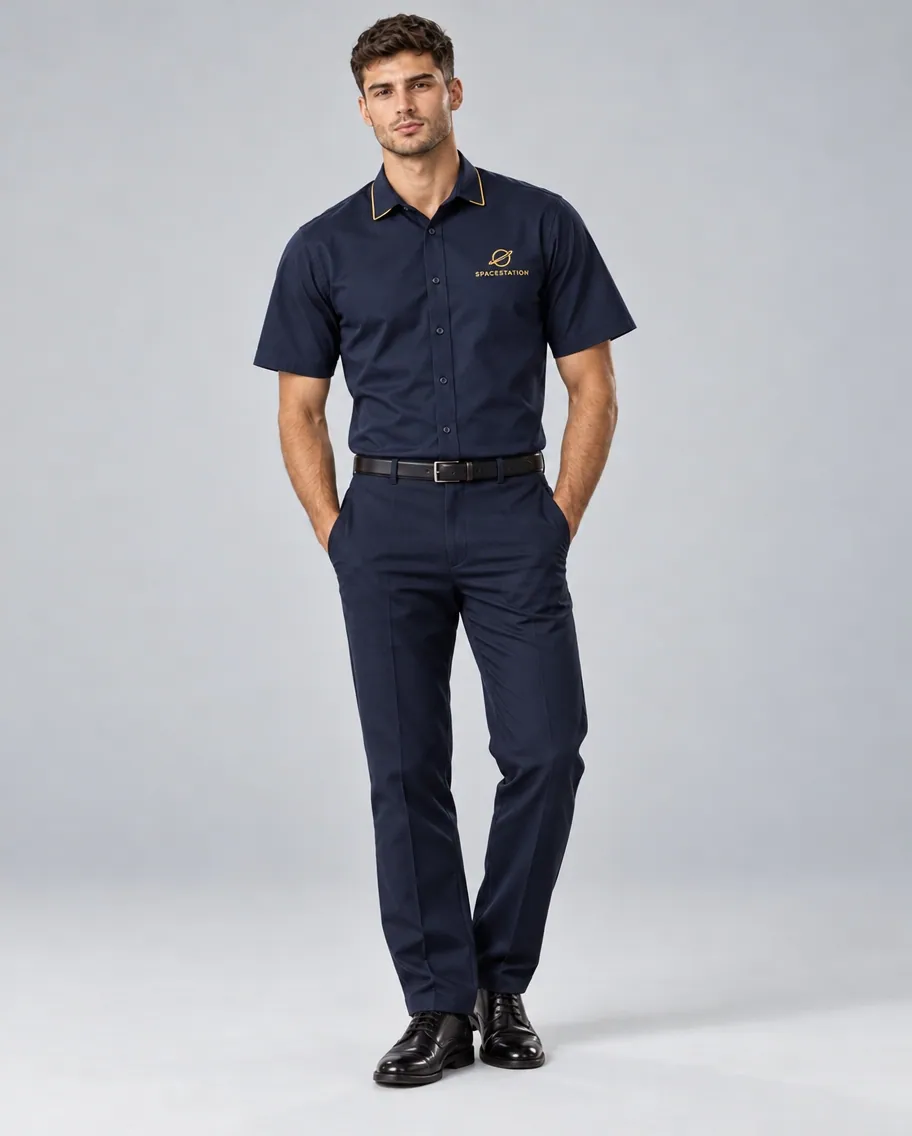 Navy restaurant and bar shirt with gold trimAsk for this design
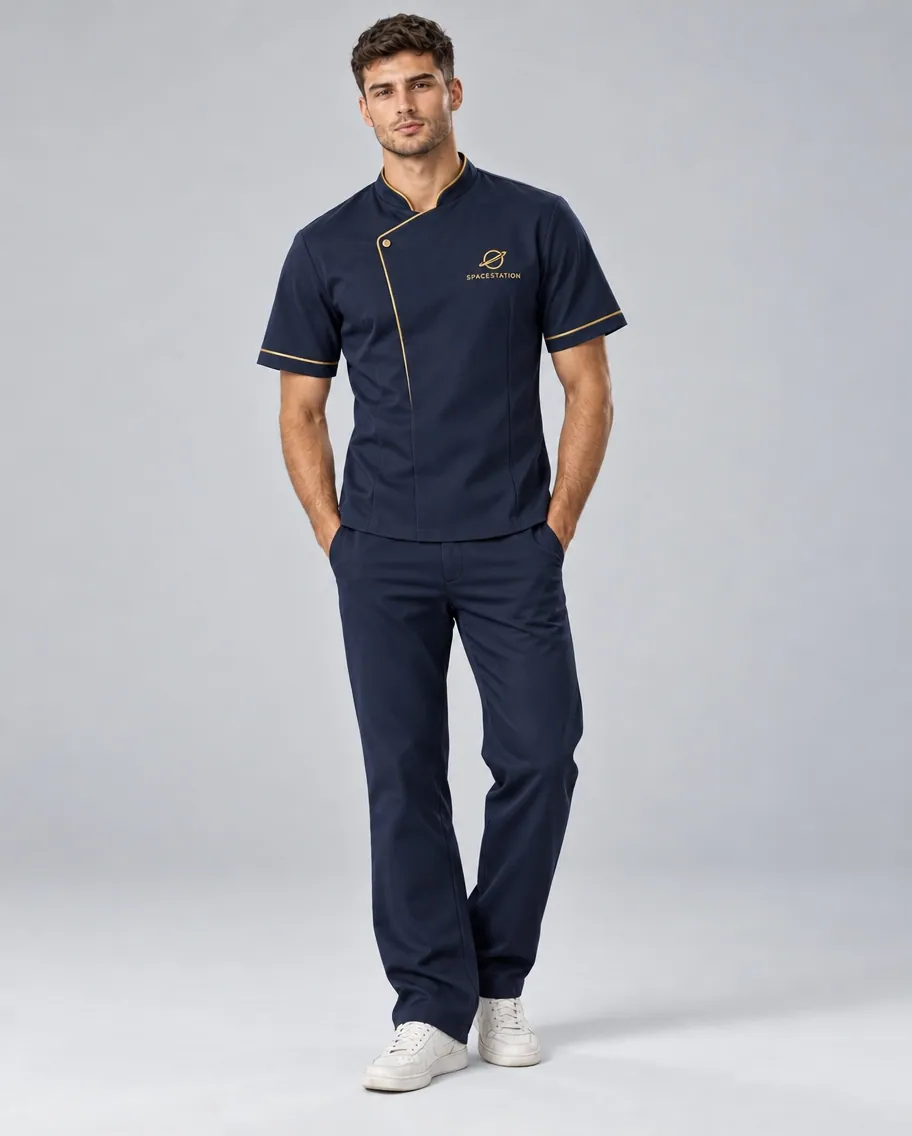 Navy housekeeping tunic with gold trimAsk for this design
 Navy management jacket with gold pipingAsk for this design
 Light blue stretch shirt with navy trousersAsk for this design
Sampling comes before bulk. From approximately 50 pieces per style, subject to technical review.
Tell us your designShare your product details, target quantity and delivery requirements. We will confirm feasibility, materials and construction before quoting.
Contact our team