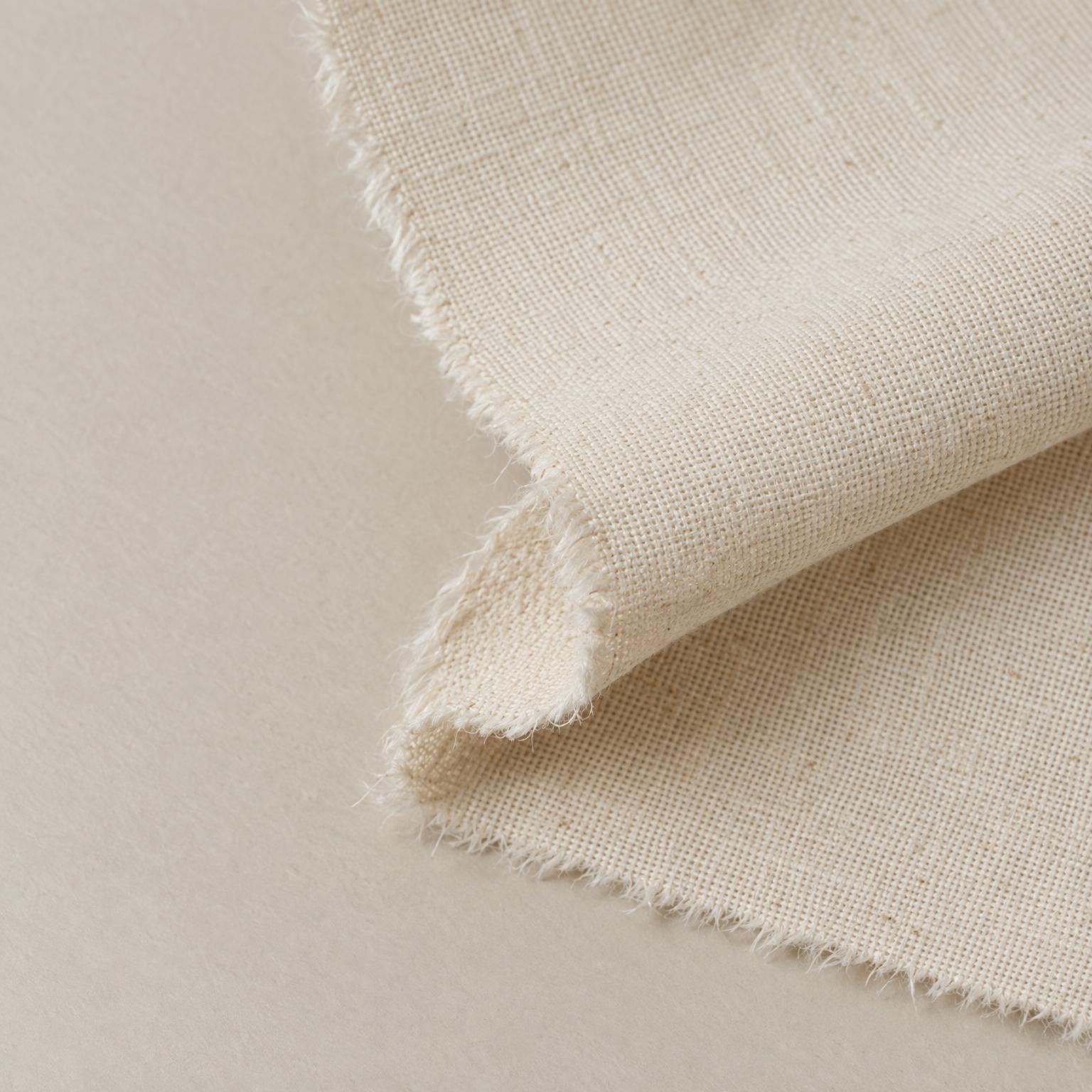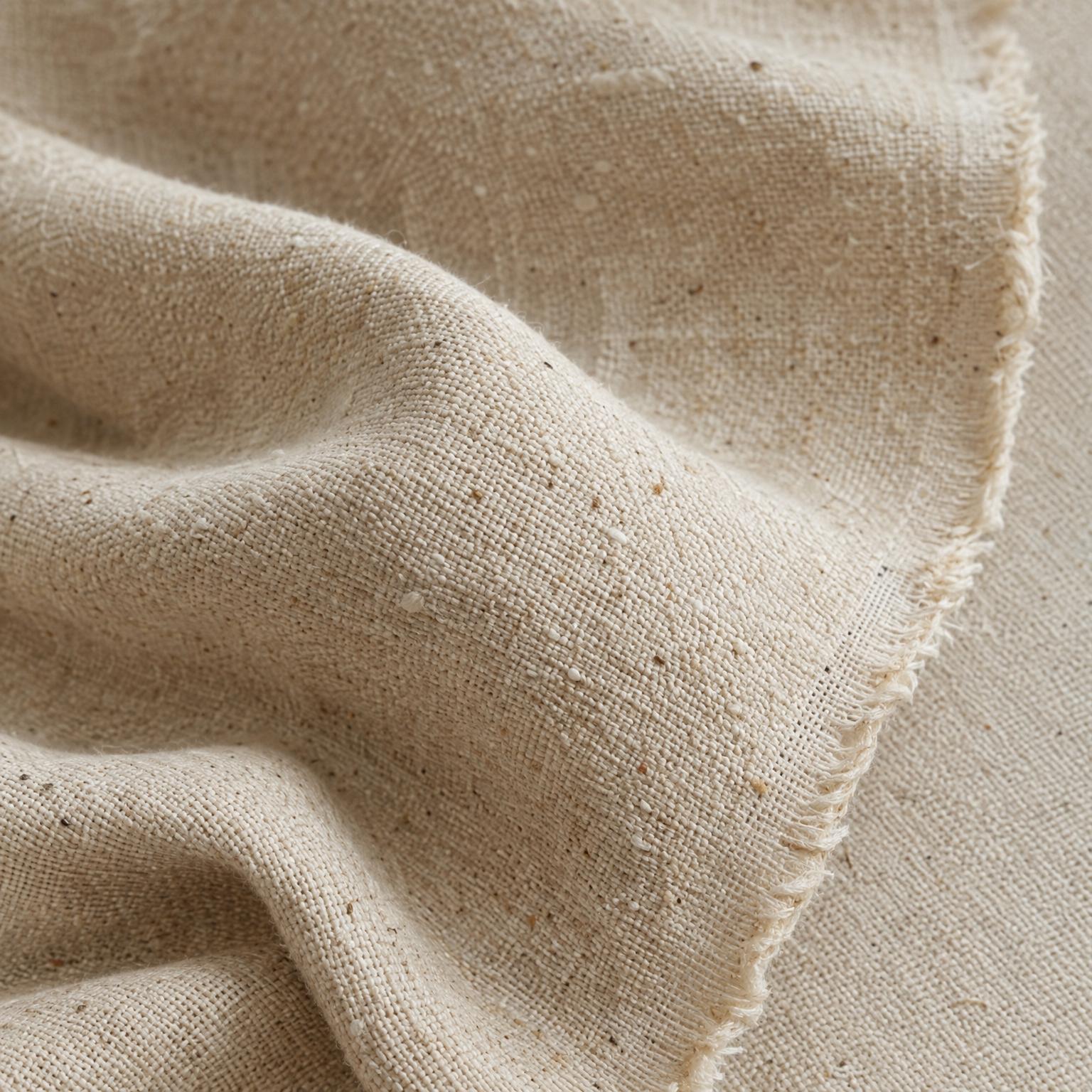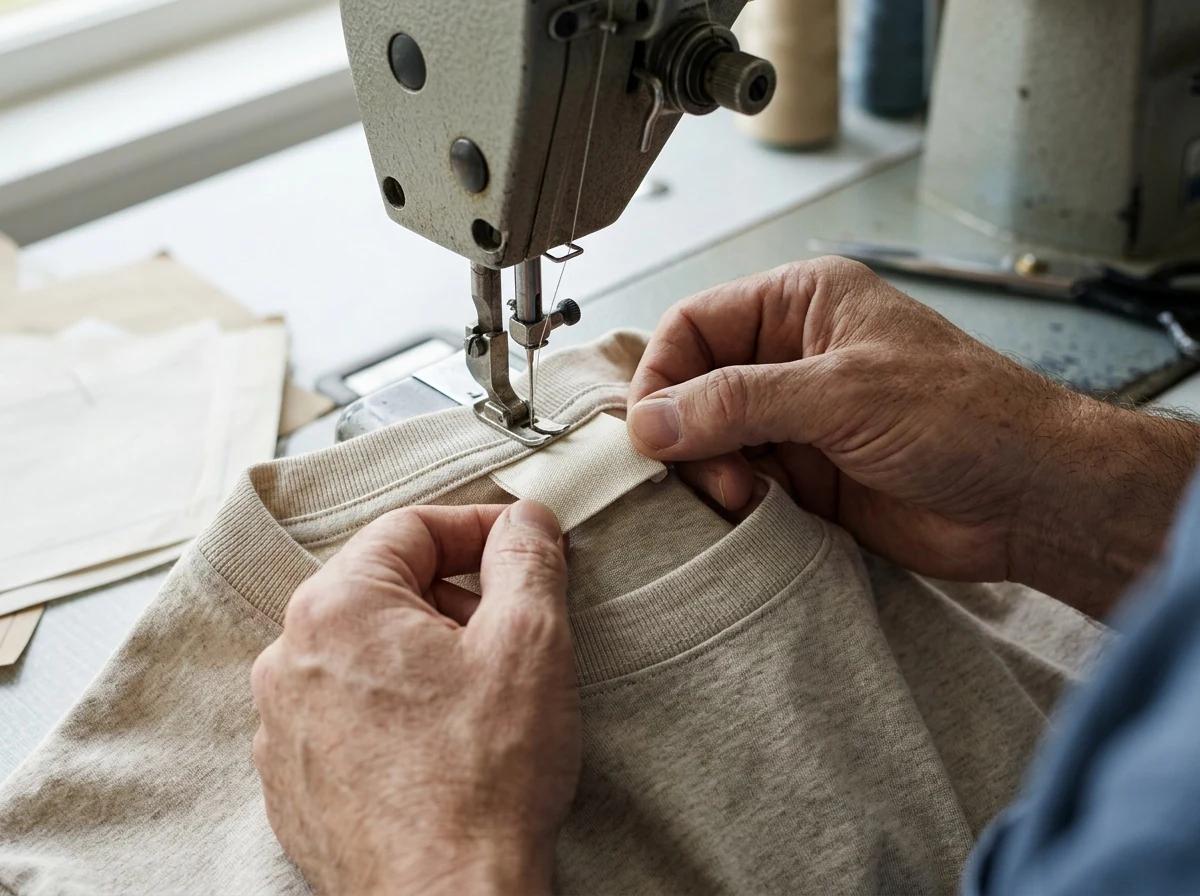


Chest and sleeve marks
Supplier example- Method
- Embroidery or applique
- Trade-off
- Knit stretches and can distort under stitching, so backing and density matter.
- Approve before bulk
- Test on the real knit.
Loading page content
Product
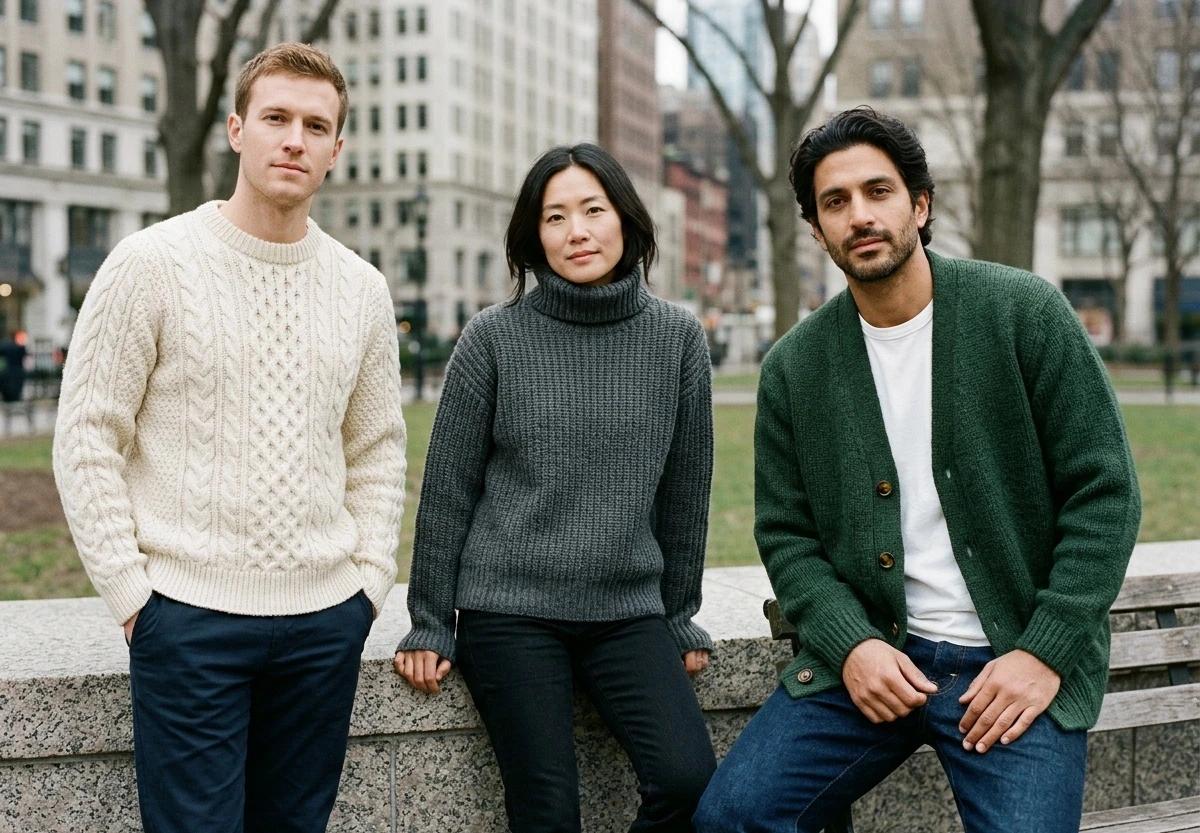
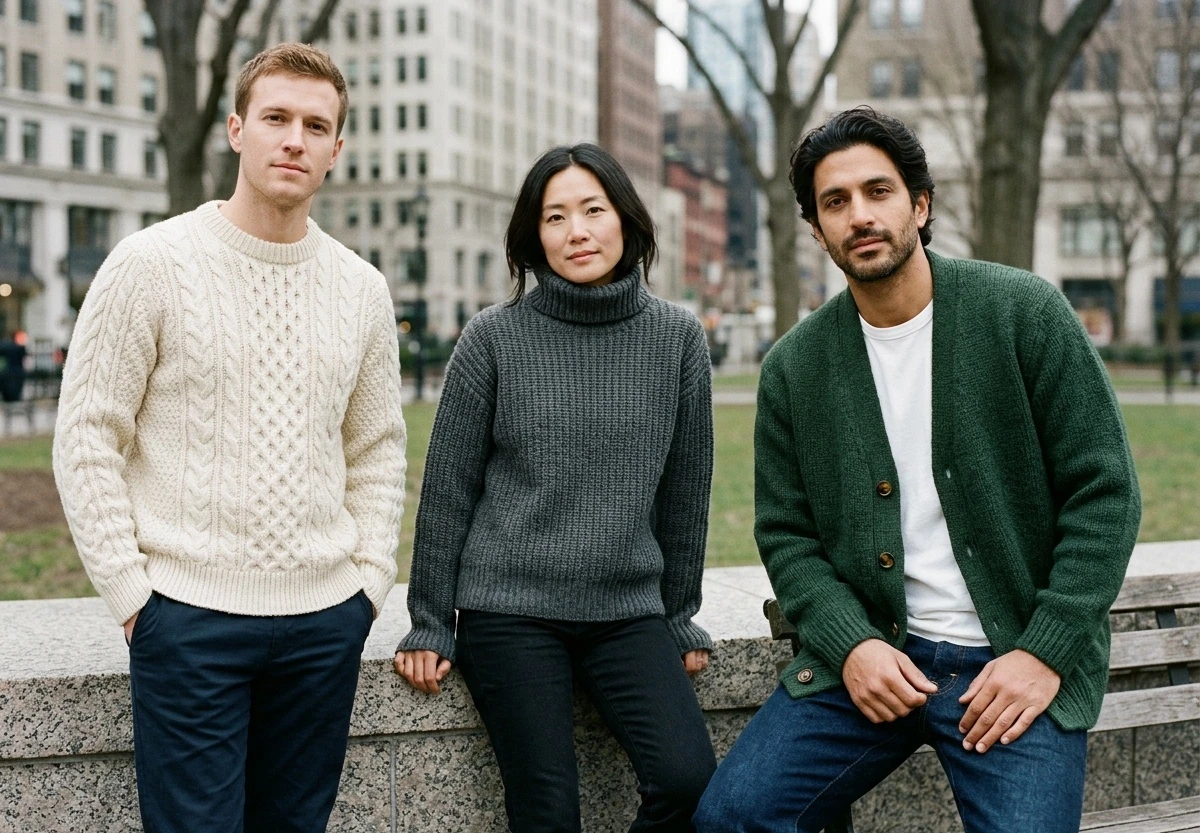
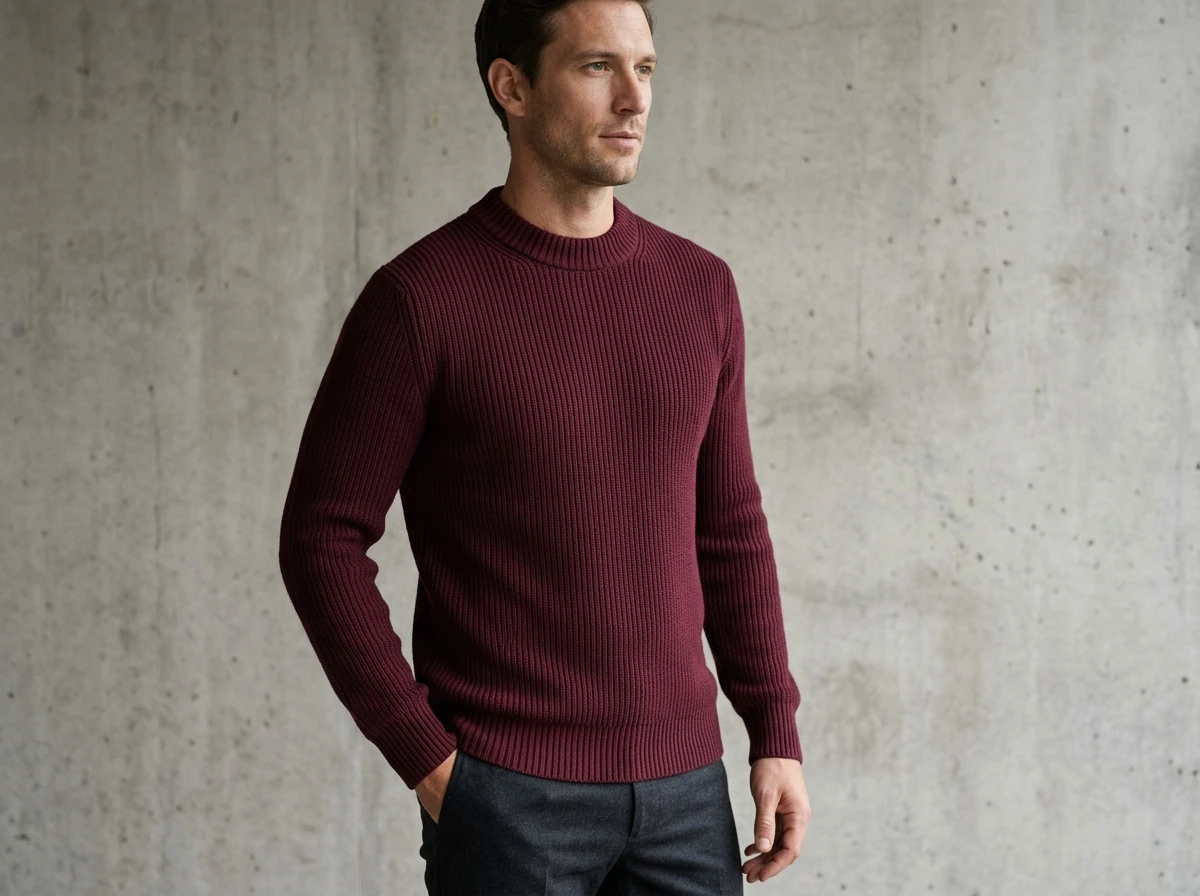
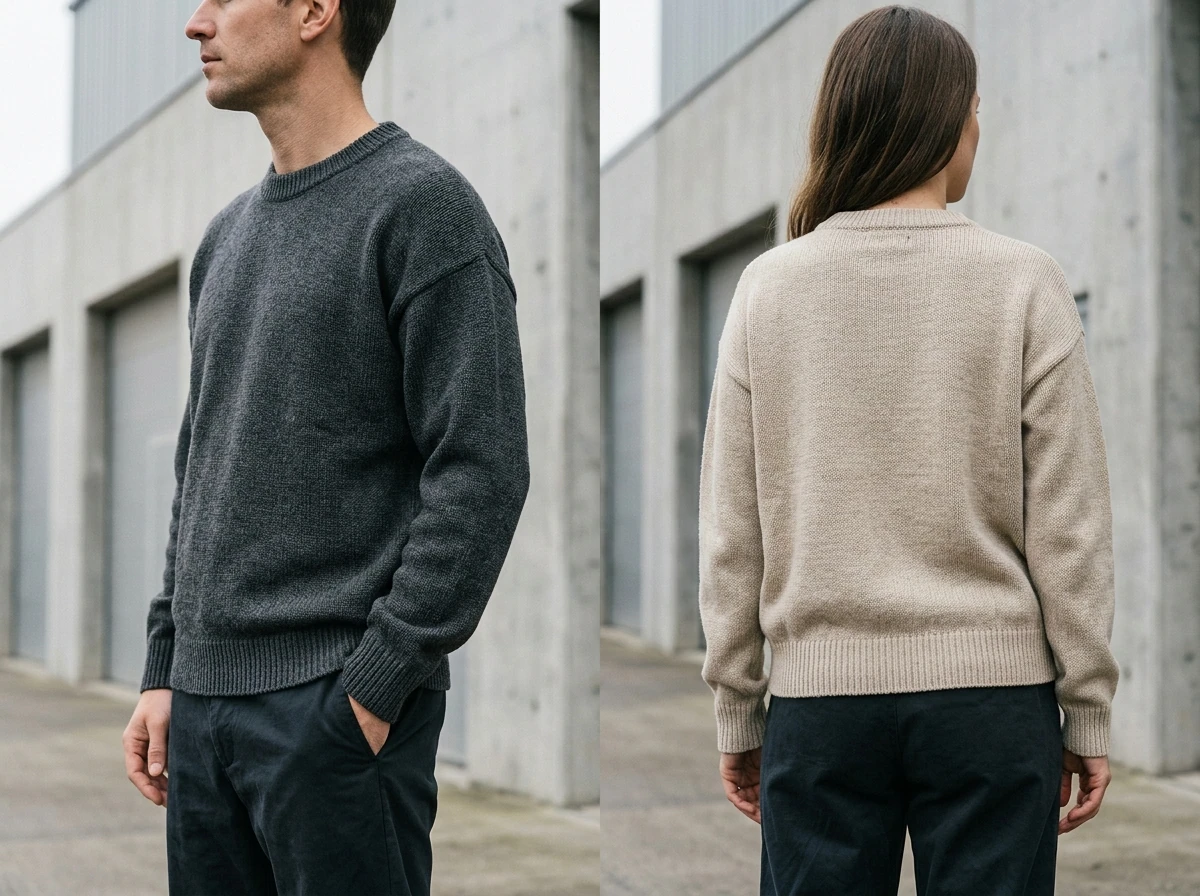
TextileWays manufactures sweaters and knitwear for fashion brands and retailers: crew neck sweaters, cardigans, turtlenecks, polo knits and textured knits in cotton and blended yarns, made to your pattern or a developed block.
Knitwear is defined by its yarn and gauge: the same design in a finer or coarser knit, or a different yarn, is a different garment. Handfeel, weight, stitch definition and how a knit recovers after washing are approved on a sample in the real yarn, and any wash or finishing is specified before bulk.
A range can be developed from your own design (OEM) or from developed styles that you brand as your own (ODM, often called white label or private label), and approved yarns, colours and patterns are retained for reorders.
Product types
Anything not listed can still be assessed on technical review.
Specification
Weight ranges are typical for this product. The finished weight of your fabric is confirmed on the approved sample rather than guaranteed to a figure.
Ranges are typical. The exact specification is confirmed on your approved sample before production.
Component-level guidance for sweaters and knitwear. Any ranges are indicative sourcing references, not guaranteed order specifications. Different components can need different fabrics, weights and units; the selected materials, construction and finished measurements are confirmed on the approved sample.
| Component | Weight, unit or setting | Construction choices | Check on the sample |
|---|---|---|---|
| Knit weight and gaugeIndustry guidance | Confirmed per style: set by yarn and gauge and approved on the sample, not by gsm. | Cable, rib or textured stitch. | Measure before and after washing. |
| Sweatshirt terryIndustry guidance | 280 to 340 gsm for jersey based sweatshirts beside the knitwear range; not comparable with knitwear gauge. | Ribbed collar. | Shrinkage. |
| PillingIndustry guidance | Assessed on the sample for the chosen yarn. | Knit structure. | Pilling grade; knitwear is usually tested by the pilling box method rather than Martindale. |
Decoration
Decoration is matched to the fabric and the artwork rather than applied by default.
Which method suits each placement on sweaters and knitwear, its trade-offs and what to approve before bulk. Compatibility is checked against the actual fabric, stretch, coating and heat tolerance; approval on one component does not establish suitability on another.
Materials
Composition, weight guidance and decoration compatibility for each fabric are on its own page.
What each part of sweaters and knitwear is usually made from, why, where it falls short and what to check. This is industry guidance, not a TextileWays specification: the fabric and components for your order are confirmed on technical review.
Ordering
None of these figures are published as a universal number, because none is true across every specification.
MOQ depends on material availability, colour count, construction, decoration and packaging. Custom dyed yarn follows dye house minimums, and each colour is a separate yarn lot. Knitwear in stock yarn can begin from approximately 50 pieces per style following technical review.
A sample is knitted in the real yarn and gauge, because handfeel and drape cannot be judged from a swatch of a different yarn. Measurements are recorded before and after washing, and finishing is approved before bulk.
Lead time depends on the factors above rather than a single published figure. An indicative schedule is confirmed with your quotation.
Detailed product guidance
Materials, manufacturing routes and buying considerationsKnitwear is a seasonal, high value category where yarn, gauge and finish decide the product. A sweater that feels right in the hand sells itself.
Brands want developed shapes and yarns they can brand as their own, using a private label or white label route.
Retailers want consistent fit and colour across seasons, which depends on retained patterns and approved yarn lots.
Corporate and team programmes order matching sweaters and cardigans in set colours with embroidered crests.
Knitwear is defined by its yarn and gauge. A change in either produces a different garment, so both are approved on a sample in the real yarn.
Cotton, organic cotton and blended yarns are chosen for handfeel, warmth and how they wash, and sourced to your specification.
Gauge sets how fine or chunky a knit looks, and weight and drape are confirmed per style on the sample, not by a single gsm figure.
Rib, cable and textured stitch patterns are developed on the sample and checked for definition and recovery.
Knitwear finishing is where quality shows: how a collar sits, how a cuff recovers and how a cardigan closes.
Ribbed collars, cuffs and hems, or plain finished edges, are specified on the sample, and recovery is checked.
Fully fashioned or cut and sew knit construction is confirmed on technical review, depending on the design and yarn.
Cardigan closures, button bands and zips are specified on the sample so the front hangs straight.
Knitwear is usually ordered well ahead of the season, because yarn sourcing and dyeing take time.
Knitwear in stock yarn can begin from approximately 50 pieces per style following technical review, while custom dyed yarn follows dye house minimums.
A sample is knitted in the real yarn and gauge, and measurements are recorded before and after washing.
Approved yarns, colours and patterns are retained so a popular sweater can be reordered, with capacity beyond 100,000 pieces.
Questions
Minimum order quantity depends on material availability, colour count, construction, decoration and packaging. Projects can begin from approximately 50 pieces per style following technical review. Where a fabric has to be knitted or dyed specifically for a project, the practical minimum is set by the mill rather than by us, and we tell you that before you commit.
Sampling normally runs in stages: a proto sample to confirm construction, a fit sample against your measurement chart, and a pre production sample that fixes fabric, colour, decoration, labelling and packaging. Each stage needs written approval before the next one starts. Sample charges and courier costs are quoted before work begins.
Yes. Private label production covers your main label, care and content labels, size labels, hangtags, barcodes and packaging. You supply the brand assets and the legally required care and fibre content information for your market, and we apply them to the approved specification.
An approved pre production sample and the signed specification become the reference for repeat orders. Reorders are checked against that reference rather than reinterpreted, which is what keeps a second run consistent with the first. Where a fabric or trim has changed availability, we tell you before production instead of substituting quietly.
Pick a design as your starting point. Colours, fabric and branding are set in the quote.
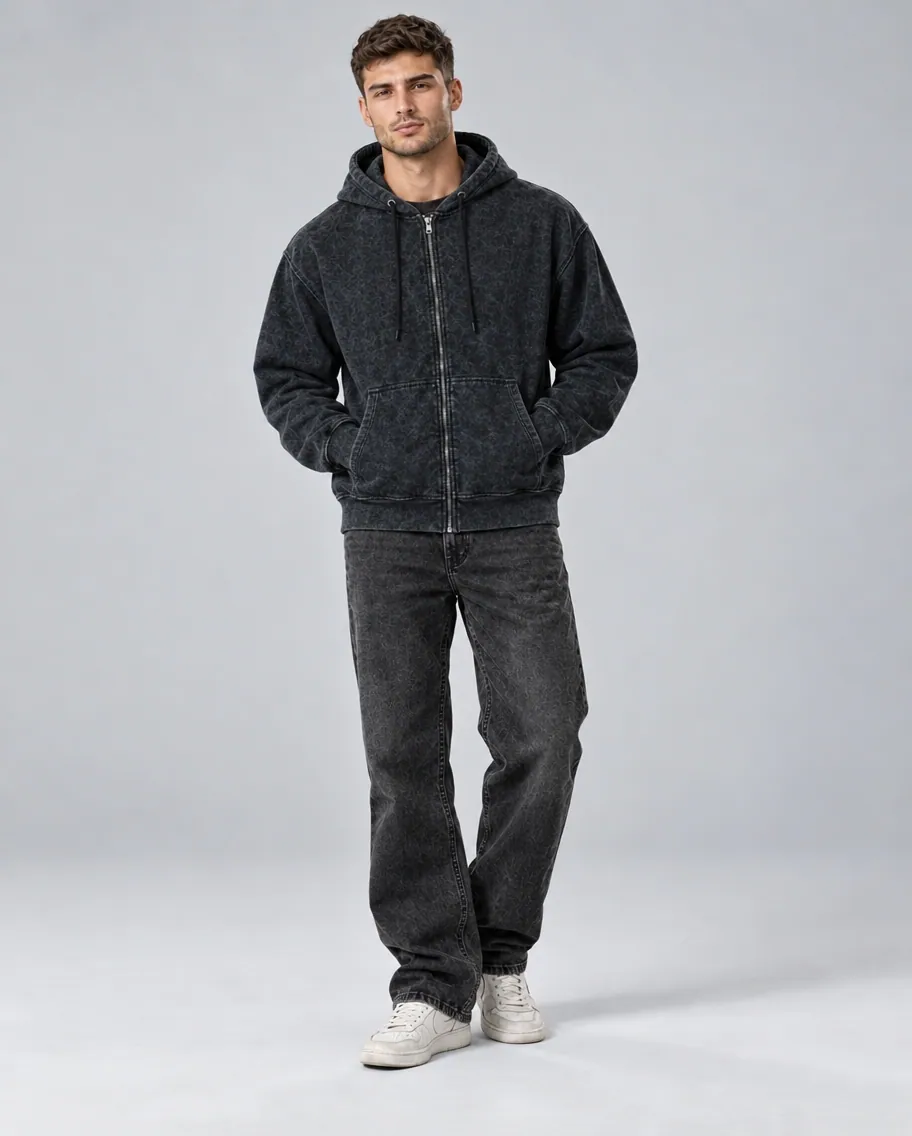 Black acid-wash zip hoodieAsk for this design
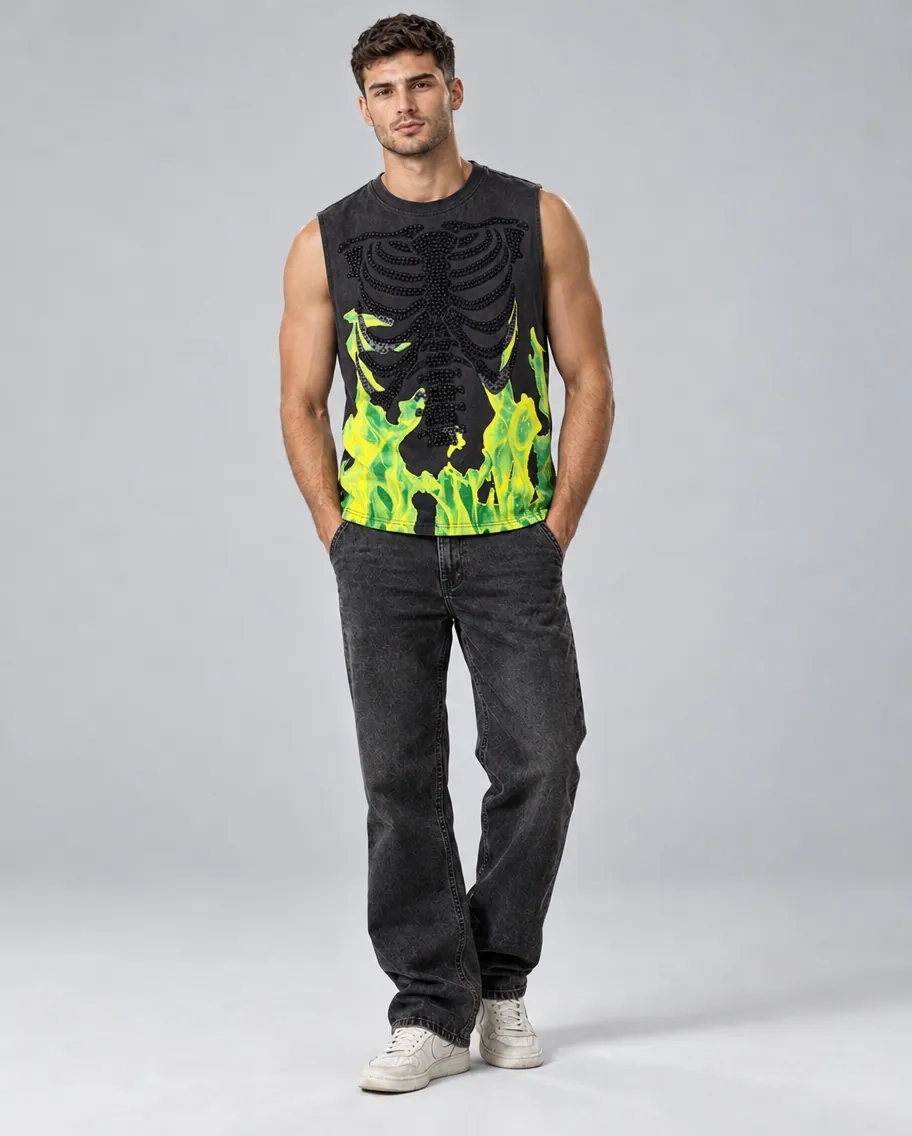 Black sleeveless top with rib-cage and flame printAsk for this design
 Cream hoodie with black piping and striped cuffsAsk for this design
 Green tank with cross print and frayed hemAsk for this design
Sampling comes before bulk. From approximately 50 pieces per style, subject to technical review.
Tell us your designShare your product details, target quantity and delivery requirements. We will confirm feasibility, materials and construction before quoting.
Contact our team