SpecificationGuidanceNotes
- Lightweight jersey and training top
- 130 to 180 gsm where selected
- An indicative lightweight option, not a universal range for every baseball jersey. Match jerseys may use different mesh, interlock or double-knit constructions.
- Mesh panels
- 100 to 150 gsm where selected
- An indicative ventilation option. Specify the actual mesh and check opacity, snag resistance and print reproduction.
- Baseball pants
- Separate double-knit or stretch specification
- Confirm finished gsm or an explicitly stated oz per square yard value. Do not apply the lightweight jersey range to pants; assess abrasion, opacity, fit and knee construction separately.
- Placket, buttons and piping
- Dimensions and attachment specified
- Confirm placket alignment, button attachment and piping stability after washing. Approve lettering alignment across a button-front opening.
- Waistband, belt loops and pockets
- Specified for the chosen pants style
- Agree the closure and waistband rather than assuming all pants use drawcords. Check loop attachment, pocket reinforcement and movement allowance.
Construction options
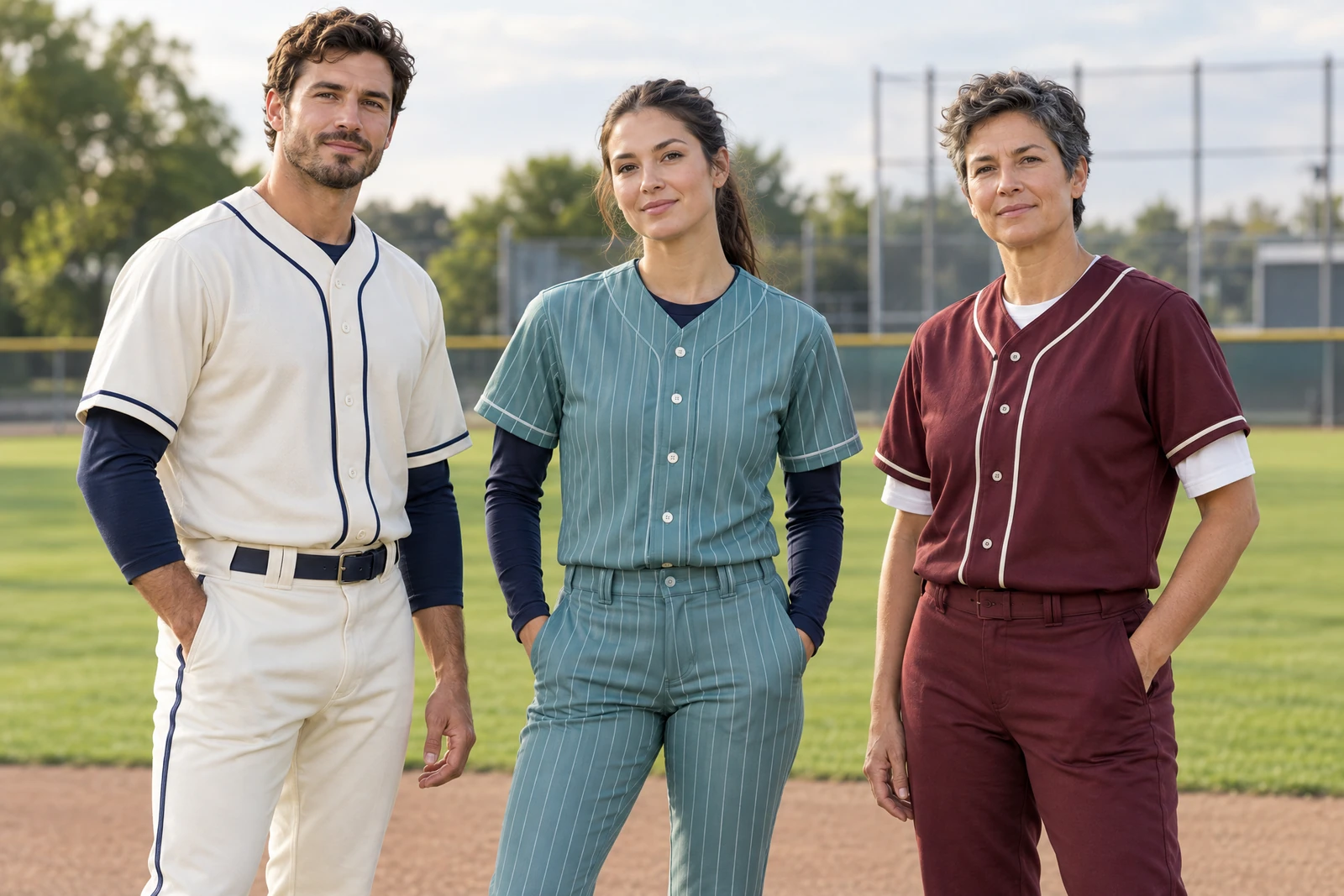
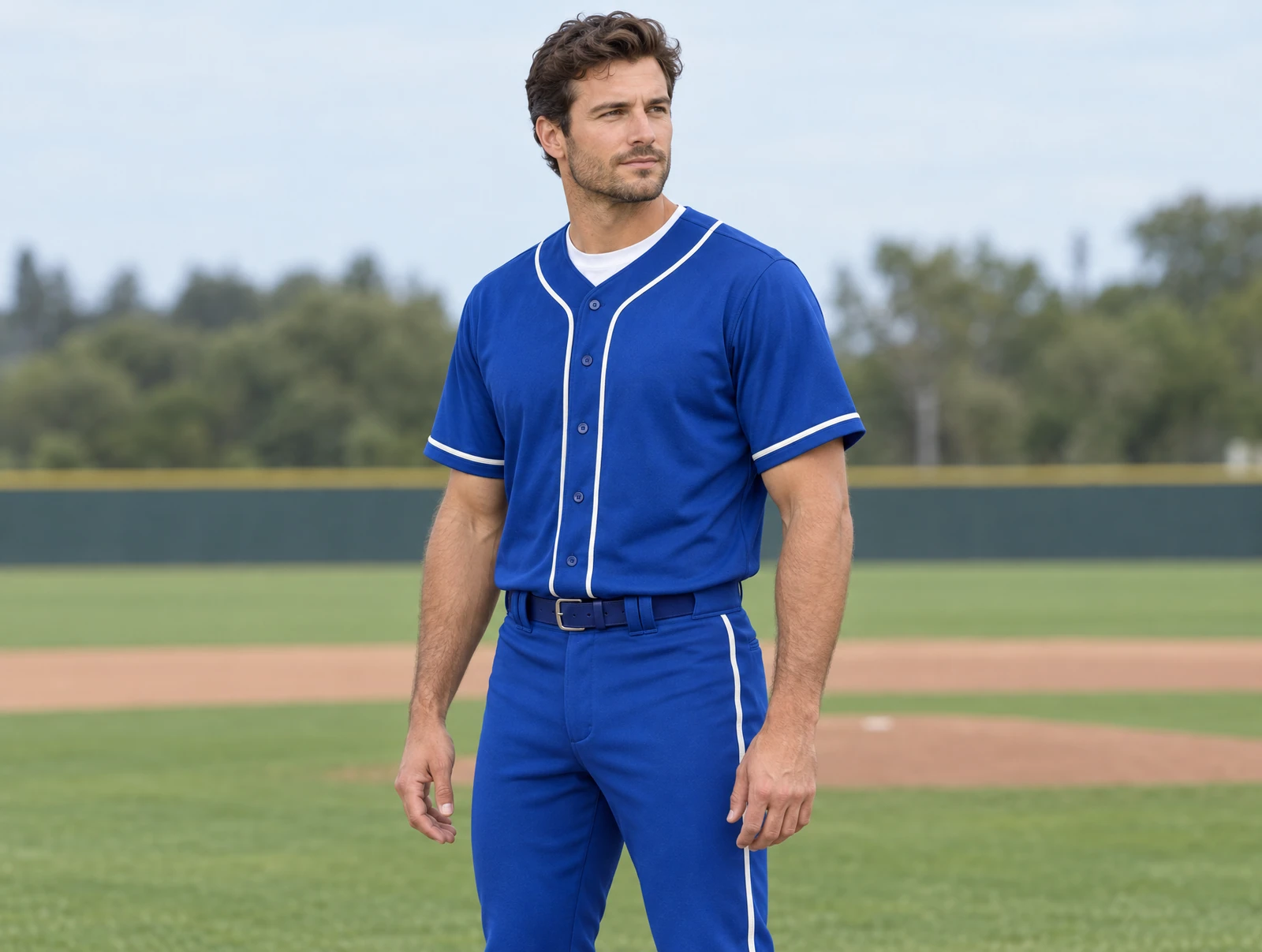
- 01Button front or pullover jersey construction
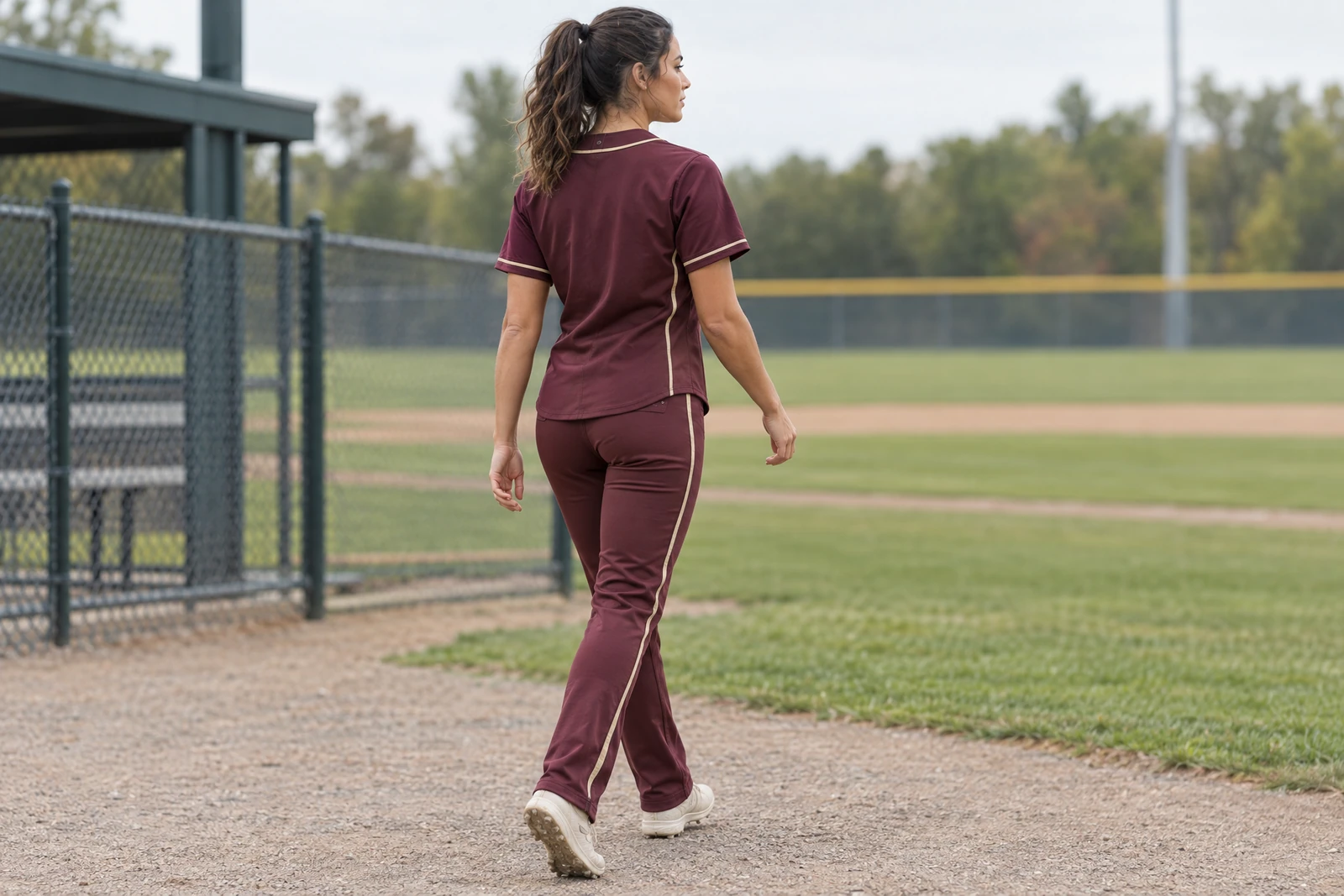
- 02Piping and contrast trim in team colours
- 03Elastic or drawcord waistbands on pants, with pocket options
- 04Flatlock seams to reduce chafing
- 05Lettering, number and crest placement set on the sample
- 06Set in or raglan sleeve construction
Labelling and packaging
- 01Tagless heat transfer labels to avoid skin irritation
- 02Per piece polybagging with name and size marking for team orders
- 03Team kit packed by player or by size assortment
Weights and construction by component
Component-level guidance for baseball uniforms. Any ranges are indicative sourcing references, not guaranteed order specifications. Different components can need different fabrics, weights and units; the selected materials, construction and finished measurements are confirmed on the approved sample.
Component by component weights, construction and sample checks for baseball uniforms| Component | Weight, unit or setting | Construction choices | Check on the sample |
|---|
| JerseyIndustry guidance | 130 to 180 gsm is an indicative lightweight jersey or training-top option, not a universal match jersey range. Specify the actual mesh, interlock or double-knit fabric. | Button front or pullover, set-in or raglan sleeves, piping and trim as agreed. | Check finished weight, placket alignment, opacity, print reproduction and shade match with the pants. |
|---|
| PantsIndustry guidance | Specify the selected double-knit or stretch fabric independently, using finished gsm or an explicitly stated oz per square yard value. | Agreed waistband and closure, with belt loops, pockets and knee reinforcement where specified. | Assess abrasion at intended wear zones, knee and seat opacity, movement allowance and post-wash dimensions. |
|---|
| Buttons, piping and belt loopsIndustry guidance | Attachment, dimensions and trim shrinkage specified separately from the main fabric. | Secure button attachment, aligned piping, reinforced loops and pocket openings where needed. | Check attachment strength, seam alignment and distortion after laundering. |
|---|
| Lettering across the front openingIndustry guidance | Artwork placement and spacing agreed with the jersey buttoned in its normal worn position. | Sublimation, transfer or sewn lettering selected for the actual substrate and design. | Check alignment across the placket, button clearance and readability across the ordered sizes. |
|---|