SpecificationGuidanceNotes
- Coloured and training shirt body
- 130 to 180 gsm
- An indicative range for selected lightweight shirt knits. Confirm opacity, moisture-management behaviour and finished weight on the actual fabric.
- Mesh panels
- 100 to 150 gsm
- An indicative ventilation range. Approve placement, opacity and compatibility with the adjoining shirt fabric.
- Cricket trousers and training pants
- Separate fabric and finished gsm
- There is no universal cricket trouser weight. Specify the actual knit or woven fabric and assess white or cream opacity during movement, waistband recovery and post-wash dimensions.
- Collar, placket and cuffs
- Construction and recovery specified
- Confirm collar and placket stability, trim shade and flatness after washing independently of the shirt body weight.
- Sweaters and warm-up layers
- Separate knitwear or fleece specification
- For sweaters specify yarn, stitch and machine gauge where applicable; for fleece specify construction and finished gsm. Neither is defined by the lightweight shirt range.
Construction options
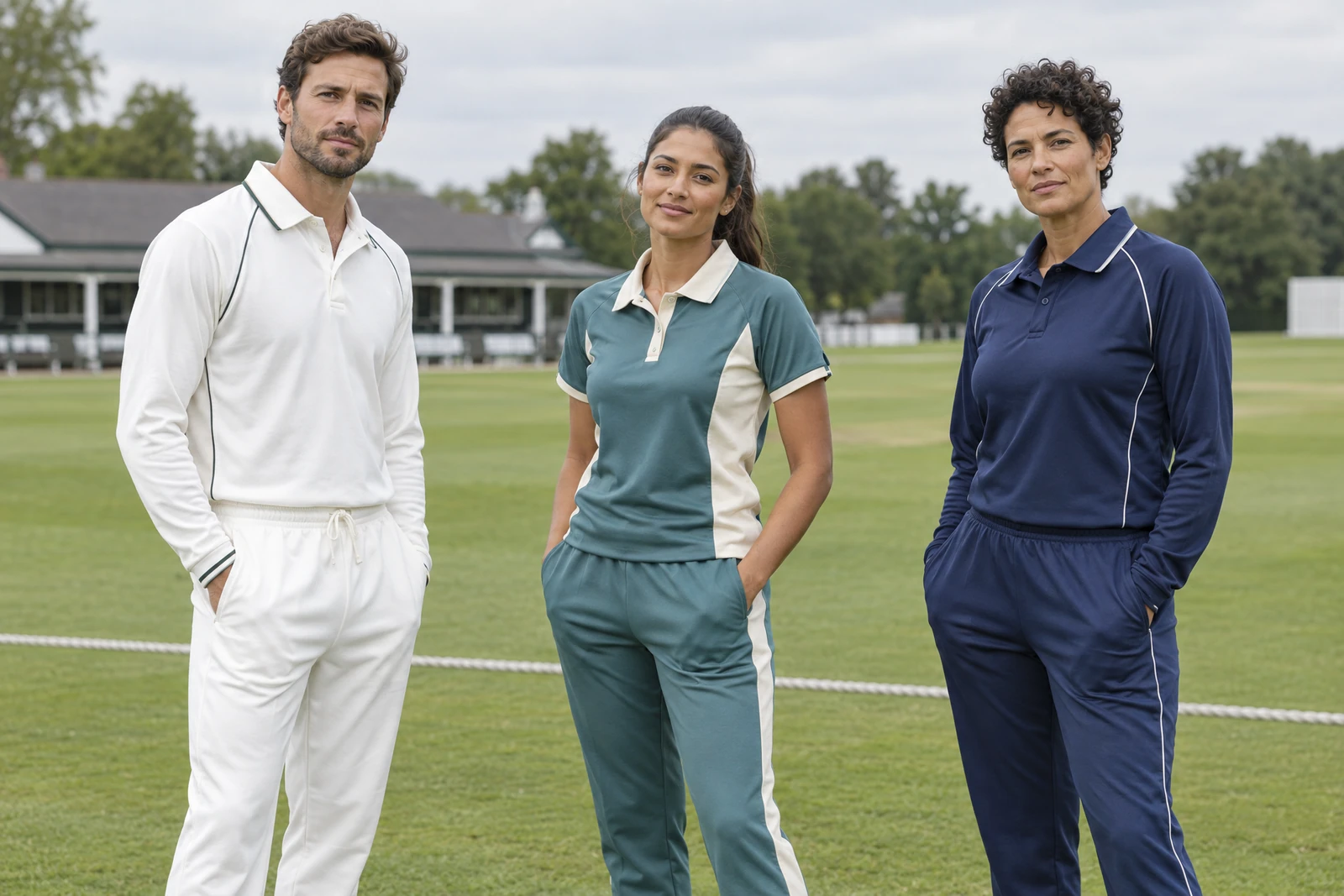
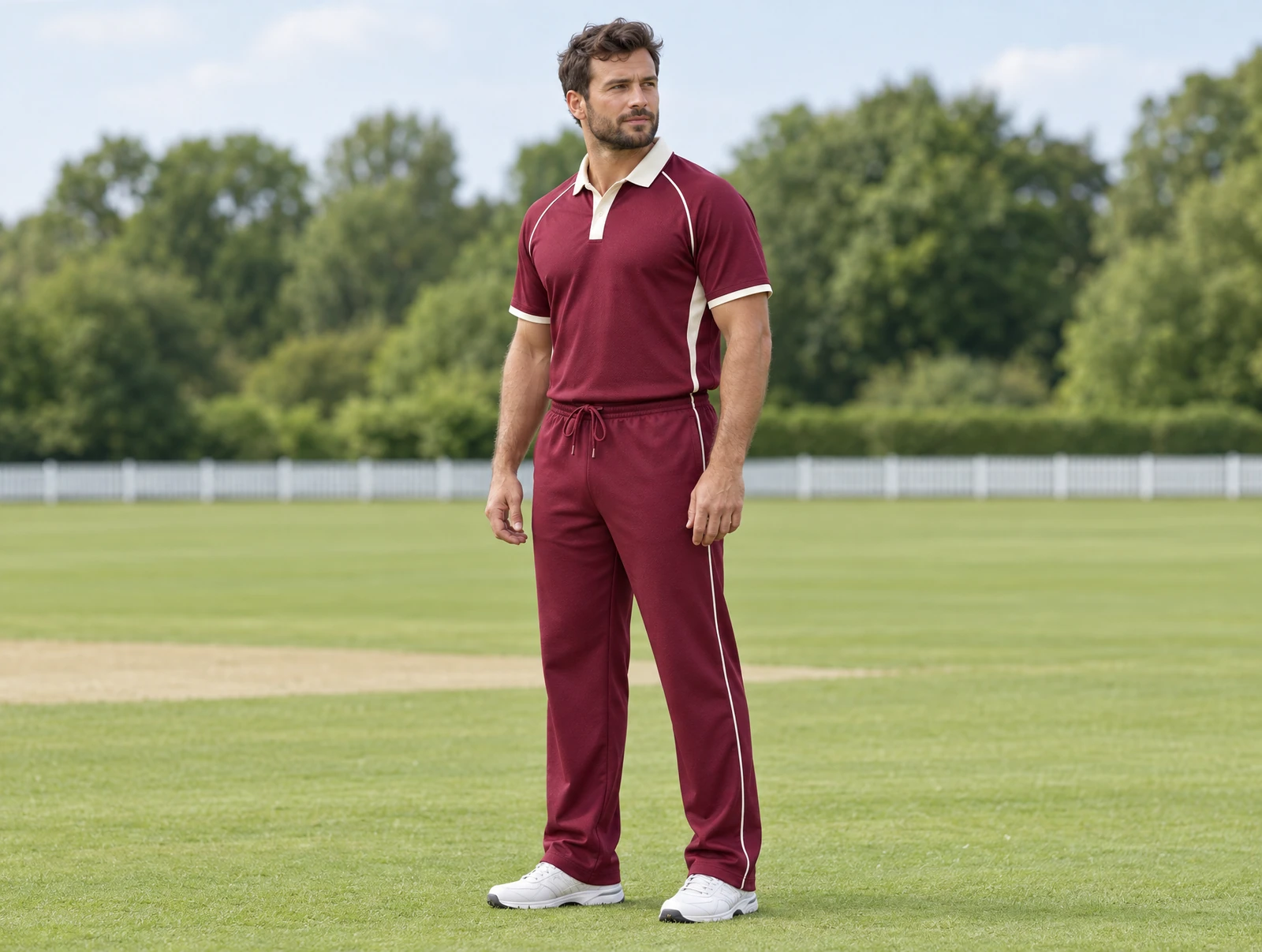
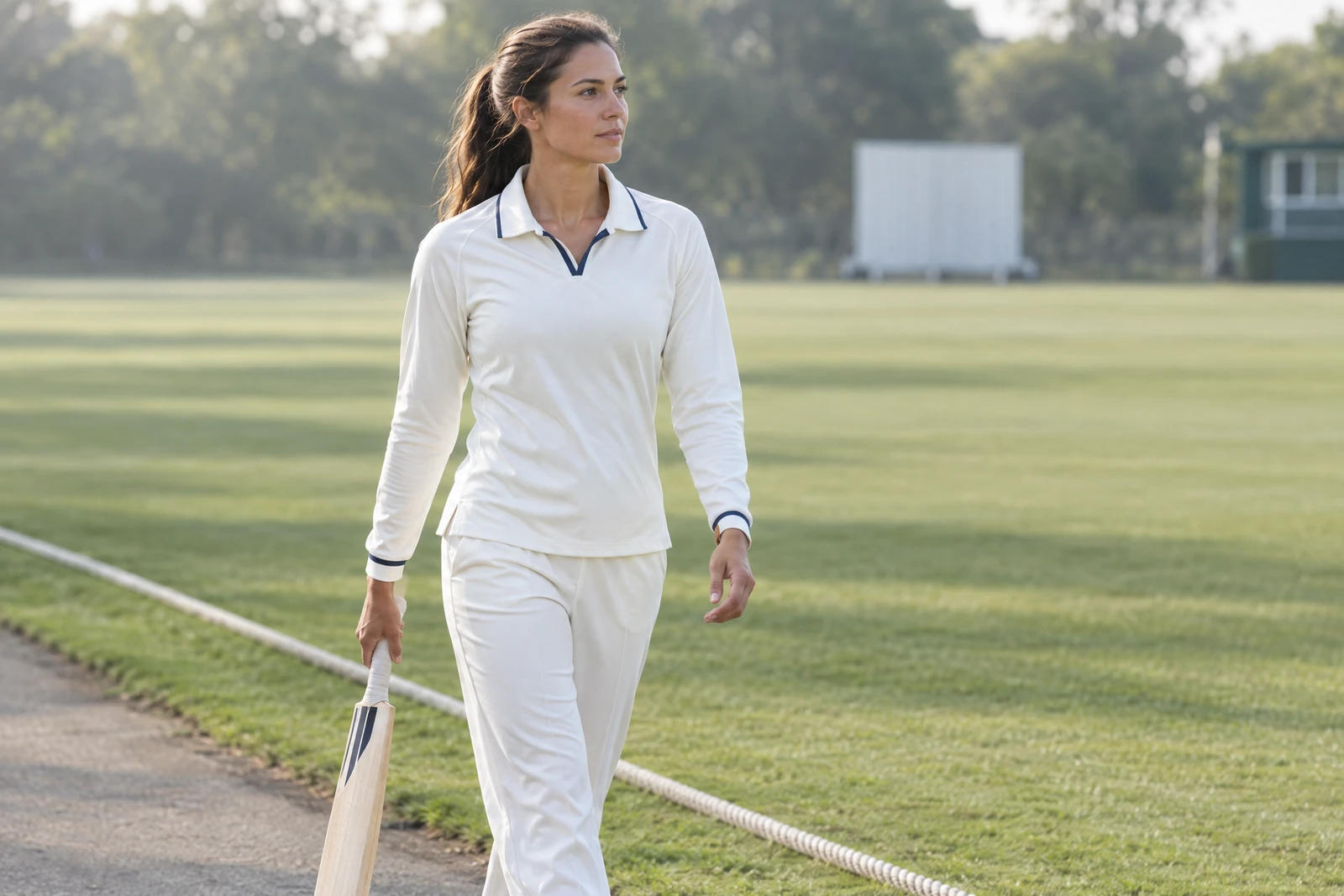
- 01Collared or crew neck shirts with matching or contrast trim
- 02Raglan or set in sleeve construction
- 03Elastic or drawcord waistbands on trousers, with pocket options
- 04Flatlock seams to reduce chafing
- 05Contrast panels and piping in club colours
- 06Name, number and sponsor placement set on the sample
Labelling and packaging
- 01Tagless heat transfer labels to avoid skin irritation
- 02Per piece polybagging with name and size marking for team orders
- 03Team kit packed by player or by size assortment
Weights and construction by component
Component-level guidance for cricket clothing. Any ranges are indicative sourcing references, not guaranteed order specifications. Different components can need different fabrics, weights and units; the selected materials, construction and finished measurements are confirmed on the approved sample.
Component by component weights, construction and sample checks for cricket clothing| Component | Weight, unit or setting | Construction choices | Check on the sample |
|---|
| ShirtIndustry guidance | 130 to 180 gsm is an indicative range for selected lightweight shirt knits; ventilation mesh may be specified separately around 100 to 150 gsm. | Collared or crew neck, matching or contrast trim, raglan or set-in sleeves. | Check finished weight, shirt opacity, collar flatness and shade match across the squad. |
|---|
| TrousersIndustry guidance | Specify finished gsm for the actual knit or woven fabric. There is no universal cricket trouser weight. | Elastic, drawcord or other agreed waistband, with pockets and reinforcement as specified. | Assess light-colour opacity during bending and movement, waist recovery, seam comfort and dimensions after washing. |
|---|
| Warm up layersIndustry guidance | Specify fleece by construction and finished gsm; specify sweater knitwear by yarn, stitch and machine gauge where applicable. | Zip or pullover, with rib or self-fabric trim and fit allowance over the shirt. | Check fit over the match shirt, trim recovery and decoration durability on the selected layer. |
|---|
| Collar, placket and cuffsIndustry guidance | Confirm trim composition, dimensions, recovery and any stabilising construction separately from the body. | Self-fabric or knitted collar and cuffs, with placket construction agreed per style. | Check flatness, symmetry and colour match before and after laundering. |
|---|