Loading page content
Loading page content
Design and development
Translating a design and a measurement chart into the pattern pieces a garment is cut from.
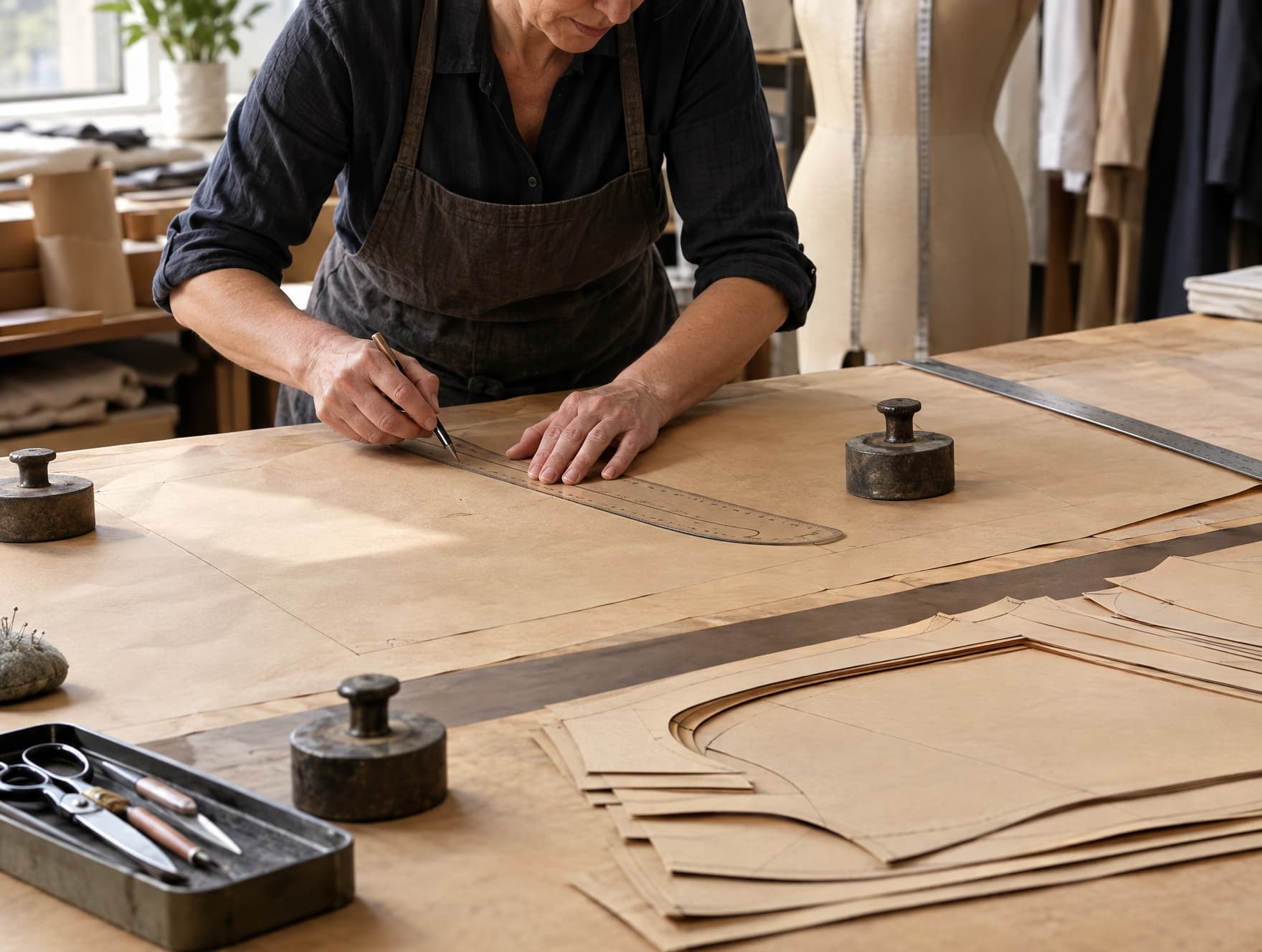
The pattern is where fit is actually decided. It has to account for the fabric it will be cut in, because the same pattern produces a different garment in rigid poplin and in stretch jersey.
Patterns are built to your measurement chart with agreed tolerances, then corrected against fit samples. The approved pattern is retained so a repeat order starts from a known reference rather than from a redraft.
Process
Each stage exists to resolve one question. Skipping a stage moves risk further down the line rather than removing it.
Points of measure and tolerances are reviewed for completeness.
A base pattern is drafted for the nominated fabric type.
The pattern is corrected against fit sample comments.
The approved pattern is retained and version controlled.
Suitability
Where this capability is the right choice, and the materials it is compatible with.
Limits
Stated plainly, because a capability described without its constraints will be misapplied to a product it does not suit.
Materials
Composition, weight guidance and decoration behaviour for each fabric are on its own page.
Questions
Sampling normally runs in stages: a proto sample to confirm construction, a fit sample against your measurement chart, and a pre production sample that fixes fabric, colour, decoration, labelling and packaging. Each stage needs written approval before the next one starts. Sample charges and courier costs are quoted before work begins.
No. A tech pack makes quoting faster and more accurate, but a clear description, reference garments, target quantity and target market are enough to start. Where you do not have a specification, we can develop one with you and confirm it in writing before sampling.
Tell us the product, the fabric and the quantity. We will confirm whether this is the right process and what it means for your minimum quantity and schedule.