
Loading page content
Loading page content
Decoration
The volume method for solid colour artwork. Lowest unit cost at quantity, with a setup cost per colour.
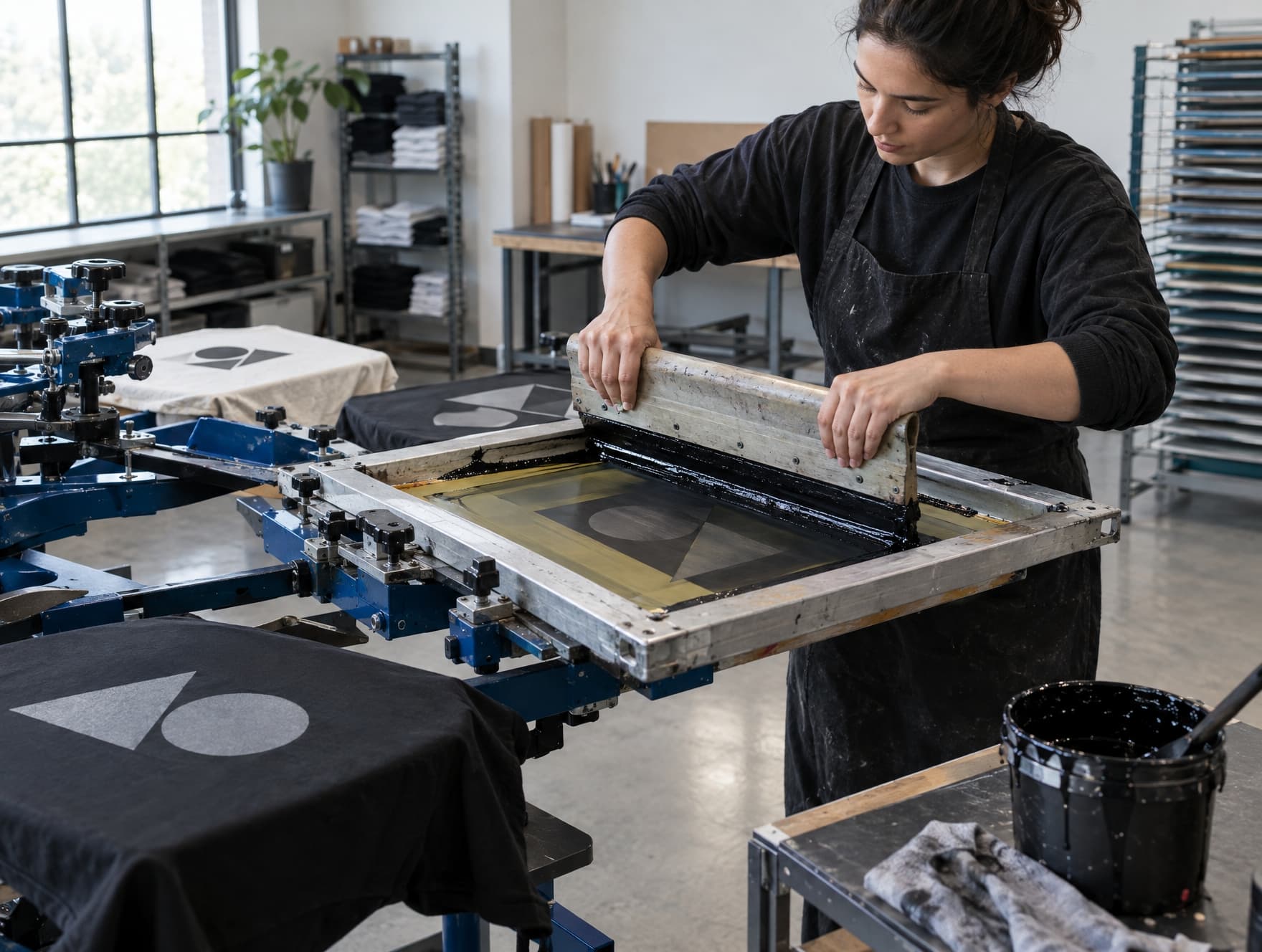
Screen printing pushes ink through a mesh screen, one screen per colour. That structure explains its economics: setup cost rises with colour count and falls away across quantity, so it is the cheapest method at volume and an expensive one for a short run.
It also produces the most durable and opaque result on cotton, which is why it remains the standard for tee shirt and sweatshirt graphics despite newer digital options.
Process
Each stage exists to resolve one question. Skipping a stage moves risk further down the line rather than removing it.
Artwork is separated into individual colours and screens are prepared.
Ink colours are mixed and approved against your reference.
A test print on the actual fabric is approved before bulk printing.
Bulk is printed with periodic checks against the approved strike off.
Ink is cured to temperature, which determines wash durability.
Suitability
Where this capability is the right choice, and the materials it is compatible with.
Limits
Stated plainly, because a capability described without its constraints will be misapplied to a product it does not suit.
Materials
Composition, weight guidance and decoration behaviour for each fabric are on its own page.
Questions
It depends on the fabric, the artwork and the quantity. Screen printing suits solid colour artwork at volume. DTG and DTF suit detailed or low volume artwork. Sublimation works on polyester rich fabrics. Embroidery suits logos and durable branding. We confirm the method against your artwork and fabric during technical review rather than applying one method to everything.
Minimum order quantity depends on material availability, colour count, construction, decoration and packaging. Projects can begin from approximately 50 pieces per style following technical review. Where a fabric has to be knitted or dyed specifically for a project, the practical minimum is set by the mill rather than by us, and we tell you that before you commit.
Tell us the product, the fabric and the quantity. We will confirm whether this is the right process and what it means for your minimum quantity and schedule.