What changes when you source from Pakistan
Pakistan has an established textile chain, from spinning and knitting to dyeing and garment making, so most cut and sew programmes can source their fabric in the country rather than importing it. For a buyer in the USA, the UK, the EU or Australia, the practical differences are trade terms, documents and freight, not the way a garment is specified.
What does not change is that a written specification, an approved sample and clear terms decide the result. The rest of this guide covers the parts that are specific to importing from Pakistan.
Duty and preferential access
Import duty depends on the commodity code of the garment, its fibre content and its country of origin. Pakistan currently has preferential access into two of the four markets this site serves, and the terms of both schemes can change.
- European Union: Pakistan is currently a beneficiary of the EU's GSP+ scheme, which gives duty free access for most textiles and clothing that meet the rules of origin. The status depends on Pakistan continuing to implement international conventions and is monitored by the European Commission.
- United Kingdom: Pakistan is a beneficiary of the UK's Developing Countries Trading Scheme, which offers reduced or zero duty on many apparel lines, depending on the product and the proof of origin.
- United States: duty follows the commodity code and the origin, and additional tariffs on imports have changed repeatedly, so the current total rate should be confirmed before an order is committed.
- Australia: duty depends on the commodity code and the origin, and preferential rates apply only to countries with a trade agreement with Australia. Goods and services tax is charged on imports in addition to duty.
Check the rate before you commit
None of this is legal advice. Confirm the rate for your commodity code with your customs broker before you commit to an order, and include duty in your landed cost from the first quotation, not after the goods have shipped.
Documents that travel with the goods
A clean document set prevents delays at the border. A typical export shipment from Pakistan carries:
- Commercial invoice
- Packing list with carton dimensions and weights
- Certificate of origin, where the scheme or the importer requires one
- Bill of lading or air waybill
- Test reports, where your buyer or product category requires them
Ask for the checklist early
The document set is confirmed against your destination and your importer's requirements before dispatch. Ask for that checklist while you are still comparing suppliers, because a supplier who cannot describe it yet is likely to discover the requirements late.
Incoterms decide who pays for what
A quotation on a recognised Incoterm makes responsibility for freight, insurance, duty and clearance explicit. Under most terms the importer clears the goods and pays duty. Under delivered duty paid the seller carries those costs, so the price is higher and the responsibility sits with the supplier.
Compare quotations on the same term. Two prices on different Incoterms are not a comparison.
Lead time is a chain, not a single number
No honest supplier can give one lead time for every product, because the schedule is the sum of several stages, each with its own variables:
- Fabric availability, and whether the fabric is stock or made to order
- Sample approvals, which depend on how quickly revisions are agreed
- Decoration setup, such as screens, digitising or wash development
- Production scheduling at your quantity
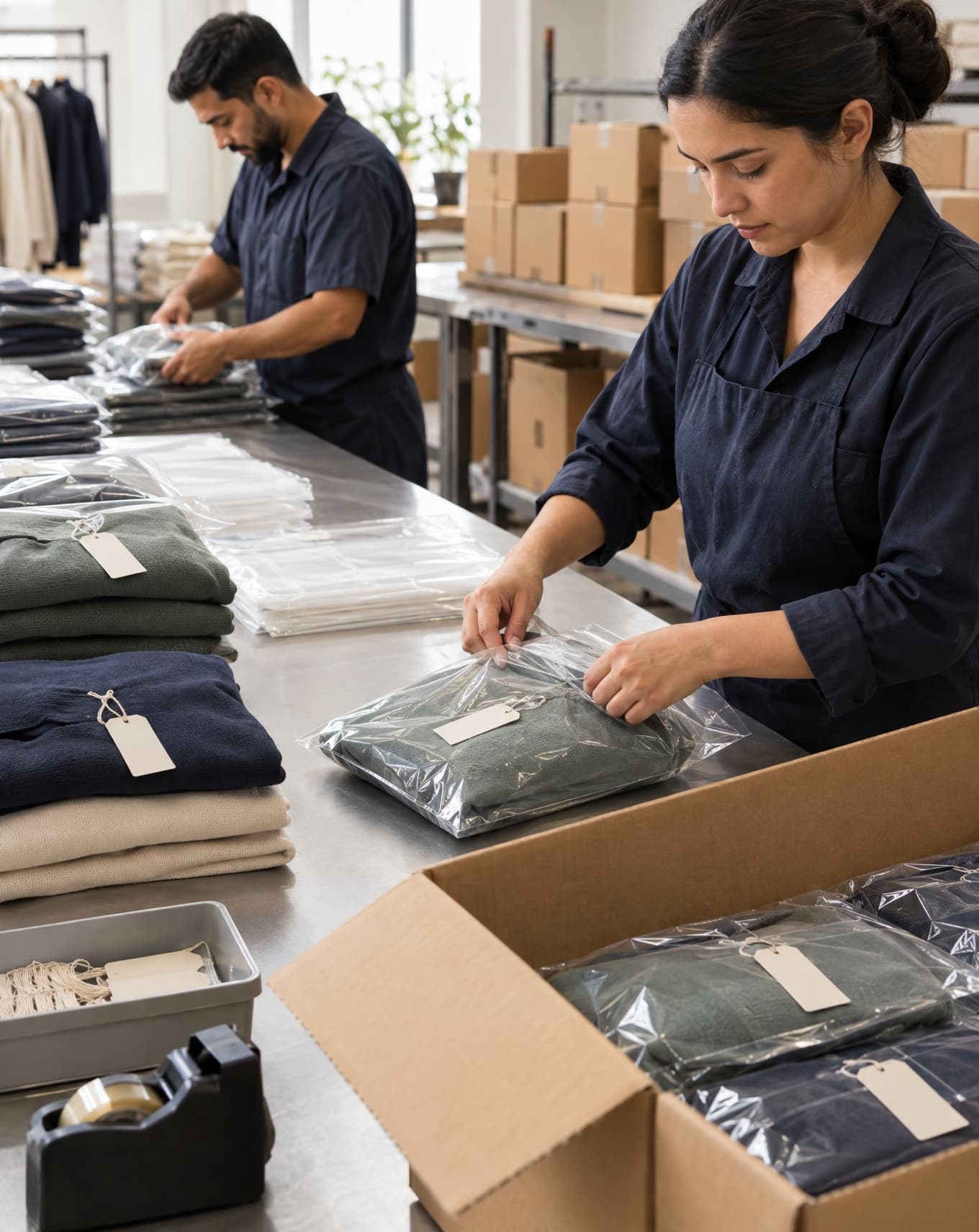
- Packing to the required standard
- Freight mode: sea freight is the standard route, and air freight is available at a much higher cost when a date cannot move
Ask for the factors, not a headline number
Ask for the factors that apply to your product and an indicative schedule confirmed with the quotation. A single figure quoted before the specification exists is a sales number, not a plan.
Questions to ask any supplier before you commit
These apply to every supplier in every country, and the answers are worth having in writing:
- Which certificates does the factory hold, and can I verify the numbers with the issuer?
- What sets the minimum quantity for my product, and which part of it can move?
- Who pays for samples and courier, and is that quoted before work starts?
- What is kept as the reference for reorders, and how are changes in fabric or trims handled?
- Which shipping documents are prepared, and on which Incoterm is this quotation?
- How are delays reported, and at what stage?