
Four decisions behind every label
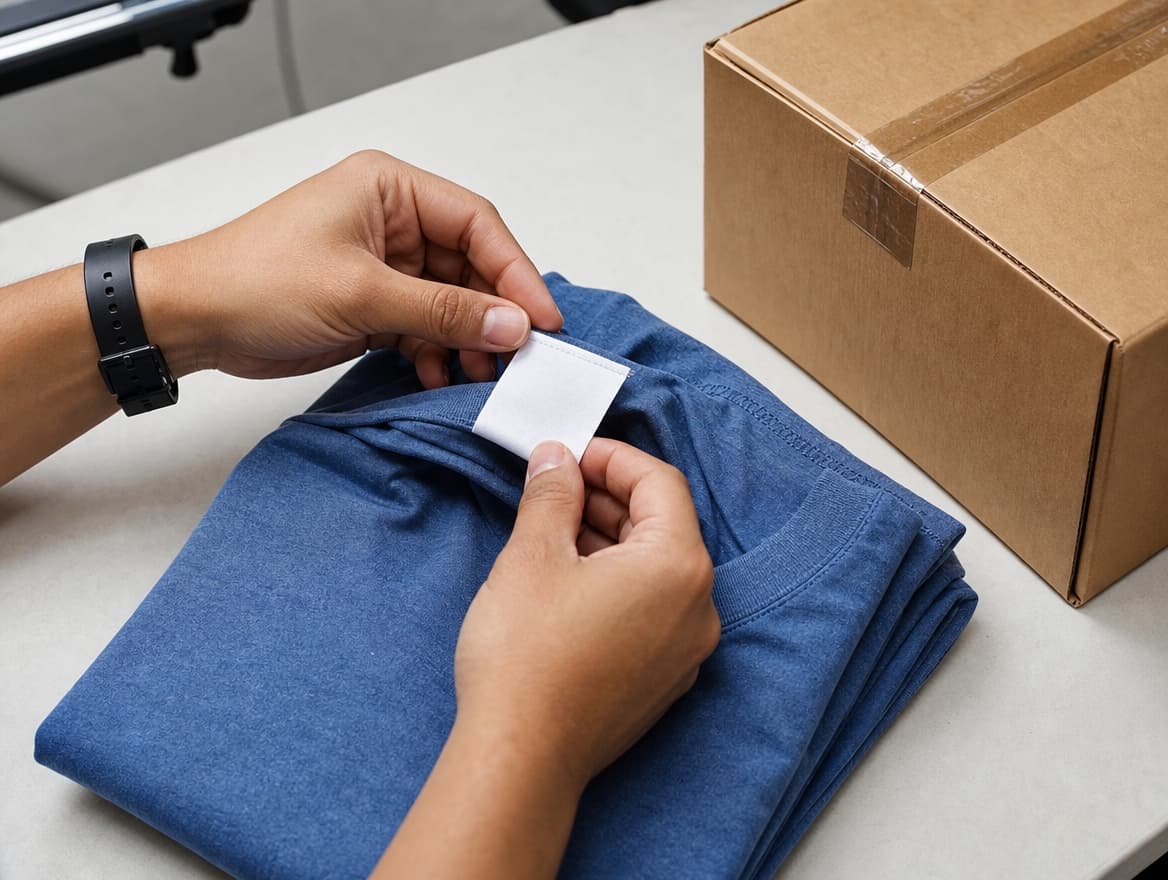
Whatever the market, a legal clothing label answers the same four questions.
- Fibre content: what the garment is made of, by percentage, using accepted fibre names.
- Care: how the garment should be washed, dried and ironed.
- Origin: where the garment was made, where a market requires it or where you choose to state it.
- Identity and language: who is responsible for the product, and in which languages the information appears.
United States
The Textile Fiber Products Identification Act requires fibre content by percentage, the country of origin and the identity of the manufacturer or dealer, often shown as a registered identification number. The Care Labeling Rule requires care instructions on most apparel. Labels must stay attached and legible for the life of the garment.
European Union
The EU textile labelling regulation sets the fibre names that may be used and requires composition on products sold in member states, in the official language or languages of the country where the product is sold. Care symbols are voluntary across the EU but widely expected by retailers. Origin marking is not generally mandatory for clothing, but any origin claim must be accurate.
United Kingdom
The UK keeps its own textile labelling rules, closely based on the EU regulation, with composition in English. Care labelling is voluntary but standard practice. Goods for Northern Ireland can follow different arrangements, so confirm the destination.
Canada
Canadian textile labelling rules require fibre content in both English and French, and identification of the dealer by name and address or a CA identification number. Care labelling is voluntary, but where it is used the care symbols should follow the recognised Canadian standard.
Australia
Care labelling is a mandatory standard in Australia for most clothing, and instructions must be permanent and legible. Country of origin claims must be accurate, and importers should confirm whether their goods need an origin mark. Fibre content is not universally mandatory, but anything stated must not mislead.
Planning labels for several markets
A few decisions made early save reprinting later.
- Use a multilingual label when one garment sells in several countries.
- Keep the brand label separate from the legal content label, so the legal label can change without redesigning the brand label.
- Approve care instructions after the wash test, because the fabric decides what care it can take.
- Plan polybag warnings at the same time as labels, because packaging has its own rules in some markets.
Who is responsible
As the brand or importer, you are responsible for what the label says. TextileWays applies the wording you approve, in the languages you specify, and flags anything that looks inconsistent with the fabric or the market before production.