
Why sizing is a market decision
Size labels are a promise to a customer about fit. Customers in different markets read the same label differently, so a range sold in several countries needs a deliberate sizing plan rather than one chart copied everywhere.
Base size and grade rules
Development starts with one base size, usually a medium or a women's UK 10 or 12, fitted on a model or form that represents your customer. Grade rules then set how much each point of measure changes between sizes. Writing them down is what makes the range consistent and repeatable.
Numeric sizes by market
Women's numeric sizes follow different systems. Common conversions are below, but brand charts vary, so treat them as a starting point.
- UK and Australia 8: commonly US 4 and EU 36.
- UK and Australia 10: commonly US 6 and EU 38.
- UK and Australia 12: commonly US 8 and EU 40.
- UK and Australia 14: commonly US 10 and EU 42.
Alpha sizes and body measurements
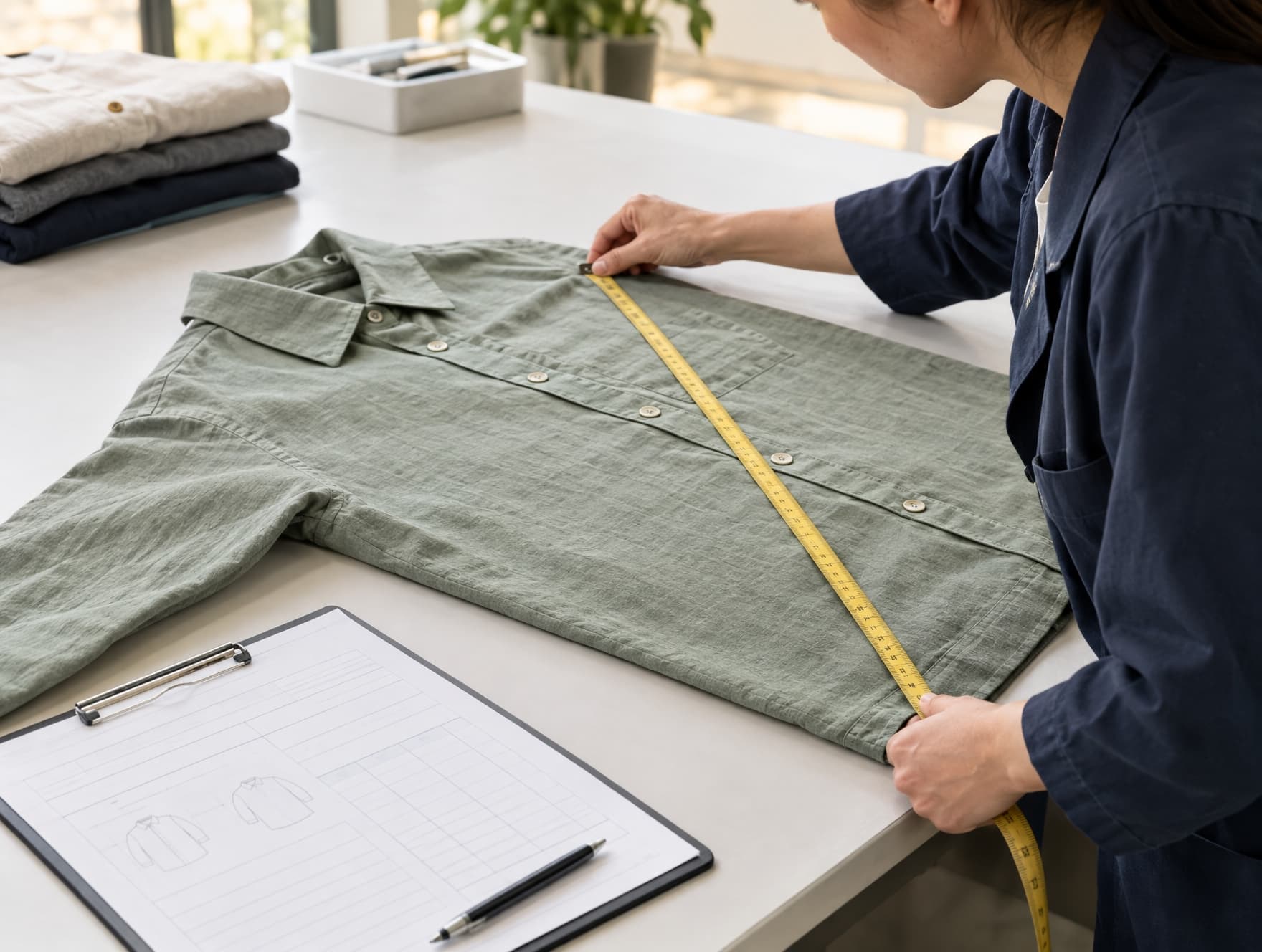
Menswear and casual apparel usually use alpha sizes. These are not standardised between brands or countries, and fit expectations at the same letter can differ between markets. Publish chest, waist and length measurements for each size so customers can choose, and so returns do not depend on guesswork.
Labelling sizes for several markets
A range sold in several countries can carry multi market size labels, such as a UK, US and EU size on one label, or a single alpha size backed by a published chart. Decide this before labels are ordered, because size labels are usually printed with the main label.
Checking the grade
Grading errors are cheap to catch on samples and expensive to catch in bulk.
- Approve a fit sample in the base size first.
- Then approve a size set, at least the smallest and largest sizes, before bulk.
- Measure every point against the chart and its tolerance.
- Record the approved measurements as the reference for reorders.
How TextileWays works
Size ranges are confirmed and graded for your destination market before sampling, and a size set can be approved before bulk production begins. Your measurement chart and tolerances become the standard every order is inspected against.